

BMW X5 Service Costs
Transparent pricing, OE-quality parts and open, honest advice.
BMW X5 Service Costs – Reliable Care Without Main Dealer Prices
Select your BMW model below (or enter your registration) to view fixed service costs using our Service Calculator.
Looking for the X5M? These are listed on our
BMW M Cars page.
Looking for Fixed-Price BMW X5 Servicing?
Use our BMW X5 Service Calculator to check transparent pricing, explore service packages, and plan your maintenance with confidence.
We service all BMW X5 models — including the xDrive30d, xDrive40i, xDrive45e plug-in hybrid, and performance M50d and M60i variants — using only OE-standard parts to maintain performance, warranty protection, and reliability.
Our fixed prices include parts, labour, and VAT with no hidden costs.
We always reset the onboard service computer and update your digital service records (where supported).
Conveniently located near Birmingham with easy access to the M5 and M6 motorways, we are trusted specialists for petrol, diesel, hybrid, and M Sport BMW X5 servicing across the West Midlands.
Why Choose Us for Your BMW X5 Servicing?
Transparent Fixed Pricing
All costs include parts, labour, and VAT — no hidden extras.
Digital Service Updates
Service computer reset and digital service history updated (where fitted).
Genuine OE-Standard Parts
We use OE-specification parts to ensure performance and warranty protection.
All Models Expertly Serviced
Including petrol, diesel, plug-in hybrid, xDrive, and M Sport X5 models.
Convenient Location
Located in Great Bridge, West Midlands (DY4 7LH) — near Birmingham, M5 and M6 access.
Trusted by BMW Owners
Proven reputation for honest advice, expert service, and customer loyalty.
BMW X5 Fixed-Price Servicing Guide
Important: The service prices shown below are typical examples. Exact pricing varies by model, engine size, and fuel type. For an exact quote, please select your model using the Service Calculator above.
All services include VAT, parts, labour, onboard service computer reset, and digital service record updates (where fitted). No hidden charges — just clear, honest pricing.
| Service | What’s Included | Price |
|---|---|---|
| Bronze Service | Oil and filter change using BMW-spec oil and filter | From £180.00 |
| Silver Service (4 Cylinder) | Oil, filter, and air filter change using BMW-spec parts | From £220.00 |
| Gold Service (4 Cylinder) | Oil, filter, air filter, and cabin filter change using BMW-spec parts | From £295.00 |
| Platinum Service (4 Cylinder Petrol) | Gold Service plus spark plug replacement | From £445.00 |
| Silver Service (6 Cylinder) | Oil, filter, and air filter change using BMW-spec parts | From £260.00 |
| Gold Service (6 Cylinder) | Oil, filter, air filter, and cabin filter change using BMW-spec parts | From £345.00 |
| Platinum Service (6 Cylinder Petrol) | Gold Service plus spark plug replacement | From £495.00 |
| Platinum Service (Diesel) | Gold Service plus fuel filter replacement | From £395.00 |
| Brake Fluid Flush | Flush and replacement using high-performance DOT4 brake fluid | £100.00 |
| MOT | Official MOT test for vehicles over 3 years old | £50.00 |
| Diagnostic Check | Dealer-level BMW diagnostic scan and technician report | £80.00 |
What’s Included with Your BMW X5 Service?
- Fixed-price servicing with genuine or OE-standard parts
- Onboard service computer reset and digital service history update (where fitted)
- Brake, steering, suspension, and engine health checks
- Service options tailored for petrol, diesel, hybrid, and M variants
- Full invoice transparency — no hidden extras
Need Help Choosing the Right BMW X5 Service?
Use our BMW X5 Service Calculator at the top of this page to explore all service options for your car, compare prices, and book online with confidence.
Prefer to talk? Call us on 0330 999 0020 — we’re happy to help.
Knowing which generation your BMW X5 belongs to matters for servicing. Engines, oil specifications, service intervals, and common faults all vary significantly between generations. Use the table below to identify your generation, then explore the details for engine codes, body styles, and service points. The E53 was BMW's first ever SUV — or Sports Activity Vehicle, as BMW preferred — launched in 1999 and produced through 2006. Developed during BMW's ownership of Land Rover, the E53 shared components with both the Range Rover L322 (hill descent control, off-road engine management) and the E39 5 Series (engines, electronics, suspension geometry). It coined the SAV term and proved that a luxury SUV could handle like a sports saloon whilst offering genuine off-road capability. Available exclusively with all-wheel drive (xDrive), the E53 offered inline-six petrol and diesel engines alongside V8 petrols ranging from 3.0 to 4.8 litres. A mid-life facelift in 2003 brought revised styling, improved interior materials, and updated engine options including the N62 V8. Nearly 468,000 E53s were produced across a seven-year run, establishing the X5 as BMW's most successful SUV nameplate and creating an entirely new market segment that competitors rushed to fill. The E53 petrol range spanned inline-six and V8 options. The xDrive30i (2000–2006) used the M54B30 3.0-litre naturally aspirated inline-six producing 231 hp and 300 Nm — smooth, refined, and the most common petrol variant. The xDrive44i (2000–2003) featured the M62B44 4.4-litre V8 producing 286 hp and 440 Nm, replaced from 2003 by the N62B44 4.4-litre V8 with 320 hp and 440 Nm — Valvetronic variable valve lift improving efficiency and response. The range-topping xDrive48is (2004–2006) used the N62B48 4.8-litre V8 producing 360 hp and 500 Nm — substantial performance for its era. The M54 inline-six is exceptionally robust and long-lived; the M62 V8 can suffer from Nikasil bore wear on early examples (check engine history), whilst the later N62 V8 is more reliable but can develop coolant-pipe and Valvetronic motor issues at higher mileages. The diesel range was built on BMW's acclaimed M57 3.0-litre turbocharged inline-six. The xDrive30d (2001–2006) produced 184 hp (early) rising to 218 hp (post-2003 facelift) and up to 500 Nm of torque — exceptional low-end pull making it the natural choice for towing and long-distance cruising. The M57 is one of BMW's most celebrated diesel engines: smooth, powerful, and remarkably durable, with many examples exceeding 250,000 miles on proper maintenance. Common-rail injection and variable-geometry turbocharging provided refinement ahead of its era. The M57 is the engine that established BMW's diesel reputation and remains sought after by enthusiasts for its combination of performance, economy, and reliability. E53 ownership is rewarding but demands awareness of age-related issues across a vehicle now 20+ years old. The M54 inline-six is mechanically excellent — VANOS seals and CCV (crankcase ventilation) valve replacement are the most common service items, both straightforward and inexpensive. The M62 V8 can suffer from Nikasil bore lining damage on pre-2003 examples (caused by high-sulphur fuel) — check compression and engine history before purchase. The N62 V8 is more modern but develops coolant-pipe leaks (the valley pan between the cylinder banks) and Valvetronic motor failures — both manageable with preventive maintenance but expensive if neglected. The M57 diesel is robust and long-lived; injector wear and turbo-actuator issues are the primary service items beyond 150,000 miles. The transfer case and front/rear differentials require fluid changes every 60,000 miles — neglected drivetrain fluid causes premature wear and expensive failures. Suspension bushes — particularly front lower control arms and rear integral links — wear significantly on UK roads and affect handling and tyre wear. Air suspension (where fitted) develops compressor and air-spring failures with age; budget for conversion to conventional springs if air-spring replacement costs are prohibitive. The E53 is a well-engineered platform that rewards specialist knowledge and preventive maintenance — rushed or generic workshop care risks expensive consequential damage on ageing components. The E70 was a comprehensive redesign of the X5, launched in 2006 and produced through 2013. Larger, more refined, and substantially more technologically advanced than the E53, the E70 introduced iDrive to the X5 range, offered an optional third-row seating package, and expanded the powertrain lineup to include turbocharged petrol engines and the first X5 M high-performance variant. The E70 shared its platform with the E71 X6 — BMW's first coupé-SUV. Engine options ranged from the naturally aspirated N52 inline-six through to the S63 twin-turbo V8 in the X5 M, producing 555 hp. Diesel options continued with the acclaimed M57 and its successor, the N57 — both 3.0-litre turbocharged inline-sixes offering exceptional torque and efficiency. A mid-life facelift (LCI) in 2010 brought revised styling, updated engines, and the eight-speed ZF automatic on later models. The E70's combination of dynamic handling, luxury, and practicality set the benchmark for the premium SUV segment throughout its production run. The E70 petrol range expanded significantly from the E53. The xDrive30i (2006–2010) used the N52B30 3.0-litre naturally aspirated inline-six producing 272 hp and 315 Nm. From 2010, the xDrive35i replaced it with the N55B30 3.0-litre turbocharged inline-six producing 306 hp and 400 Nm — a substantial performance leap with improved efficiency. The xDrive48i (2007–2010) featured the N62B48 4.8-litre V8 producing 355 hp and 475 Nm, replaced from 2010 by the xDrive50i with the N63B44 4.4-litre twin-turbo V8 producing 408 hp and 600 Nm. The X5 M (2009–2013) deployed the S63B44 4.4-litre twin-turbo V8 producing 555 hp and 680 Nm — genuine supercar performance in an SUV. The N52 is robust and long-lived; the N55 turbo inline-six is excellent but requires charge-pipe and valve-cover gasket monitoring; the N63 V8 earned a mixed early reputation for oil consumption and hot-vee turbo leaks, though later revisions improved reliability. Diesel options remained central to the E70's UK appeal. Early models (2006–2010) used the M57D30 3.0-litre turbocharged inline-six in various outputs: xDrive30d producing 235 hp and 520 Nm, and the twin-turbo xDrive35d producing 286 hp and 580 Nm. From 2010, the N57D30 replaced the M57 across the range: xDrive30d producing 245 hp and 540 Nm, xDrive40d producing 306 hp and 600 Nm, and the tri-turbo M50d producing 381 hp and 740 Nm — the most powerful diesel X5 to date. Both the M57 and N57 are exceptional engines — smooth, powerful, and durable. The M57 is one of BMW's most celebrated diesels; the N57 builds on that reputation with improved emissions, refinement, and efficiency. DPF management, quality fuel, and timely oil changes are the primary service considerations. The E70 ActiveHybrid X5 (2010–2013) was BMW's first hybrid SUV, pairing the N55B30 3.0-litre turbocharged inline-six with a 30 kW electric motor and small battery pack, producing a combined 340 hp. It offered modest electric assistance during acceleration and regenerative braking but no pure-electric driving capability. Production numbers were very limited, and the ActiveHybrid X5 is uncommon on the used market. Fully electric variants were not available for the E70. The E70 spans a wide technical range depending on model year and engine choice. The N52 naturally aspirated inline-six is mechanically straightforward; VANOS and Valvetronic maintenance are the primary service items. The N55 turbo inline-six is more complex — charge-pipe failures (plastic pipe splits under boost), valve-cover gasket oil leaks, and wastegate rattle are well-documented issues, all manageable with preventive maintenance. The N63 V8 (xDrive50i) requires specialist knowledge; early examples suffered from hot-vee turbo oil leaks, timing-chain guide wear, and injector failures — the N63 TU (technical update) from 2012 onwards addressed most issues. The S63 V8 (X5 M) demands M-car specialist care: higher thermal loads, performance brake wear, and track-oriented oil specifications. The M57 and N57 diesels are both excellent — robust, efficient, and long-lived; swirl-flap removal (M57), DPF health, and injector condition are the primary diesel service items. The ZF automatic (six-speed early, eight-speed later) is durable; fluid and filter changes every 60,000 miles are essential. Transfer case and differential fluid changes maintain drivetrain longevity. Air suspension (where fitted) develops compressor and air-spring failures; budget for replacement components on higher-mileage examples. The E70 is a capable, well-engineered SUV that rewards specialist servicing and prompt attention to engine-specific weak points. The F15 retained much of the E70's platform architecture but achieved significant weight reduction through extensive use of aluminium and high-strength steel — approximately 90 kg lighter despite increased dimensions and equipment. Launched in 2013 and produced through 2018, the F15 introduced the xDrive40e plug-in hybrid — the first electrified X5 — and expanded the diesel range to include a four-cylinder option (xDrive25d) for the first time. The eight-speed ZF automatic became standard across all variants, and iDrive was updated with touchpad and voice-control functionality. The X5 M (F85) continued with the S63 twin-turbo V8 producing 575 hp. Engine options spanned four-cylinder diesel through to twin-turbo V8, with the tri-turbo M50d diesel producing 381 hp remaining a uniquely compelling proposition. The F15 competed with the Mercedes GLE, Audi Q7, and Range Rover Sport, and its combination of efficiency, dynamics, and luxury sustained the X5's segment leadership. The F15 petrol range featured turbocharged inline-six and V8 options. The xDrive35i (2013–2018) used the N55B30 3.0-litre turbocharged inline-six producing 306 hp and 400 Nm — smooth, responsive, and well-suited to the X5's sporting character. The xDrive50i (2013–2018) employed the N63B44TU 4.4-litre twin-turbo V8 producing 450 hp and 650 Nm — the technical update addressing the early N63's reliability concerns with revised turbo oil feeds, improved sealing, and better thermal management. The X5 M (F85, 2014–2018) deployed the S63B44T2 producing 575 hp and 750 Nm — the most powerful X5 to date. The N55 is well-proven but benefits from charge-pipe and valve-cover gasket monitoring; the N63TU is significantly more reliable than early N63 variants but still demands meticulous cooling-system maintenance. The F15 expanded the diesel range to four variants. The sDrive/xDrive25d (2013–2018) used the N47D20 2.0-litre turbocharged four-cylinder producing 218 hp and 450 Nm on early models, transitioning to the B47D20 from 2015 — the first four-cylinder diesel in an X5, offering entry-level pricing with respectable performance. The xDrive30d (2013–2018) employed the N57D30 3.0-litre turbocharged inline-six producing 258 hp and 560 Nm — the sweet spot of the range. The xDrive40d (2013–2018) used a twin-turbo N57 variant producing 313 hp and 630 Nm. The M50d (2013–2018) featured the tri-turbo N57D30S1 producing 381 hp and 740 Nm — extraordinary diesel performance. Early xDrive25d models with the N47 carry the timing-chain risk; post-2015 B47 variants resolve this. The N57 inline-six in all forms is exceptional — smooth, powerful, and durable. The xDrive40e plug-in hybrid (2015–2018) was the first electrified X5, combining the N20B20 2.0-litre turbocharged four-cylinder (245 hp) with a 83 kW electric motor, producing a combined 313 hp and 450 Nm. A 9.2 kWh lithium-ion battery provided up to 19 miles of pure-electric range (WLTP). The PHEV system integrated with the eight-speed automatic and xDrive all-wheel drive, offering genuine electric-only urban capability whilst retaining petrol range for longer journeys. The xDrive40e proved the concept but was superseded by the substantially more capable xDrive45e in the fourth-generation G05. Fully electric variants were not available for the F15. The F15 benefits from the E70's engineering maturity with improved weight efficiency and updated technology. Engine choice determines the service profile. Early xDrive25d models with the N47 diesel require timing-chain inspection beyond 80,000 miles — the well-documented rear-chain weakness applies here as it does across the N47 range. Post-2015 B47 variants resolve this with a front-mounted chain. The N57 3.0-litre diesel in all variants is excellent — DPF health, quality fuel, and timely oil changes are the primary considerations. The N55 turbo petrol requires charge-pipe and valve-cover gasket monitoring; the N63TU V8 is more reliable than earlier N63 variants but demands cooling-system vigilance. The S63 V8 (X5 M) requires specialist M-car knowledge and premium maintenance. The xDrive40e hybrid adds high-voltage battery, electric motor, and charging-system diagnostics — the N20 petrol engine also requires oil pump chain and VANOS attention beyond 100,000 miles. The eight-speed ZF automatic is durable; fluid and filter changes every 60,000 miles are essential. Air suspension (where fitted) remains a maintenance consideration — compressor and air-spring replacements are costly. The F15 is a refined, capable SUV that rewards regular specialist servicing across all variants. The G05 is the current-generation X5, launched in late 2018 on BMW's modular CLAR platform — a significant architectural step forward from the F15. Larger, more refined, and substantially more technology-rich, the G05 offers the X5's most diverse powertrain lineup: turbocharged four-cylinder and six-cylinder petrols, four-cylinder and six-cylinder diesels, the xDrive45e plug-in hybrid with genuine 50+ mile electric range, and the X5 M Competition (F95) with up to 625 hp. A mid-life facelift (LCI) in 2023 brought revised styling, updated iDrive 8, and the transition from the N63 to S68 V8 in performance variants. The CLAR platform is shared with the G06 X6 and G07 X7, ensuring economies of scale across BMW's large-SUV range. The G05 competes with the Mercedes GLE, Audi Q7, and Range Rover Sport, and its combination of dynamic handling, luxury, practicality, and electrified efficiency has made it the most commercially successful X5 generation to date. The G05 petrol range features BMW's latest turbocharged engine families. The xDrive40i (2018–present) uses the B58B30 3.0-litre turbocharged inline-six producing 340 hp and 450 Nm — widely regarded as one of BMW's finest modern engines, delivering exceptional smoothness and efficiency. The xDrive50i (2018–2023) employed the N63B44TU2 4.4-litre twin-turbo V8 producing 462 hp and 650 Nm, replaced from 2023 by the S68B44T0 producing 523 hp and 750 Nm in the M60i xDrive. The X5 M and X5 M Competition (F95, 2019–present) deployed the S63B44T4 producing 600 hp (standard) or 625 hp (Competition) and 750 Nm — supercar performance with SUV practicality. All petrol engines feature the eight-speed ZF 8HP automatic. The B58 is exceptionally reliable with excellent long-term durability; the N63TU2 and S68 V8s demand meticulous cooling-system maintenance and quality oil. Diesel variants remain popular in the UK. The xDrive25d (2018–present) uses the B47D20 2.0-litre turbocharged four-cylinder producing 231 hp and 450 Nm — the entry diesel with strong efficiency. The xDrive30d (2018–present) employs the B57D30 3.0-litre turbocharged inline-six producing 265 hp and 620 Nm — the sweet spot of the range, combining effortless torque with excellent fuel economy. The xDrive40d (2018–present) uses a twin-turbo B57 producing 340 hp and 700 Nm. The M50d (2018–2021) featured the quad-turbo B57D30S0 producing 400 hp and 760 Nm — the most powerful diesel X5 ever and among the last quad-turbo diesel engines produced for road cars. The B47 four-cylinder and B57 inline-six are both excellent modern diesels — reliable, refined, and efficient. DPF health, AdBlue replenishment, and quality fuel are the primary service considerations. The xDrive45e plug-in hybrid (2019–present) is the G05's standout electrified variant, combining the B58B30 3.0-litre turbocharged inline-six with a 83 kW electric motor, producing a combined 394 hp and 600 Nm. A 24 kWh lithium-ion battery provides up to 54 miles of pure-electric range (WLTP) — a transformative improvement over the F15 xDrive40e's 19 miles, making genuine electric-only commuting viable. The xDrive50e (2023–present) upgrades to a combined 489 hp with the same battery capacity. The PHEV integrates seamlessly with the eight-speed automatic and xDrive, offering electric-only urban driving, intelligent energy management using GPS data, and unrestricted petrol range for longer journeys. Charging from a 7.4 kW wallbox takes approximately 3.5 hours. BMW also developed the iX5 hydrogen fuel-cell prototype on the G05 platform, though this has not entered series production. Fully electric variants are served by the separate BMW iX platform. The G05 benefits from CLAR platform maturity and BMW's latest engine families. The B58 inline-six (xDrive40i) is one of BMW's most reliable modern engines — straightforward maintenance with excellent parts availability. The N63TU2 and S68 V8s are powerful and refined but demand cooling-system vigilance and quality oil (LL-04 specification); thermostat and water-pump monitoring is advisable beyond 80,000 miles. The S63/S68 V8 (X5 M) requires specialist M-car knowledge: higher thermal loads, performance brake wear, and track-oriented oil specifications. The B47 and B57 diesels are both excellent — DPF health is the primary concern, particularly for short-journey urban use; the B57 inline-six is BMW's finest modern diesel. The xDrive45e/50e PHEV adds high-voltage battery conditioning, electric motor diagnostics, and charging-system checks — the 24 kWh battery is substantial and requires specialist equipment for any faults. The eight-speed ZF 8HP is durable; fluid and filter changes every 60,000 miles maintain reliability. Air suspension (where fitted) remains a long-term maintenance item — compressor and air-spring replacements are costly but increasingly well-understood by specialists. xDrive transfer case and differential fluid changes maintain drivetrain longevity. The G05 is a sophisticated, capable platform that rewards regular specialist servicing — particularly prompt DPF attention on diesels, cooling-system monitoring on V8s, and specialist high-voltage care on PHEV variants. Found your model? Get an exact service price in seconds using the Service Calculator at the top of this page, or call us to discuss your specific car.Generations of the BMW X5
Generation
Years
Chassis codes
Body styles
Platform
First generation (E53)
1999–2006
E53
5-door SUV
BMW E53 platform (E39 5 Series based)
Second generation (E70)
2006–2013
E70
5-door SUV
BMW L4 platform
Third generation (F15)
2013–2018
F15, F85
5-door SUV
BMW L4 platform (evolved)
Fourth generation (G05)
2018–present
G05, F95
5-door SUV
BMW CLAR platform
Show details for the First generation (E53)
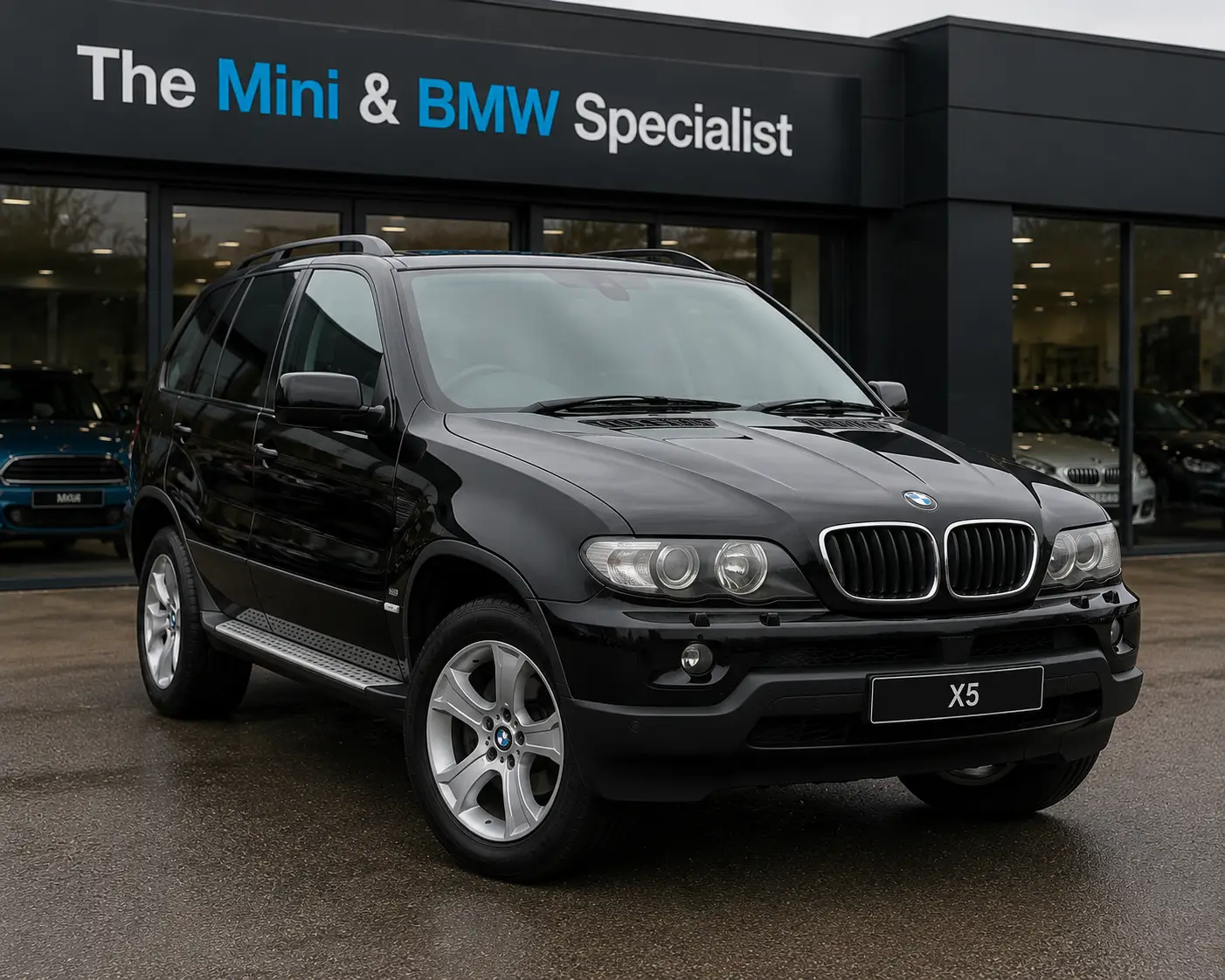
Engines
Service points for this generation
Show details for the Second generation (E70)
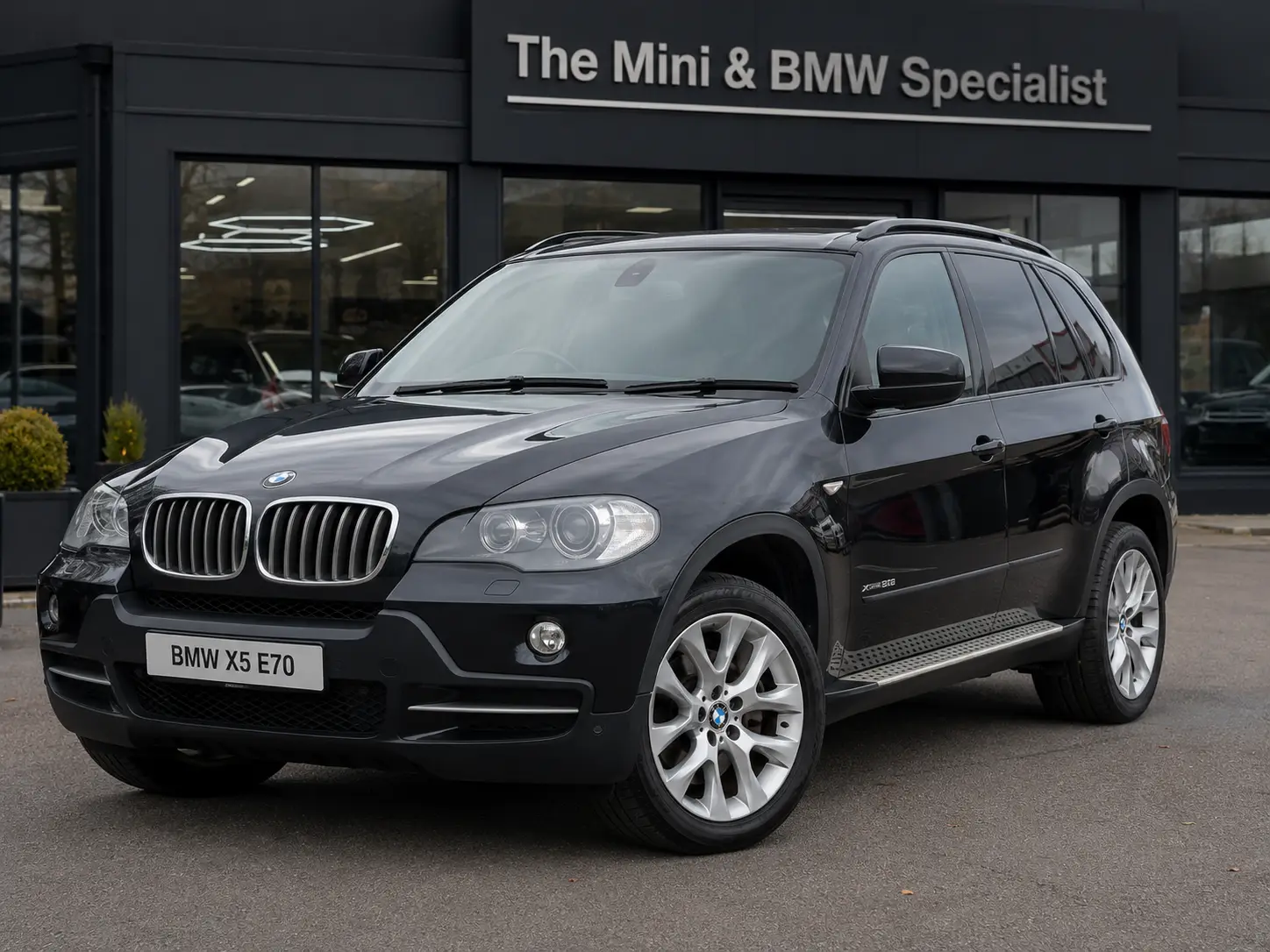
Engines
Service points for this generation
Show details for the Third generation (F15)
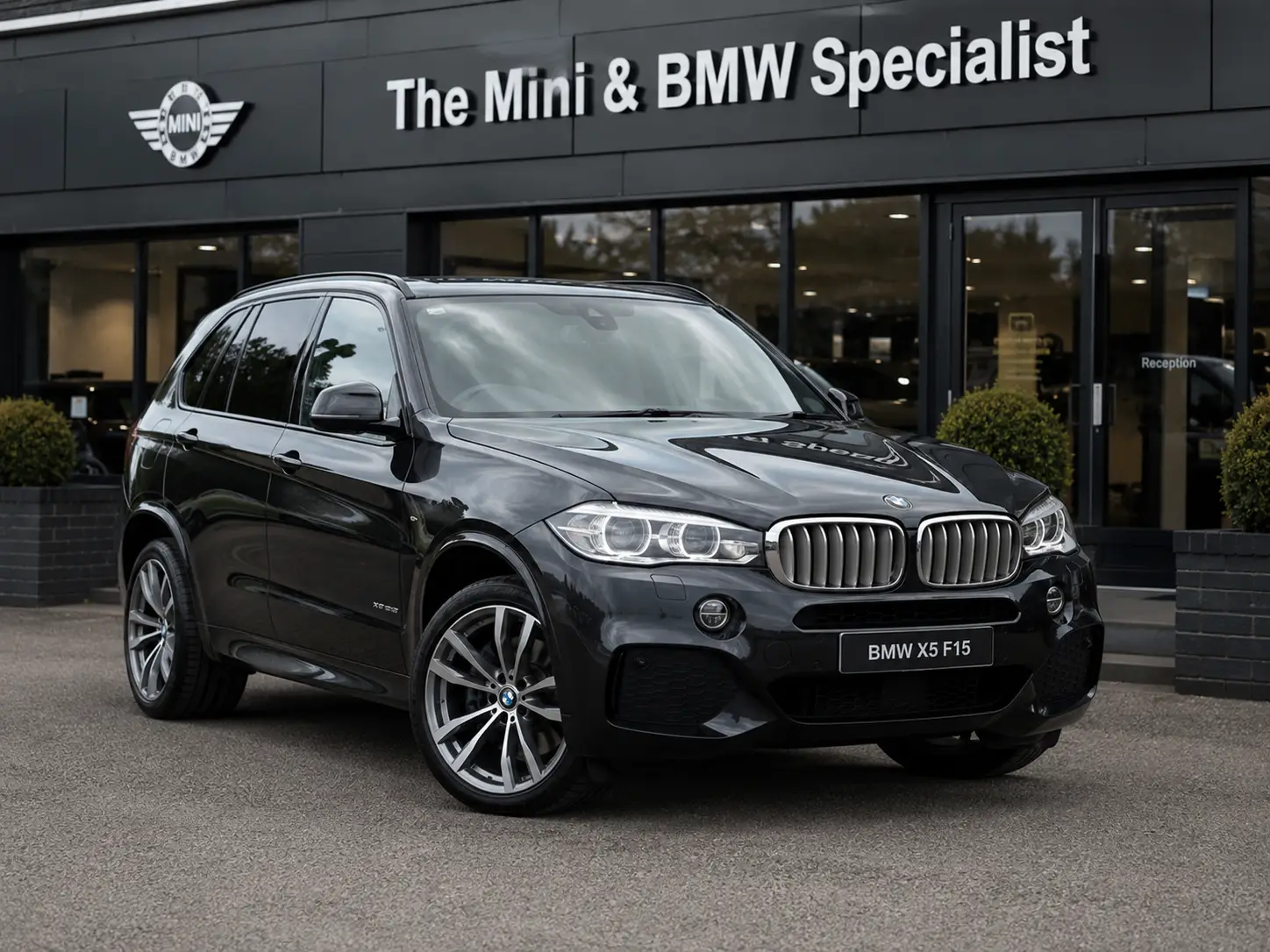
Engines
Service points for this generation
Show details for the Fourth generation (G05)
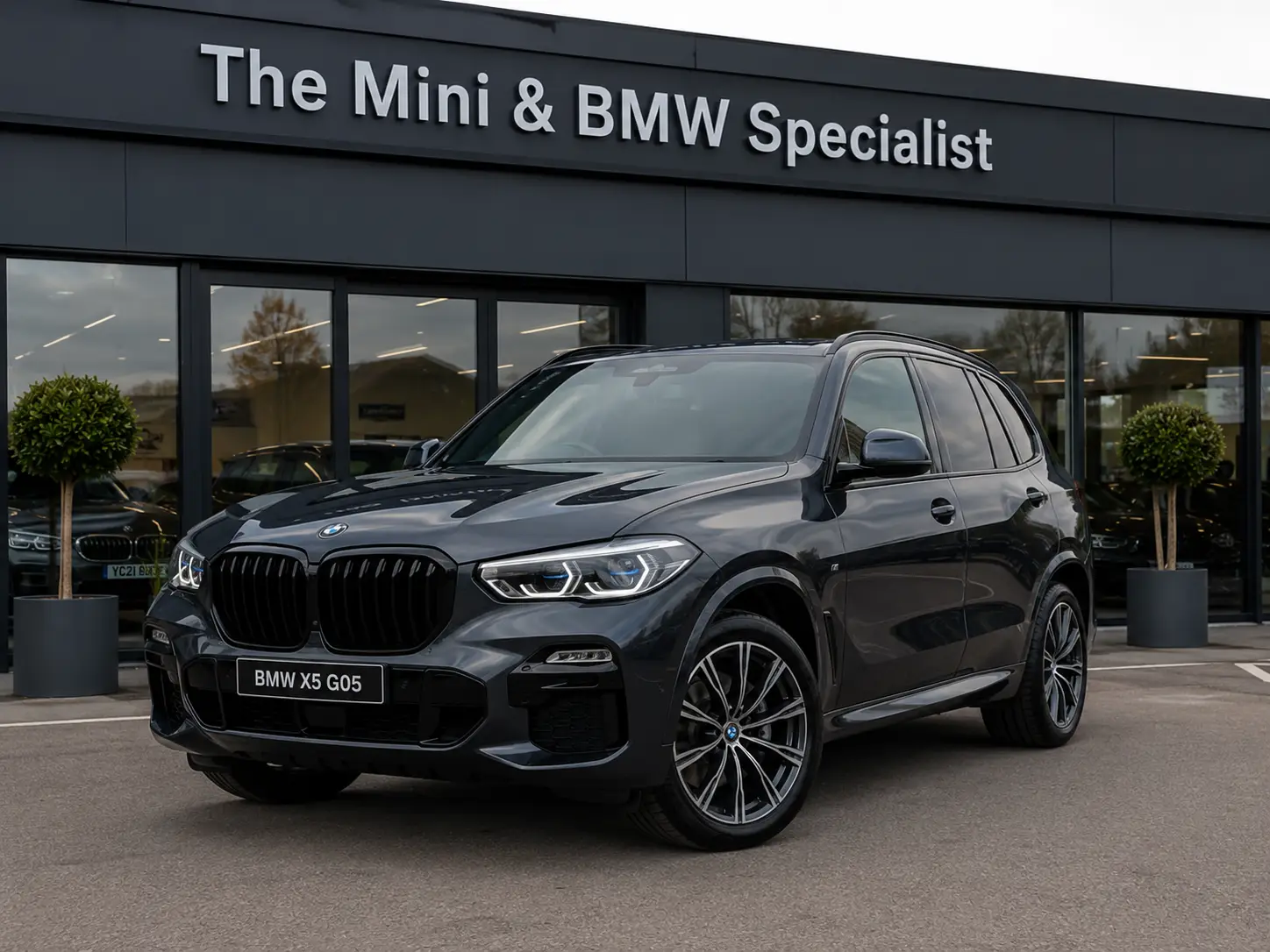
Engines
Service points for this generation
A BMW X5 service typically costs £320–£600 at an independent specialist, depending on engine type and service level. Four-cylinder diesel variants (xDrive25d) sit at the lower end; six-cylinder models (xDrive30d, xDrive40i) are mid-range; V8 petrols (xDrive50i, X5 M) and plug-in hybrids (xDrive45e) carry higher costs due to increased oil capacity, additional components, and labour-intensive access. We use genuine BMW or OE-standard parts and follow BMW's service schedules to the letter. Every service includes full diagnostic scanning via BMW-specific equipment, fluid checks, brake inspection, and digital service history update where fitted — typically at 30–50% less than main dealer prices. View X5 service options and book online. Common faults vary by generation. The E53 (1999–2006) suffers from cooling-system deterioration, transfer-case actuator failures, and air-suspension compressor wear. The E70 (2006–2013) is affected by N63 V8 hot-vee turbo oil leaks, N55 charge-pipe failures, and air-spring deterioration. The F15 (2013–2018) carries the N47 timing-chain risk on early xDrive25d models and N63TU cooling-system concerns on V8 variants. The current G05 (2018+) has fewer reported faults, though DPF blockage on short-journey diesels and air-suspension wear remain service considerations. Regular specialist servicing prevents the majority of these issues. The X5's size and complexity mean that neglected maintenance escalates quickly into expensive repairs — particularly on V8 models and air-suspension-equipped variants. View X5 service options and book online. BMW's Condition Based Servicing (CBS) system monitors oil condition, brake wear, and filter life in real time and recommends an oil service every 24 months or approximately 15,000 miles, whichever comes first. Brake fluid replacement is due every 2 years, and a major vehicle inspection every 4 years. The iDrive screen displays service notifications as each item becomes due. For V8 X5 models we recommend not stretching oil-service intervals to the full 24 months — the twin-turbo V8 runs higher thermal loads and oil degrades faster under stress. Diesel models making predominantly short urban journeys should also be serviced more frequently to protect DPF health. The xDrive45e plug-in hybrid requires annual battery-health checks alongside standard servicing. View X5 service options and book online. The G05 xDrive45e is one of the most capable plug-in hybrids on the market. It combines the B58 3.0-litre turbo inline-six with an electric motor, producing a combined 394 hp — genuinely quick — whilst the 24 kWh battery delivers up to 54 miles of pure-electric range. If you can charge at home and your daily commute is under 50 miles, you could run almost entirely on electric power during the week and still have a 400+ hp luxury SUV for longer journeys at weekends. The trade-off is complexity: the xDrive45e requires standard BMW servicing plus annual high-voltage battery-health checks, charging-system diagnostics, and electric motor inspection. Running costs are substantially lower than the V8 petrol if you charge regularly, but comparable to the xDrive30d diesel if you don't. We provide full hybrid diagnostics and servicing for all X5 PHEV variants. View X5 service options and book online. Yes. Under EU Block Exemption Regulation, retained in UK law, you can have your BMW X5 serviced by any qualified independent garage without affecting the manufacturer's warranty — provided the garage uses parts of equivalent quality and follows BMW's service schedule. This applies to all X5 variants including the xDrive45e plug-in hybrid and X5 M Competition. We use genuine BMW or OE-standard parts (often supplied by the same manufacturers that supply BMW directly), follow BMW's service schedules to the letter, and update your digital service history where fitted. Your warranty stays fully intact, typically at 30–50% less than main dealer prices. View X5 service options and book online.