

BMW X1 Service Costs
Transparent pricing, OE-quality parts and open, honest advice.
BMW X1 Service Costs – Reliable Care Without Main Dealer Prices
Select your BMW model below (or enter your registration) to view fixed service costs using our Service Calculator.
Looking for Affordable BMW X1 Servicing?
Use our BMW X1 Service Calculator to view fixed prices, compare service levels, and book your next service online with confidence.
We service all BMW X1 models — from the practical sDrive18d to the powerful xDrive25i — using OE-standard parts to protect your BMW’s performance and warranty.
Our prices include parts, labour, and VAT as standard.
We also reset the onboard service computer and update your BMW’s digital service history (where supported).
Conveniently located near Birmingham with easy access to the M5 and M6, we’re trusted specialists for petrol, diesel, and xDrive BMW X1 servicing across the West Midlands.
Why Choose Us for Your BMW X1 Servicing?
Transparent Pricing
Fixed prices with parts, labour, and VAT included — no hidden costs.
Digital Service Updates
Service computer reset and digital history updated (where fitted).
Genuine OE-Standard Parts
We use OE-spec parts to protect your performance and warranty.
All X1 Variants Covered
Petrol, diesel, and xDrive versions all serviced with care.
Convenient Location
Near Birmingham with easy access to M5 and M6 — serving Great Bridge, Dudley, Wolverhampton, and beyond.
Trusted by BMW Owners
Proven track record for honest advice, expert service, and lasting customer relationships.
BMW X1 Fixed-Price Servicing Guide
Important: The service prices shown below are typical examples. Exact pricing varies by model, engine size, and fuel type. For an exact quote, please select your model using the Service Calculator above.
All services include VAT, parts, labour, service computer reset, and digital service record updates (where fitted). No hidden charges — just clear, honest pricing.
| Service | What’s Included | Price |
|---|---|---|
| Bronze Service | Oil and filter change using BMW spec oil and filter | From £150.00 |
| Silver Service (4 Cylinder) | Oil, filter, and air filter change using BMW spec parts | From £200.00 |
| Gold Service (4 Cylinder) | Oil, filter, air filter, and cabin filter change using BMW spec parts | From £280.00 |
| Platinum Service (4 Cylinder Petrol) | Gold Service plus spark plug replacement | From £425.00 |
| Platinum Service (Diesel) | Gold Service plus fuel filter replacement | From £375.00 |
| Brake Fluid Flush | Flush and replacement using high-performance DOT4 brake fluid | £100.00 |
| MOT | Official Ministry of Transport test for vehicles over 3 years old | £50.00 |
| Diagnostic Check | Dealer-level BMW diagnostic scan and technician report | £80.00 |
What’s Included with Your BMW X1 Service?
- Fixed-price servicing with genuine or OE-standard parts
- Onboard service computer reset and digital history update (where fitted)
- Brake, suspension, xDrive, and engine health checks
- Service options tailored for petrol, diesel, and xDrive models
- Full invoice transparency — no hidden charges
Need Help Choosing the Right BMW X1 Service?
Use our BMW X1 Service Calculator at the top of this page to explore all service options, compare prices, and book online with confidence.
Prefer to talk? Call us on 0330 999 0020 — our team is happy to help with advice and bookings.
Knowing which generation your BMW X1 belongs to matters for servicing. Engines, oil specifications, service intervals, and common faults all vary significantly between generations. Use the table below to identify your generation, then explore the details for engine codes, body styles, and service points. The E84 was BMW's first subcompact crossover SUV, launched in 2009 as the entry point to the X-Series range. Based on the E90 3 Series platform with a 2,760 mm wheelbase, the E84 was unusual for its segment in offering rear-wheel drive (sDrive) as standard — a layout inherited from the 3 Series rather than the front-wheel-drive architecture used by most compact SUV competitors. xDrive all-wheel drive was optional across most variants. Originally presented as the Concept X1 at the 2008 Paris Motor Show, development was fast-tracked in response to rising fuel prices and demand for smaller, more efficient SUVs. A mid-life facelift arrived in 2013, bringing restyled exterior and interior elements alongside BMW EfficientDynamics technology across the range. Over 820,000 E84s were sold globally during its six-year production run — a strong commercial success that validated BMW's decision to expand the X-Series downward. The E84 was replaced by the front-wheel-drive-based F48 X1 in mid-2015. The E84 petrol range spanned naturally aspirated and turbocharged four-cylinder and six-cylinder engines. The sDrive18i (2009–2015) used the N46B20 2.0-litre naturally aspirated four-cylinder producing 150 hp and 200 Nm — adequate for urban driving but unexceptional on motorways. From 2011, the 20i variants received the N20B20 2.0-litre turbocharged four-cylinder with 184 hp and 270 Nm, delivering a significant improvement in mid-range torque and responsiveness via BMW's TwinPower Turbo technology. The xDrive28i (2011–2015) used the same N20 architecture producing 245 hp and 350 Nm — the most powerful four-cylinder in the range. Early E84s (2009–2011) also offered the xDrive25i with the N52B30 3.0-litre naturally aspirated inline-six producing 218 hp and 250 Nm — a smooth, refined engine but rare on the used market. The N46 is known for oil leaks, VANOS issues, and Valvetronic complications; the N20 is more responsive but requires preventive attention to the oil pump chain, high-pressure fuel pump, and VANOS system — particularly beyond 100,000 miles. The diesel range was built entirely around the N47 2.0-litre turbodiesel four-cylinder — BMW's most popular diesel of the era. The sDrive/xDrive18d (2009–2015) produced 143 hp and 320 Nm, offering the best fuel economy in the range at 50+ mpg on a motorway run. The sDrive/xDrive20d (2009–2015) produced 177 hp (pre-facelift) or 184 hp (post-2012 facelift) and 380 Nm — the sweet spot of the E84 lineup, combining strong low-end torque with genuine efficiency. The range-topping xDrive23d (2009–2012, later renamed xDrive25d) used a twin-turbo variant of the N47 producing 218 hp and 450 Nm — brisk performance with impressive fuel economy. The N47 is a proven and widely used engine, but its rear-mounted timing chain is a well-documented weak point: chain stretch and tensioner wear can cause rattling on cold start and, if ignored, catastrophic engine failure. Post-2011 N47 TU (technical update) variants improved chain longevity, but all E84 diesels benefit from early timing-chain inspection — particularly examples with over 80,000 miles or a history of extended service intervals. Hybrid and electric variants were not available for the E84. BMW's electrification of the X1 did not begin until the third-generation U11 (2022+), which introduced the fully electric iX1. The E84's rear-wheel-drive platform was not designed to accommodate hybrid or electric powertrains. E84 ownership is generally straightforward by modern BMW standards, but engine choice determines the service profile. The N47 diesel — by far the most common UK variant — is robust and economical but demands timing-chain vigilance: listen for a rattling noise on cold start, particularly on pre-2011 examples, and budget for chain and tensioner replacement (£1,200–£2,000) as preventive maintenance beyond 80,000 miles. The N20 turbo petrol is responsive and refined but requires attention to the oil pump chain, high-pressure fuel pump, and vacuum pump — all known failure points beyond 100,000 miles. The naturally aspirated N46 petrol is the least powerful option and suffers from oil consumption, VANOS wear, and Valvetronic motor failures — check oil level regularly and address any warning lights promptly. The rear-wheel-drive layout means conventional propshaft, differential, and rear suspension maintenance applies — unlike the front-wheel-drive F48 successor. xDrive variants add transfer-case servicing and front-axle maintenance. The six-speed manual gearbox is durable; the ZF automatic (six-speed early, eight-speed later) is reliable but benefits from fluid and filter changes every 60,000 miles. Suspension bushes — particularly rear trailing-arm bushes — wear on higher-mileage examples and noticeably affect handling. Brake wear is moderate; rear pads typically outlast fronts by 50%. The E84 is a practical, well-engineered compact SUV that rewards regular specialist servicing and prompt attention to known engine-specific weak points. The F48 marked a fundamental engineering shift for the X1, moving from the E84's rear-wheel-drive 3 Series platform to the front-wheel-drive UKL2 architecture shared with the 2 Series Active Tourer and MINI Countryman. Launched in mid-2015 and produced through to mid-2022, the F48 was shorter in overall length than its predecessor yet offered significantly more interior space — particularly rear legroom and boot capacity — thanks to the transverse engine layout and flat floor. sDrive (front-wheel drive) was standard on most variants, with xDrive all-wheel drive optional or standard on higher-powered models. The engine range moved entirely to BMW's modular B-series family: three-cylinder and four-cylinder petrol and diesel units replacing the older N-series engines. A mid-life facelift in 2019 brought revised styling, updated iDrive, and the addition of the xDrive25e plug-in hybrid — the first electrified X1. The F48 sold strongly across Europe and the UK, establishing the X1 as BMW's volume SUV and a genuine competitor to the Audi Q3 and Mercedes GLA. The F48 petrol range was built on BMW's modular engine family. The sDrive18i (2015–2022) used the B38 1.5-litre turbocharged three-cylinder producing 136 hp and 220 Nm — a compact, efficient unit shared with the MINI Cooper, offering adequate performance for urban and commuter use with fuel economy approaching 45 mpg. The sDrive/xDrive20i (2015–2022) featured the B48 2.0-litre turbocharged four-cylinder producing 192 hp and 280 Nm — the most popular petrol variant in the UK, delivering a strong balance of performance and efficiency via TwinPower Turbo technology with direct injection, Valvetronic, and double-VANOS variable valve timing. The xDrive25i (2015–2019, selected markets) used a higher-output B48 variant producing 231 hp and 350 Nm. Both the B38 and B48 are part of BMW's modular 0.5-litre-per-cylinder architecture and benefit from chain-driven timing systems with improved longevity compared to the older N-series engines. The B48 requires attention to operating temperature and injector condition at higher mileages; the B38 three-cylinder is generally reliable but demands quality fuel and regular oil servicing to maintain turbocharger health. Diesel variants dominated UK sales of the F48. The sDrive/xDrive18d (2015–2022) used the B47 2.0-litre turbocharged four-cylinder producing 150 hp and 330 Nm — the entry-level diesel offering excellent fuel economy (50+ mpg achievable) and sufficient torque for everyday driving. The sDrive/xDrive20d (2015–2022) produced 190 hp and 400 Nm from the same B47 architecture — the sweet spot of the F48 range, combining strong mid-range pull with genuine efficiency. The xDrive25d (2015–2019) used a twin-turbo variant of the B47 producing 231 hp and 450 Nm — brisk performance for a compact SUV. The B47 is a significant improvement over the E84's N47: the timing chain moves from the rear of the engine to the front, making inspection and replacement far more accessible and substantially reducing the catastrophic failure risk that plagued the N47. DPF health, AdBlue replenishment (on post-2018 Euro 6d models), and quality fuel remain the primary diesel service considerations. The xDrive25e plug-in hybrid (2020–2022) arrived with the 2019 facelift — the first electrified X1. It combined the B38 1.5-litre turbocharged three-cylinder petrol engine (125 hp) with a rear-mounted electric motor (95 hp), producing a combined 220 hp and 385 Nm. A 9.7 kWh lithium-ion battery provided up to 35 miles of pure-electric range (WLTP), with the petrol engine powering the front wheels and the electric motor driving the rears — creating an electrically driven all-wheel-drive system without a mechanical transfer case. The xDrive25e suited urban commuters with home charging, offering genuine electric-only capability for short journeys whilst retaining petrol range for longer trips. Battery conditioning and high-voltage system diagnostics are the primary service additions over conventional F48 variants. Fully electric variants were not available for the F48; the all-electric iX1 arrived with the third-generation U11 in 2022. The F48 is generally more reliable and easier to service than the E84, thanks to the newer B-series engine family and improved component access. The B47 diesel — the most common UK variant — resolves the E84's N47 timing-chain anxiety with a front-mounted chain that is accessible for inspection and replacement without engine removal; chain longevity is substantially improved, though preventive replacement remains advisable beyond 120,000 miles on high-mileage examples. DPF management is the primary diesel concern: short journeys without regeneration cycles cause soot buildup, leading to restricted performance and eventual DPF failure (£1,500–£2,500 to replace). The B48 petrol is robust and well-proven across the BMW range; operating temperature is higher than older engines, so oil quality and coolant condition matter — use only BMW-approved LL-04 specification oil. The B38 three-cylinder is compact and efficient but can develop injector issues and turbocharger wear at higher mileages; quality fuel and regular servicing are essential. The xDrive25e hybrid adds high-voltage battery, electric motor, and charging-system diagnostics — specialist equipment is required for any hybrid-specific faults, though the system has proven reliable in real-world use. The UKL2 platform's front-wheel-drive layout means no propshaft or rear differential servicing on sDrive models — reducing running costs compared to the rear-wheel-drive E84. The Aisin eight-speed automatic is durable but benefits from fluid changes every 60,000 miles. Suspension is conventional MacPherson strut front, multi-link rear — bushes and drop links are the most common wear items. The F48 is an accessible, practical ownership proposition that rewards regular specialist servicing and prompt attention to DPF health on diesel variants. The U11 is the current-generation X1, launched in late 2022 as a comprehensive evolution of the F48 on the same UKL2 platform. Larger, more spacious, and significantly more technology-rich than its predecessor, the U11 introduces BMW's most diverse powertrain lineup for the X1 — spanning three-cylinder petrol, four-cylinder diesel, plug-in hybrid, and the fully electric iX1. The design adopts BMW's current styling language with a larger kidney grille, slimmer headlights, and a more upright, muscular stance. Interior quality takes a substantial step forward with the curved BMW Operating System 8 display (combining a 10.25-inch instrument cluster and 10.7-inch touchscreen), improved materials, and a flat-floor layout offering generous rear legroom and a 540-litre boot. All combustion variants now feature 48-volt mild-hybrid technology (MHEV) as standard, improving start-stop refinement and adding a 14 kW electric boost motor. The seven-speed Getrag dual-clutch transmission replaces the previous Aisin eight-speed torque-converter automatic across most variants. The U11 competes directly with the Audi Q3, Mercedes GLA, and Volvo XC40 — and the iX1 electric variant positions it against the growing battery-electric compact SUV segment. The U11 petrol range continues with BMW's modular engine family, now with 48-volt mild-hybrid support across all variants. The sDrive18i (2022–present) uses the B38 1.5-litre turbocharged three-cylinder producing 136 hp and 230 Nm — paired with the seven-speed DCT, it delivers adequate urban performance with fuel economy approaching 45 mpg. The xDrive23i (2022–present) features the B48 2.0-litre turbocharged four-cylinder with 48V MHEV producing 218 hp and 360 Nm — the 14 kW electric boost motor fills torque gaps during gear changes and improves low-speed response. The range-topping M35i xDrive (2024–present) uses a high-output B48 variant producing 300 hp and 400 Nm — the most powerful X1 ever, reaching 0–62 mph in 5.4 seconds. All petrol engines feature direct injection, Valvetronic, double-VANOS, and chain-driven timing. The B48 is well-proven across the BMW range and benefits from improved durability compared to the older N20; the B38 three-cylinder is efficient but demands quality fuel and regular servicing to maintain turbocharger longevity. Diesel variants remain popular in the UK and European markets. The sDrive18d (2022–present) uses the B47 2.0-litre twin-scroll turbocharged four-cylinder with 48V MHEV producing 150 hp and 360 Nm — the entry-level diesel offering excellent fuel economy (50+ mpg achievable) with the electric boost motor smoothing out low-speed driving and improving stop-start transitions. The xDrive23d (2022–present) produces 197 hp and 400 Nm from the same B47 architecture with MHEV — brisk performance for a compact SUV with genuine long-distance efficiency. The B47 continues its strong reliability record from the F48; the front-mounted timing chain is accessible and durable, and the 48V system reduces turbo lag at low revs. DPF management, AdBlue replenishment, and quality fuel remain the primary diesel service considerations — short-journey use without regeneration cycles is the single biggest threat to DPF health and longevity. The U11 offers BMW's most comprehensive electrified X1 lineup. The xDrive25e plug-in hybrid (2022–present) combines the B38 1.5-litre turbo three-cylinder with a rear-mounted 81 kW electric motor, producing a combined 245 hp and 478 Nm with a 16.3 kWh battery providing up to 55 miles of pure-electric range (WLTP). The xDrive30e (2024–present) upgrades to a 130 kW electric motor with a combined 326 hp and 478 Nm — genuine performance-car acceleration in a compact SUV. Both PHEVs use the petrol engine for the front axle and the electric motor for the rear, creating electrically driven all-wheel drive without a mechanical transfer case. The fully electric iX1 xDrive30 (2022–present) uses dual BMW eDrive 5.0 permanent-magnet synchronous motors producing 313 hp and 494 Nm, powered by a 64.7 kWh lithium-ion battery delivering up to 272 miles of range (WLTP). The iX1 supports rapid DC charging up to 130 kW, reaching 10–80% in approximately 29 minutes. The iX1 represents BMW's entry-level electric SUV and competes directly with the Mercedes EQA and Volvo EX40. All electrified variants require specialist high-voltage diagnostics for battery, motor, and charging-system faults. The U11 builds on the F48's solid reliability foundation whilst adding complexity through 48V mild-hybrid systems and expanded electrification options. The B47 diesel remains the most straightforward ownership proposition — robust, efficient, and well-understood by specialists; DPF health is the primary concern, particularly for owners making predominantly short urban journeys. The B48 petrol with MHEV is well-proven and durable; the 48V system adds a starter-generator and small battery that require no routine maintenance but benefit from specialist diagnostics if fault codes arise. The B38 three-cylinder suits low-mileage urban use but demands quality fuel and timely oil changes. The seven-speed DCT transmission is generally reliable but more sensitive to driving style than a torque-converter automatic — aggressive low-speed manoeuvring and hill-start clutch slip can accelerate wear; fluid changes every 60,000 miles are advisable despite BMW's sealed-for-life guidance. PHEV variants (xDrive25e, xDrive30e) add high-voltage battery conditioning, electric motor diagnostics, and charging-system checks — specialist equipment is essential for any hybrid-specific faults. The iX1 requires EV-specific servicing: battery health monitoring, thermal management system checks, brake fluid changes (regenerative braking reduces pad wear significantly), and cabin filter replacement. Suspension is MacPherson strut front, multi-link rear — control arm bushes and drop links are the most common wear items on higher-mileage examples. The Operating System 8 infotainment is sophisticated and benefits from over-the-air updates; specialist diagnostics are required for screen, connectivity, or sensor faults. The U11 is a modern, technology-dense platform that rewards specialist knowledge — particularly for PHEV and iX1 variants where high-voltage competency is essential. Found your model? Get an exact service price in seconds using the Service Calculator at the top of this page, or call us to discuss your specific car.Generations of the BMW X1
Generation
Years
Chassis codes
Body styles
Platform
First generation (E84)
2009–2015
E84
5-door SUV
BMW L2 platform (E90 3 Series based, rear-wheel drive)
Second generation (F48)
2015–2022
F48
5-door SUV
BMW UKL2 platform (front-wheel drive)
Third generation (U11)
2022–present
U11
5-door SUV
BMW UKL2 platform (front-wheel drive, evolved)
Show details for the First generation (E84)
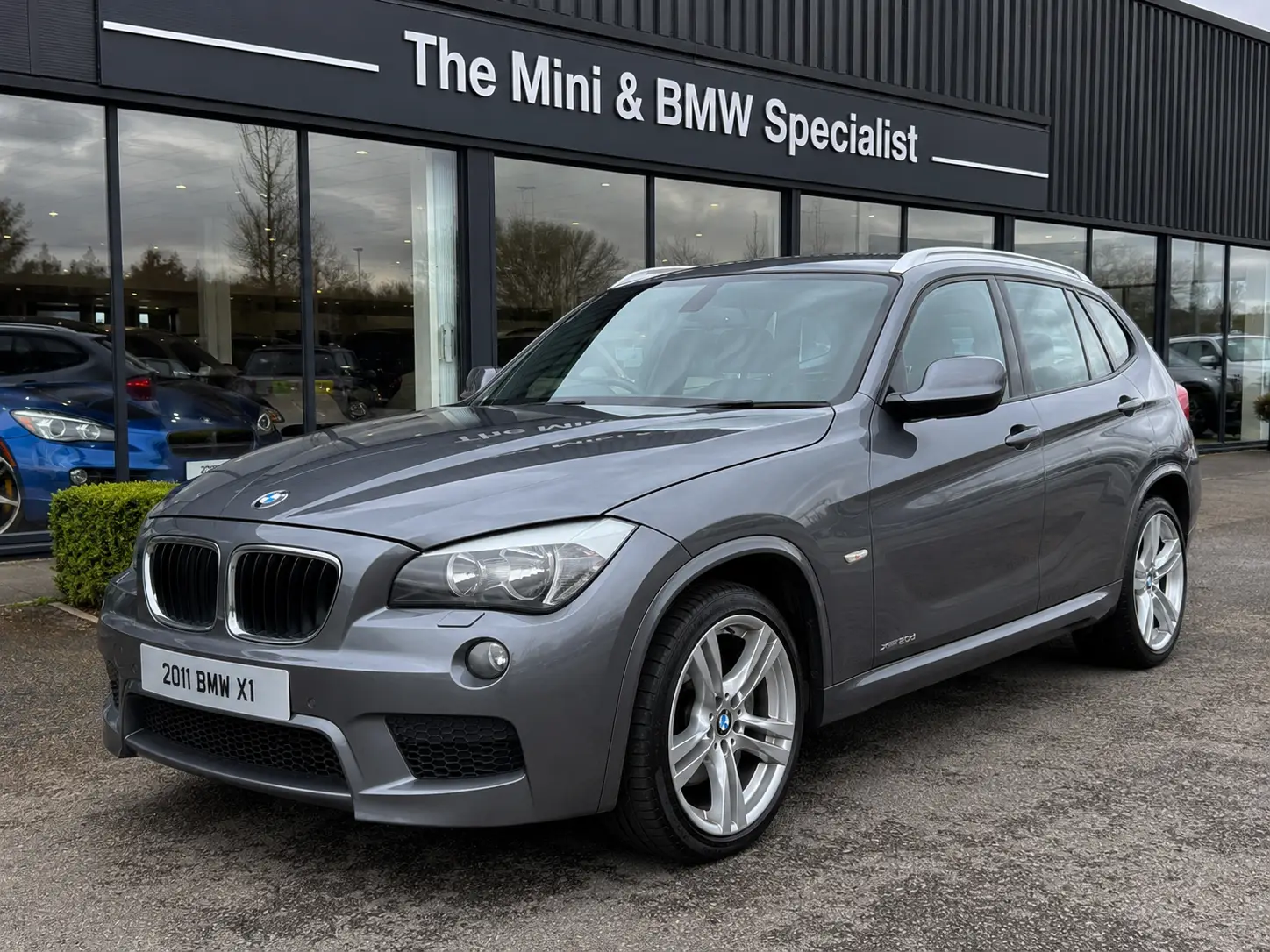
Engines
Service points for this generation
Show details for the Second generation (F48)
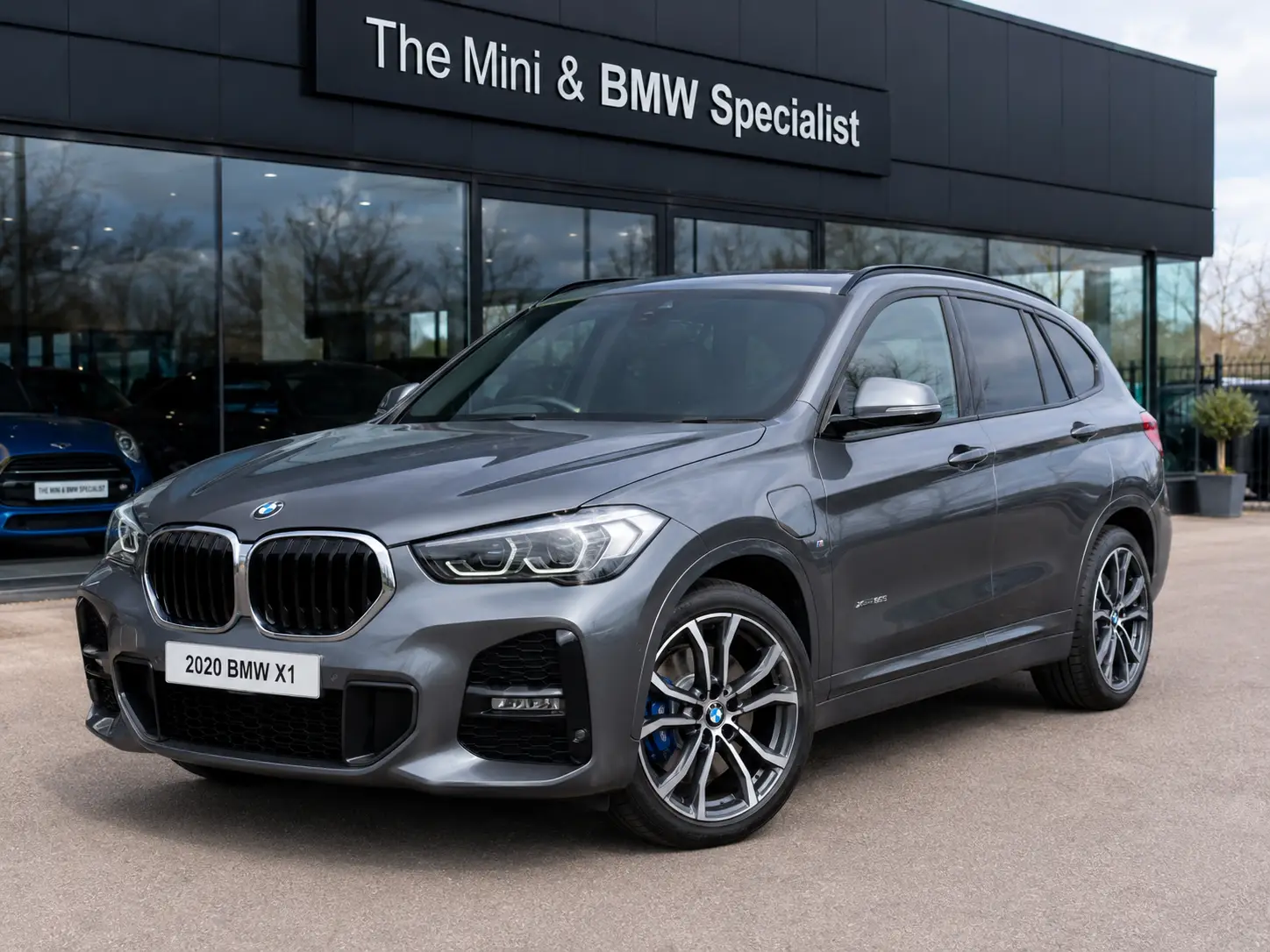
Engines
Service points for this generation
Show details for the Third generation (U11)
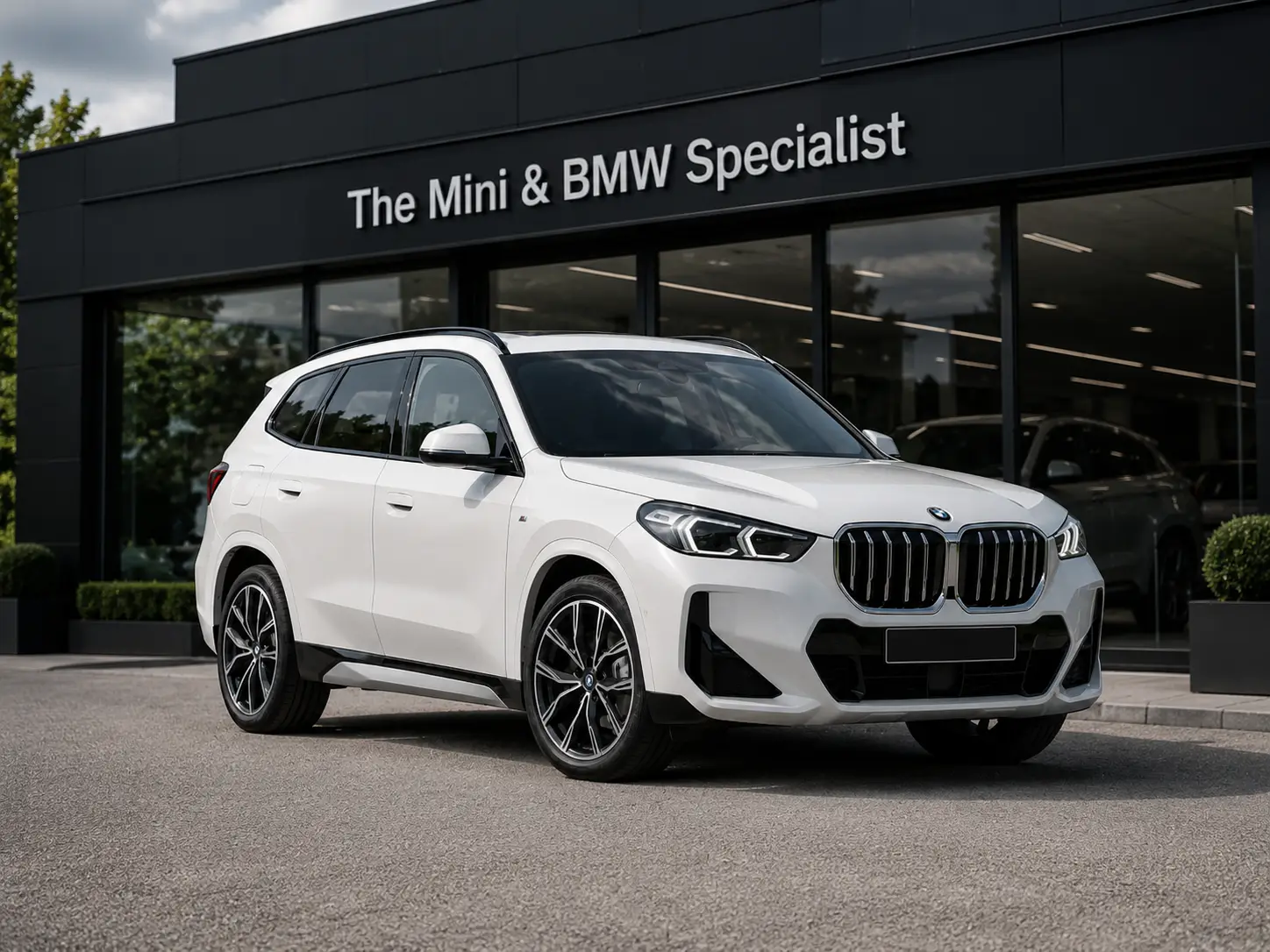
Engines
Service points for this generation
A BMW X1 service typically costs £150–£450 at an independent specialist, depending on engine type and service level. Diesel variants (18d, 20d, 23d) sit in the mid-range; petrol models (18i, 20i, 23i) are similar. PHEV (xDrive25e/30e) and iX1 electric variants may carry a small premium for hybrid-specific or high-voltage checks. We use genuine BMW or OE-standard parts and follow BMW's service schedules to the letter. Every service includes full diagnostic scanning via BMW-specific equipment, fluid checks, brake inspection, and digital service history update where fitted — typically at 30–50% less than main dealer prices. View X1 service options and book online. It depends on the generation. The first-generation E84 (2009–2015) used the N47 diesel engine with a rear-mounted timing chain — a well-documented weak point. Chain stretch and tensioner wear can cause a rattling noise on cold start and, if ignored, catastrophic engine failure. Preventive replacement is strongly recommended beyond 80,000 miles on E84 models, costing £1,200–£2,000. The second-generation F48 (2015–2022) and current U11 (2022+) use the B47 diesel with a front-mounted timing chain — far more accessible and substantially more durable. Chain failure is rare on B47 engines, though inspection remains advisable beyond 120,000 miles. If you own an E84 X1 diesel, a timing-chain health check should be your first service priority. View X1 service options and book online. BMW's Condition Based Servicing (CBS) system monitors oil condition, brake wear, and filter life in real time and recommends an oil service every 24 months or approximately 15,000 miles, whichever comes first. Brake fluid replacement is due every 2 years, and a major vehicle inspection every 4 years. The iDrive screen displays service notifications as each item becomes due. For diesel X1s making predominantly short urban journeys, we recommend not stretching oil-service intervals to the full 24 months — short runs without DPF regeneration cycles accelerate soot buildup and oil contamination. PHEV and iX1 variants require annual battery-health checks alongside standard servicing. View X1 service options and book online. Common faults vary by generation. The E84 (2009–2015) is most affected by N47 timing-chain wear, turbocharger failures, and injector faults on diesel models; petrol N20 variants can develop oil pump chain and high-pressure fuel pump issues beyond 100,000 miles. The F48 (2015–2022) is generally more reliable — DPF blockage from short-journey use is the primary diesel concern, whilst the B48 petrol can develop coolant leaks at higher mileages. The current U11 (2022+) has minimal reported faults, though the seven-speed DCT can exhibit occasional judder at low speeds if not driven sympathetically. Regular specialist servicing prevents the majority of these issues. Early diagnosis — particularly timing-chain inspection on E84 diesels and DPF health checks on F48/U11 models — avoids expensive consequential damage. View X1 service options and book online. Yes. Under EU Block Exemption Regulation, retained in UK law, you can have your BMW X1 serviced by any qualified independent garage without affecting the manufacturer's warranty — provided the garage uses parts of equivalent quality and follows BMW's service schedule. This applies to all X1 variants including the iX1 electric and xDrive25e/30e plug-in hybrid models. We use genuine BMW or OE-standard parts (often supplied by the same manufacturers that supply BMW directly), follow BMW's service schedules to the letter, and update your digital service history where fitted. Your warranty stays fully intact, typically at 30–50% less than main dealer prices. View X1 service options and book online.