

BMW 3 Series Service Costs
Transparent pricing, OE-quality parts and open, honest advice.
BMW 3 Series Service Costs – Reliable Care Without Main Dealer Prices
Select your BMW model below (or enter your registration) to view fixed service costs using our Service Calculator.
Affordable BMW 3 Series Servicing by Experts
Use our BMW 3 Series Service Calculator to compare service options, see fixed prices, and book your service online with confidence.
We service all 3 Series models — from the efficient 316d and 318i to the powerful 330d and hybrid 330e — using OE-standard parts for maximum reliability and warranty protection.
Our servicing always includes parts, labour, and VAT.
We also reset the onboard service computer and update your BMW’s digital service history (where fitted).
Conveniently located in Great Bridge, West Midlands (DY4 7LH), with easy access to Birmingham, Wolverhampton, and the M5 and M6 motorways — trusted by BMW 3 Series owners across the region.
Why Choose Us for Your BMW 3 Series Servicing?
Transparent Fixed Pricing
Fixed prices with parts, labour, and VAT included — no hidden extras.
Digital Service Updates
We reset the onboard service computer and update your digital BMW history (where fitted).
Genuine OE-Standard Parts
Only OE-spec parts used — protecting your BMW’s performance and warranty.
All Engines & Models Covered
Petrol, diesel, and plug-in hybrid 3 Series models expertly serviced.
Convenient West Midlands Location
Near Birmingham, Wolverhampton, Dudley — easy access from M5 and M6.
Trusted by BMW Owners
Known for expert service, honest advice, and loyal customer relationships.
BMW 3 Series Fixed-Price Servicing Guide
Important: The service prices shown below are typical examples. Exact pricing varies by model, engine size, and fuel type. For an exact quote, please select your model using the Service Calculator above.
All services include VAT, parts, labour, service computer reset, and digital service record updates (where fitted). No hidden charges — just clear, honest pricing.
| Service | What’s Included | Price |
|---|---|---|
| Bronze Service | Oil and filter change using BMW spec oil and filter | From £150.00 |
| Silver Service (4 Cylinder) | Oil, filter, and air filter change using BMW spec parts | From £200.00 |
| Gold Service (4 Cylinder) | Oil, filter, air filter, and cabin filter change using BMW spec parts | From £280.00 |
| Platinum Service (4 Cylinder Petrol) | Gold Service plus spark plug replacement | From £425.00 |
| Platinum Service (Diesel) | Gold Service plus fuel filter replacement | From £375.00 |
| Brake Fluid Flush | Flush and replacement using high-performance DOT4 brake fluid | £100.00 |
| MOT | Official Ministry of Transport test for vehicles over 3 years old | £50.00 |
| Diagnostic Check | Dealer-level BMW diagnostic scan and technician report | £80.00 |
What’s Included with Your BMW 3 Series Service?
- Fixed-price servicing with genuine or OE-standard parts
- Onboard service computer reset and digital history update (where fitted)
- Brake, steering, suspension, and engine health checks
- Service options tailored for petrol, diesel, and M Sport models
- Full invoice transparency — no hidden charges
Need Help Choosing the Right BMW 3 Series Service?
Use our BMW 3 Series Service Calculator at the top of this page to explore all service options for your car, compare prices, and book online with confidence.
Prefer to talk? Call us on 0330 999 0020 — our team is happy to help with advice and bookings.
Knowing which generation your BMW 3 Series belongs to matters for servicing. Engines, oil specifications, service intervals, and common faults all vary significantly between generations. Use the table below to identify your generation, then explore the details for engine codes, body styles, and service points. The E21 is the car that started the 3 Series. Launched in 1975 as the successor to the BMW 02 Series (1502, 1602, 2002), the E21 created the compact executive segment that BMW has dominated ever since. It was the first car to wear the "3 Series" badge and established the template — rear-wheel-drive, longitudinally-mounted engine, near-50:50 weight distribution, driver-focused cabin with the angled centre console — that defined every 3 Series until the F44 Gran Coupé broke the rule four decades later. The E21 was a clean break in styling from the 02 Series it replaced. Paul Bracq, BMW's Director of Design from 1970 to 1974, set the visual direction: a low bonnet, the now-iconic kidney grille standing proud of the radiator cover, and the Hofmeister kink at the C-pillar. The Design Museum London later named the E21 one of "fifty cars that changed the world." Inside, the angled driver-focused dashboard became a BMW signature — every subsequent 3 Series until very recently inherited that interior philosophy. The E21 was offered only as a two-door saloon (BMW called it a coupé, but mechanically and structurally it was a saloon). A small number of convertible conversions were produced by Karosserie Baur — the TopCabriolet — featuring a removable targa roof panel and a separate rear soft-top. Only 4,595 Baur TopCabriolets were built between 1978 and 1981, making them rare even in the classic market today. There was no factory M3 variant — the M3 nameplate started with the E30. The closest E21 equivalent was the 323i, the six-cylinder flagship introduced in 1977. Production ran from June 1975 to December 1983 in Munich, with 1,364,039 cars built across the generation. Many were exported to the United States as the 320i (with mandatory federal-spec bumpers, sealed-beam headlights, and a detuned engine), where the E21 nearly doubled BMW's American sales volume over its run. M10 (1.6 litre four-cylinder, carburettor) — fitted to the 315 (1981–1983) and 316 (1975–1980). The economy entry-level engine. The 315 was a stripped-down post-oil-crisis variant kept on sale alongside the early E30 to meet entry-price points. Carburetted, 55–66 kW. M10 (1.8 litre four-cylinder) — fitted to the 316 from 1980 (carburettor, 66 kW) and the 318 (1975–1980, carburettor, 72 kW) and 318i (1980–1982, fuel injection, 77 kW). The volume seller. Bosch K-Jetronic fuel injection on the 318i was advanced for the period and a meaningful improvement over the carburettor cars. M10 (2.0 litre four-cylinder, fuel injected) — fitted to the 320i (1975–1977, 92 kW). Bosch K-Jetronic injection. The four-cylinder 320 was replaced from 1977 by the six-cylinder 320/6 below — so any "320" from 1977 onwards is the M20 inline-six car. M20 (2.0 litre inline-six, carburettor) — fitted to the 320/6 from 1977 to 1982 (90 kW). The first appearance of the M20 inline-six engine family that would go on to power the E28 5 Series and E30 3 Series. Distinguished from the four-cylinder cars by quad round headlights. Solex four-barrel carburettor. M20 (2.3 litre inline-six, fuel injected) — fitted to the 323i from 1978 to 1982 (105 kW). The E21 flagship. Bosch K-Jetronic injection, 8.7 seconds to 100 km/h, 190 km/h top speed — figures comparable to genuine sports cars of the era. The 323i had disc brakes all round (other E21s had rear drums). Options included a five-speed close-ratio dogleg gearbox and a 25% limited-slip differential. This is the E21 most often kept or restored today. The E21 was never offered with a diesel engine. The first diesel 3 Series was the 324d in the E30 generation (1985 onwards). Classic-car territory. The E21 finished production in 1983, so even the newest example is now over 40 years old. Customers booking E21 service work are almost always enthusiasts maintaining a restored or preserved car, not daily drivers. Service approaches and parts availability differ accordingly. We're happy to discuss before booking — some jobs we'll do happily, others we'll point to a marque-specialist restorer. M10 four-cylinder reliability. The M10 engine family (1962–1988) is one of the most durable BMW engines ever made — the same family powered the BMW 2002 and was the basis of BMW's first Formula 1 turbo engine. Routine service on an M10 E21 is straightforward and inexpensive. Carburettor cars need carburettor maintenance; injection cars need K-Jetronic-specific knowledge. M20 inline-six and the timing belt. The 320/6 and 323i use the M20 inline-six, which is timing belt-driven (not chain). The M20 timing belt is the single most important service item on these engines — failure causes valve-to-piston contact and catastrophic damage. We recommend a 4-year or 50,000-mile change interval regardless of mileage, and we strongly advise replacing tensioner and water pump at the same time. This applies equally to E21 323i and later E30 320i/325i/325e. K-Jetronic fuel injection. The 320i, 318i, and 323i use Bosch K-Jetronic continuous-flow mechanical injection — a system that requires specific knowledge to diagnose and service. Cold-start issues, idle problems, and erratic running on injection E21s are almost always K-Jetronic system issues: fuel distributor, warm-up regulator, frequency valve, fuel pressure, or air-flow sensor flap. Modern garages unfamiliar with K-Jetronic often replace electronic engine management components that aren't there to fix. Brake configuration. All E21s except the 323i have front discs and rear drums. The 323i had discs all round. Rear drum service on the four-cylinder cars is a different procedure from the rear discs most modern garages are used to — adjusters, springs, and self-adjusters need correct handling. Rear suspension oversteer characteristic. The E21's rear semi-trailing-arm suspension introduces camber changes under cornering load that can cause sudden oversteer at handling limits — well-documented in period road tests. Worn rear bushes amplify this dramatically. Worth checking and replacing rear trailing-arm bushes on any E21 that "feels lively" — often this is wear, not a fundamental car characteristic. Body rust. E21s of this age that have not been restored or kept dry will have rust in the usual places: rear wheel arches, sills, jacking points, boot floor, and around the front and rear screens. Inspection before purchase, and ongoing rust prevention on owned cars, are more important on the E21 than any mechanical concern. Parts availability. Mechanical parts for the M10 and M20 engines remain reasonably available through classic-BMW specialists. Body trim, interior parts, and bodyshell panels are harder. The Baur TopCabriolet has specific roof and seal parts that are now rare. We can help source parts through our specialist network but won't pretend it's the same as ordering a part for a current car. The E30 is the car that turned the 3 Series from a rising compact executive into a global phenomenon. Production ran from 1982 to 1994, with 2.43 million cars built — nearly double the E21's volume — and the model line expanded from a single body style to five. The E30 is also the car that introduced the M3 nameplate to the world and gave BMW its first diesel-engined 3 Series, its first all-wheel-drive car (the 325iX), and its first 3 Series Touring estate. BMW designed the E30 under chief designer Claus Luthe (exterior styling by Boyke Boyer), with development beginning in 1976 and the final design signed off in 1979. The styling deliberately echoed the late-twin-headlight E21 it replaced — a conservative evolution rather than a clean break — but underneath, BMW significantly revised the rear suspension to reduce the oversteer tendency that the E21 had been criticised for. Reviewers consistently praised the E30's handling, and the car's chassis architecture went on to underpin both the BMW Z1 roadster and (in a widened form) the later Z3. Body styles arrived in stages. The two-door saloon launched in late 1982, joined by the four-door in 1983 — the first time the 3 Series was offered with four doors. The factory two-door convertible arrived in 1985 (the Baur TopCabriolet conversion continued in parallel). The five-door Touring estate joined the range in 1987 — famously developed from a prototype built by BMW engineer Max Reisböck in his friend's garage in 1984. Production wound down as the E36 took over: the regular two-door saloon ended in April 1991, the four-door in February 1992, and the last E30 of all (a Touring) came off the line in 1994. A major facelift in September 1987 (often called "Series 2") brought a redesigned front bumper, larger rear lights, less chrome trim, and the switch from the long-running M10 four-cylinder to the new M40. From a service perspective, that 1987 cut-off matters more than the model badges — pre-1987 and post-1987 E30s often need quite different parts and different approaches. The first M3 was an E30 — the high-revving S14 four-cylinder homologation special that became one of the most successful touring cars in motorsport history. M3 service is covered separately on our dedicated M cars page. M10 (1.6 and 1.8 litre four-cylinder, carryover from E21) — fitted to the 316 (1.8 carburettor, 66 kW) from 1982 to 1988, and the 318i (1.8 fuel injection, 77 kW) from 1983 to 1987. The same M10 engine family that powered the E21. Carburettor cars use a Pierburg or Solex unit; injection cars use Bosch L-Jetronic. Carryover M10s were phased out for the M40 in the 1987 facelift. M40 (1.6 and 1.8 litre four-cylinder, introduced 1987 facelift) — fitted to the 316i (1.6, 73 kW) and 318i (1.8, 83 kW) from 1987 to 1994. Used Bosch Motronic engine management — a substantial step forward from L-Jetronic. The M40 is timing belt-driven (not chain) and has a well-known issue with the cam-following rocker arms wearing prematurely, which can lead to camshaft damage. Worth inspecting on any high-mileage M40 E30. M42 (1.8 litre four-cylinder, DOHC, 100 kW) — fitted to the 318iS from 1989 to 1991. The most advanced engine ever offered in the E30: dual overhead cam, four valves per cylinder, hydraulic valve adjusters, coil-on-plug ignition, Bosch Motronic 1.7. The M42 is timing chain-driven and has a known issue with the plastic profile gasket between the lower timing case cover and the cylinder head — leaks coolant into the oil, can cause major damage if ignored. Symptoms: mayonnaise in the oil filler cap, milky coolant. M20 (2.0, 2.3, 2.5, 2.7 litre inline-six, carryover and developed from E21) — the heart of the volume E30 range. Fitted to the 320i (2.0, 92–95 kW), 323i (2.3, 102–110 kW, 1982–1985), 325i and 325iX (2.5, 125 kW from 1985), and 325e/325es (2.7, 90–95 kW — the low-revving "eta" engine optimised for economy). All M20s are timing belt-driven, not chain. The 325i is the volume seller and the engine most often kept on enthusiast E30s. S14 (M3 only) — covered on our M cars page. M21 (2.4 litre inline-six diesel) — fitted to the 324d (1985–1991, naturally aspirated, 63 kW) and the 324td (1987–1991, turbocharged, 85 kW). The first diesel ever fitted to a 3 Series and the start of a 3 Series diesel lineage that has run continuously from then to today. Mechanical injection on the 324d, electronically-controlled mechanical injection on the 324td. The turbocharged 324td had broadly equivalent performance to the petrol 320i with significantly better fuel economy — a meaningful choice for high-mileage owners in countries with strong diesel-tax incentives. Classic-car territory, but with a working-car flavour. The E30 finished production over 30 years ago, but unlike the E21 it never really stopped being driven daily. Many E30s, particularly 320i and 325i saloons, have stayed in continuous use as enthusiast cars throughout their lives. Service approaches sit between classic-car restoration work and conventional servicing — depends entirely on the individual car's history and the owner's intention. M20 timing belt — the single most important service item. Every M20 inline-six in the E30 range (320i, 323i, 325i, 325iX, 325e) is timing belt-driven, not chain. Belt failure causes valve-to-piston contact and catastrophic damage. We recommend a 4-year or 50,000-mile change interval regardless of mileage, with tensioner and water pump replaced at the same time. This is non-negotiable on any M20 with unknown belt history. Same engine appears in the E28 and E34 5 Series and the late E21 — same recommendation across all. M40 rocker arm and cam wear. The M40-engined 316i and 318i (1987 onwards) have a known weakness: the cam-following rocker arms wear at the contact surface, causing valve clearance loss and eventually camshaft damage if left. Symptoms: ticking from the top of the engine, loss of compression on affected cylinders, eventual misfire codes. Inspection during oil service is straightforward — we can check during any visit. M42 profile gasket failure. The 318iS M42 has a well-documented issue with the plastic profile gasket between the lower timing case cover and the cylinder head. Coolant leaks into the oil pan — symptom: milky oil filler cap, mayonnaise under the oil cap, possibly milky coolant. Catch it early and replacement is a major service job. Ignore it and the engine eventually fails. We check this on any 318iS service. M21 diesel — vacuum pump and glow plugs. The 324d and 324td use a brake servo vacuum pump driven off the camshaft — wear is common at high mileage and causes brake servo loss. Glow plugs on the M21 are a wear item and starting becomes harder as they fail; replacement is straightforward. The 324td turbocharger is generally durable but the boost control system relies on aging components — worth inspecting. Brake configuration varies. Front brakes: all E30s use discs, with early 316/318 having solid discs and all others vented. Rear brakes: early four-cylinder and some six-cylinder cars use drums; later cars use solid discs. ABS became optional from 1986. The drum-brake rear cars need traditional drum service procedures — adjusters, springs, self-adjusters — which not all modern garages handle confidently. 325iX all-wheel drive — additional complexity. The 325iX was BMW's first all-wheel-drive car and uses a viscous-coupling-based system with a 37:63 front:rear torque split under normal driving. Front driveshafts, viscous coupling, transfer case, and front diff are all unique to the iX and parts can be harder to source than standard E30 components. Worth knowing before booking work on one. Body rust — the universal E30 concern. Even well-kept E30s rust in known places: rear wheel arches, jacking points, sills, boot floor, around the front and rear screens, the underside of the rear screen. Rust prevention on any E30 that's still being driven is more important than any single mechanical concern. Pre-1987 cars had less rust protection than post-1987 facelift cars and rust accordingly more. K-Jetronic vs L-Jetronic vs Motronic. The E30 spans three generations of fuel injection: K-Jetronic on the late carryover engines, L-Jetronic on early E30s, Motronic from the 1987 facelift. Diagnosis differs significantly between them. K-Jetronic and L-Jetronic are systems that most modern garages haven't worked on for decades — diagnostic equipment and parts knowledge are different. We're set up for all three. Parts availability. Mechanical parts for M20, M40, M42, and M21 engines are reasonably available through classic-BMW specialists. M3-specific S14 parts are harder. Body trim, interior parts, and bodyshell panels for the four body styles (and especially the Baur and factory convertibles) are increasingly difficult — convertible-specific trim and the Touring tailgate parts are rare. We help source through our specialist network where we can. M3 (E30) covered separately. The first-generation M3 has its own page — S14 engine service, body-specific parts, motorsport heritage. See our M cars page for detail. The E36 is the generation that turned the 3 Series from a successful compact executive into the segment-defining car against which every rival was measured. Production ran from 1990 to 2000 (1991 onwards for most markets), and the body style range expanded from the E30's four to five — saloon, coupé, convertible, Touring estate, and the new three-door Compact hatchback. Car and Driver named the E36 to their 10Best list every single year it was on sale. The styling was a clean break from the E30. Designed under chief designer Claus Luthe with exterior styling led by Pinky Lai and Boyke Boyer, the E36 introduced the smooth wedge profile, flush-mounted glass headlight covers, and aerodynamically-shaped wing mirrors that defined BMW's 1990s design language. Under the skin, the change was even more significant: BMW abandoned the semi-trailing-arm rear suspension that had served the 02, E21, and E30 in favour of a new multi-link "Z-axle" first proven on the 1989 Z1 roadster. This eliminated the rear-end oversteer characteristic of earlier 3 Series and gave the E36 reference-class handling. The E36 introduced several firsts to the 3 Series: the hatchback Compact body style (a shortened platform with the older E30-derived rear suspension), the first four-cylinder diesel (318tds), and the first six-speed manual gearbox (1996 M3, non-US markets). It is also the first 3 Series that was never offered with all-wheel drive — the 325iX had no E36 successor, and four-wheel-drive 3 Series didn't return until the E46 generation. Body styles arrived in stages: the four-door saloon launched in late 1990, with the coupé following soon after on the same chassis with subtly different sheetmetal. The convertible arrived in 1993. The Touring estate joined in March 1995. The Compact hatchback debuted in 1994. From a service perspective, the E36 is now firmly in modern-classic territory — most owners are enthusiasts maintaining a car they love rather than running it as primary transport, but parts availability remains good and the cars respond well to proper maintenance. The E36 M3 — first with the S50 3.0-litre then the S50/S52 3.2-litre inline-six — moved the M3 nameplate away from homologation-special four-cylinder roots toward broader appeal. M3 service is covered separately on our dedicated M cars page. M40 / M43 (1.6 and 1.8 litre four-cylinder, SOHC) — fitted to the 316i and 318i. The M40 ran from 1990 to 1993 (carryover from late E30), replaced by the updated M43 from 1993 to 1999. Both engines are SOHC, eight-valve units with Bosch Motronic fuel injection. The M40 inherits the E30's known cam-follower wear issue; the M43 is generally more durable but uses a plastic intake manifold that can fail with age. M42 / M44 (1.8 and 1.9 litre four-cylinder, DOHC) — fitted to the 318is, 318ti (Compact), and 318iS coupé. The M42 ran from 1991 to 1995 (1.8 litre, 103 kW), replaced by the larger M44 from 1996 to 1998 (1.9 litre, 103 kW, more torque). Both are DOHC sixteen-valve engines with timing chains (not belts). The M42 inherits the E30 318iS profile gasket issue — same plastic timing case cover gasket can fail and leak coolant into oil. The M44 addresses this with a redesigned cover but is otherwise mechanically very similar. M50 / M50TU (2.0 and 2.5 litre inline-six, DOHC) — fitted to the 320i (2.0, 110 kW) and 325i (2.5, 141 kW) from launch in 1990 until 1995. The M50 was the first BMW inline-six with timing chain (not belt) — a substantial reliability improvement over the M20. From late 1992 the M50TU added single-VANOS variable valve timing on the intake camshaft. The M50 is widely considered one of the most durable BMW engines ever made and the M50TU's VANOS is the simpler and more reliable variant. M52 (2.0, 2.5, 2.8 litre inline-six, DOHC) — fitted to the 320i, 323i (new for 1995), and 328i (replacing 325i) from 1995 to 1999. The M52 introduced single-VANOS as standard, lighter aluminium engine block (in most markets — the North American M52 retained iron block due to local fuel sulphur content), and revised cylinder head. The M52 is generally reliable but has two well-documented issues: VANOS rattle from a failed VANOS solenoid or worn diaphragm, and the plastic cooling system components (water pump impeller, expansion tank, thermostat housing) that all become brittle with age and fail. S50 / S52 (M3 only) — covered on our M cars page. M41 (1.7 litre four-cylinder turbo-diesel) — fitted to the 318tds from 1994 to 2000. The first four-cylinder diesel ever offered in the 3 Series. 66 kW with intercooler. Bosch mechanical injection with electronic boost control. The M41 is generally durable but the swirl flaps in the intake manifold can break off and ingest into the engine — well-documented and worth checking on any high-mileage 318tds. M51 (2.5 litre inline-six turbo-diesel) — fitted to the 325td (1991–1998, 85 kW, no intercooler) and 325tds (1993–1998, 105 kW, with intercooler). The M51 inline-six diesel inherits from the E34 524td and was the first turbocharged six-cylinder diesel in the 3 Series. Notable for winning the 1998 Nürburgring 24 Hours overall in an E36 320d race car — the first diesel win in that race. The 325tds with intercooler had genuinely sporting performance for the period (143 hp, similar to the petrol 323i). Modern-classic territory. The youngest E36 is now over 25 years old; the oldest is over 35. Most cars on UK roads today are enthusiast-owned or in second-line family use rather than primary daily drivers. Service expectations differ accordingly — we treat each E36 according to its individual condition and use case rather than to a single template. VANOS rattle (M50TU, M52, S50, S52). Single-VANOS variable valve timing on the inline-six engines from late 1992 onwards can develop a characteristic rattle from the front of the engine, particularly at cold start and at idle. The cause is usually a worn rubber diaphragm inside the VANOS unit or a failed solenoid. Symptoms range from intermittent rattle to permanent ticking. The fix is a VANOS rebuild or replacement — a well-known job in BMW specialist circles. Plastic cooling system components. The E36 was the start of BMW's move to extensive plastic cooling system components — water pump impeller, expansion tank, radiator end-tanks, thermostat housing, coolant hose fittings. All become brittle with age and can fail without warning. Symptoms vary from slow coolant loss to sudden catastrophic loss followed by overheating. We strongly recommend proactive replacement of all plastic cooling components on any high-mileage E36 inline-six — the cost is modest compared to the cost of a damaged head gasket or warped head from overheating. Cooling fan clutch (inline-six models). The viscous fan clutch driven from the front of the engine is a wear item with a finite service life. Failure leads to overheating at low speeds. Replacement is straightforward but requires the correct BMW fan clutch wrench. Worth replacing as a preventive measure on high-mileage cars. Suspension bushes and Z-axle. The multi-link "Z-axle" rear suspension introduced on the E36 uses several rubber bushes that degrade with age. Symptoms include rear-end clunks, vague handling, uneven tyre wear, and "tramlining" on motorways. Replacement of the rear trailing arm bushes, subframe bushes, and shock mounts transforms how the car drives — many E36s feeling "tired" are actually feeling worn bushes, not worn-out chassis. Rear subframe mounting points. A well-documented and serious issue on the E36 (and E46) — the rear subframe mounting points can crack the floor pan around them. The Z-axle puts substantial loads through four specific mounting points on the underbody, and on hard-driven or high-mileage cars (particularly those that have seen track use) the floor pan can crack and eventually tear free. Inspection involves looking at the mounting points from underneath. Repair, if required, involves welding reinforcement plates. We check this on every E36 service as standard — catching it early is much cheaper than catching it late. M50/M52 oil leaks. The valve cover gasket, VANOS solenoid seal, and oil filter housing gasket are all well-known leak points on the inline-six engines. Symptoms include burning oil smell at idle, oil drops on the driveway, and oily residue around the engine. None of these are urgent but they're all worth fixing during a major service rather than separately. M51 diesel swirl flaps and turbo. The M51 (325td/325tds) intake manifold has swirl flaps that can fail with age. The 318tds M41 has the same issue. The M51 turbocharger is generally durable but the boost control system relies on aging vacuum components — diagnostic equipment specific to BMW diesel of this era is needed to diagnose properly. Manual gearbox synchros. The Getrag and ZF five-speed manuals fitted to E36s are generally durable but the second-gear synchroniser is the typical first wear point, particularly on hard-shifted cars. Symptoms include crunch on cold-shift into second. The 1996+ M3 (non-US) Getrag 420G six-speed is a different gearbox with its own characteristics and is also generally durable. Compact (E36/5) — semi-trailing arm rear suspension. Unlike all other E36 body styles, the three-door Compact uses an E30-derived semi-trailing-arm rear suspension rather than the multi-link Z-axle. This was a packaging decision (the Compact's shorter rear end couldn't accommodate the Z-axle). Service procedures and parts on the Compact rear suspension differ from saloons, coupés, convertibles, and Tourings — they're closer to E30 service than to other E36s. Convertible-specific items. The E36 convertible's electric soft-top has a known issue with the hydraulic ram seals failing — symptom: roof operates slowly or won't latch. Replacement of the rams or seal kits is reasonably straightforward. The convertible also adds chassis weight and stress versus the saloon and coupé, so suspension bush replacement intervals tend to be shorter. Touring tailgate hinge corrosion. The Touring estate is now rare — only 105,606 were built across the entire production run. The tailgate hinges and the surrounding bodywork are known rust spots. Worth inspecting on any E36 Touring. M3 (E36) covered separately. The S50 and S52 inline-six M3s have their own page — performance-specific service items, VANOS variants (single on S50, double on later cars), and motorsport-derived components. See our M cars page for detail. The E46 is the generation where the 3 Series consolidated everything that worked about the E36 and addressed almost everything that didn't. Production ran from December 1997 to November 2006 across five body styles, with 2002 the highest-volume year in 3 Series history — 561,249 cars sold worldwide. The chassis went on to underpin the first X3, the Z4 roadster, and form the basis of a Touring car championship-winning racing programme. Development began in 1993 under chief engineer Wolfgang Ziebart and head of R&D Wolfgang Reitzle. The exterior design was led by Chris Bangle (saloon) and Erik Goplen of DesignworksUSA (coupé, convertible, Touring estate). BMW claimed the new body shell was 70% more rigid than the E36 it replaced — a substantial step forward — and aluminium suspension components were introduced to reduce unsprung mass. The 50/50 weight distribution that defined BMW's handling philosophy was retained. Several firsts arrived with the E46. It was the first 3 Series to offer Valvetronic variable valve lift (on the N42 and N46 four-cylinder petrol engines), the first to use a CAN bus electrical architecture, and the first to feature LED tail-lights (on facelifted coupés and convertibles). All-wheel drive returned to the 3 Series after a six-year absence — the 325xi, 330xi, and 330xd were the first AWD 3 Series since the E30 325iX. From the E46 generation onwards, every 3 Series generation has offered xDrive variants. Body styles arrived in stages: the saloon launched in late 1997, with the coupé following in late 1998. The Touring estate joined in January 1999, the convertible in late 1999, and the three-door Compact (E46/5) in April 2000. The saloon and Touring received a facelift in September 2001 (for the 2002 model year), with revised headlights, tail-lights, grille, and front bumper. The coupé and convertible were facelifted in March 2003 (2004 model year), gaining LED tail-lights and adaptive headlight options. The E90 saloon replaced the E46 saloon in 2005, but the coupé and convertible continued in production until November 2006. The E46 M3 — powered by the S54 inline-six and offered with a six-speed manual or six-speed SMG-II automated manual — is one of the most celebrated M3s ever made. The M3 CSL (Coupé Sport Leichtbau, 2003–2004) shed weight through carbon fibre panels and remains the most collectible E46 of all. M3 service is covered separately on our dedicated M cars page. M43 (1.9 litre four-cylinder, SOHC, pre-facelift only) — fitted to the 316i (1999–2001, 77 kW) and 318i (1998–2001, 87 kW). The M43 was carryover from late E36 production and was replaced by Valvetronic engines from 2001. SOHC eight-valve unit with Bosch Motronic engine management. Generally durable but the plastic intake manifold can fail with age. N40 / N42 / N46 (1.6, 1.8, 2.0 litre four-cylinder, Valvetronic) — fitted to facelifted 316i and 318i models from 2001 onwards. The N42 (1.8 and 2.0 litre) was BMW's first Valvetronic engine — variable valve lift on the intake side, eliminating the conventional throttle butterfly for most operating conditions. The N46 followed in 2004 as a revised version of the N42. The N40 was a 1.6-litre version fitted to the 316i. Valvetronic engines need careful diagnostic equipment to service properly; they have several well-documented issues we cover below. M52TÜ (2.0, 2.5, 2.8 litre inline-six, single VANOS) — fitted to pre-facelift 320i (2.0, 110 kW), 323i (2.5, 125 kW), and 328i (2.8, 142 kW) from launch until 2000. The M52TÜ is essentially the same engine family from the late E36 — single VANOS, aluminium block in most markets, plastic cooling system components. It inherits all the M52 service points covered in the E36 entry. M54 (2.2, 2.5, 3.0 litre inline-six, double VANOS) — fitted to 320i (2.2, 125 kW), 325i (2.5, 141 kW), and 330i (3.0, 170 kW) from 2000 onwards. The M54 introduced double-VANOS (variable valve timing on both intake and exhaust camshafts) and is widely considered one of the great BMW inline-six engines. Generally durable but has several known service items including DISA valve flap failure, valve cover gasket leaks, and cooling system plastics (water pump, expansion tank, thermostat housing). M56 (2.5 litre inline-six, SULEV, US only) — a variant of the M54 fitted to 2003–2006 325i models sold in California, New York, Massachusetts, and Vermont to meet SULEV emissions standards. Not relevant to UK-market cars but mentioned for completeness — UK 325i cars use the standard M54B25. S54 (M3 only) — covered on our M cars page. M47 (2.0 litre four-cylinder, common-rail) — fitted to the 318d (2001–2005, 85 kW) and 320d (1998–2006, 100 kW pre-facelift / 110 kW post-facelift M47TÜ). The first four-cylinder common-rail diesel in the 3 Series and a substantial step forward from the M41 it effectively replaced. The 320d is the UK volume diesel of the E46 generation. The M47TÜ facelift in 2001 brought higher torque, improved refinement, and new injectors. The 320d is the volume seller and the engine you'll see most often in workshop visits. M57 (3.0 litre inline-six, common-rail) — fitted to the 330d from 1999 to 2005 (135 kW pre-facelift / 150 kW post-facelift M57TÜ) and the 330xd Touring (all-wheel drive). The M57 is widely regarded as one of the best BMW diesel engines ever made — strong torque, good refinement, and durable when properly maintained. Service points centre on the swirl flaps in the intake manifold (a well-known issue) and the cooling system plastics shared with the petrol cars. The E46 is the generation that defines how we approach modern BMW service. Most E46s on UK roads today are over 20 years old. Many are owned by enthusiasts maintaining a car they love; others are still serving as practical daily transport. We see both. The service approach reflects the car's individual condition and intended use rather than a single template. Rear subframe mounting points — the defining E46 issue. Of all 3 Series generations, the E46 is the one most strongly associated with rear subframe mounting cracks. The Z-axle multi-link rear suspension (carried over from the E36 but with revised geometry) puts substantial loads through four specific mounting points on the underbody. Over time — and particularly on cars that have been driven hard or seen track use — the floor pan around those mounting points cracks and can eventually tear free. Symptoms include a clunk from the rear under heavy acceleration or braking, vague rear-end feel, and visible cracking around the mounting points when inspected from underneath. We check this on every E46 we see as standard. Repair, if required, involves welding reinforcement plates — a substantial job but much cheaper than discovering the problem after the subframe has separated. N42 / N46 Valvetronic issues. The Valvetronic four-cylinder engines (post-2001 316i and 318i) have several known weaknesses: the eccentric shaft sensor at the back of the engine can fail and trigger limp-mode, the Valvetronic motor itself can fail, and the timing chain guides on early N42 engines can crack and cause timing chain rattle. Diagnosis on Valvetronic engines needs BMW-specific equipment — generic OBD diagnostics often miss these faults. The N46 addressed some of the N42's weaknesses but introduced its own (notably a vibration damper / crankshaft pulley that can fail). M54 DISA valve failure. The M54 inline-six uses a variable-length intake manifold with a butterfly valve called the DISA (Differenzierte Sauganlage). The plastic flap and its mounting pivot are well-known to fail with age — the flap detaches and either rattles or, worse, is ingested into a cylinder. Symptoms include rough running, loss of low-end torque, and a characteristic rattle. Replacement of the DISA valve is a known service item and worth doing proactively on high-mileage M54 cars before the flap detaches. Cooling system plastics — proactive replacement essential. The E46 inherits and extends the E36's use of plastic cooling system components — water pump impeller, expansion tank, radiator end-tanks, thermostat housing, coolant level sensor. All become brittle with age and fail without warning. On any high-mileage E46 inline-six (M52TÜ, M54, M57), we strongly recommend proactive replacement of all cooling system plastics as a package. The cost is significant but modest compared to head gasket failure or warped head from overheating. The M54 expansion tank failure is particularly well-known — sudden coolant loss with the car otherwise running normally until temperatures spike. VANOS issues (M52TÜ single, M54 double). Variable valve timing units on E46 inline-sixes are durable but eventually wear. M52TÜ uses single-VANOS (intake only); M54 uses double-VANOS (intake and exhaust). Symptoms of VANOS wear include rattle at cold start, loss of low-end torque, and stored fault codes. VANOS rebuild kits are available and the job is well-understood by BMW specialists. M57 swirl flaps — known failure. The M57 diesel intake manifold has swirl flaps that can fail with age and be ingested into the engine, causing major damage. This is well-documented and there are two approaches: replace the flaps with updated parts during major service, or remove the flaps entirely and fit a blanking plate (a common approach on enthusiast cars where the slight emissions trade-off is acceptable). We discuss the right approach for each individual car. The 320d M47 has a similar but less catastrophic issue with its EGR valve and intake manifold. 325xi / 330xi / 330xd all-wheel drive — additional complexity. The reintroduced AWD system on saloon and Touring xi/xd variants uses a permanent four-wheel-drive configuration with a 38:62 front:rear torque split via a transfer case. Front driveshafts, transfer case, and front diff are unique to xi/xd cars. Parts availability is generally good but specific to these models. Worth knowing before booking work. Convertible roof — hydraulic and electrical. The E46 convertible's electric soft-top uses hydraulic rams that can leak or seize, and a complex microswitch-based control system that can develop intermittent faults. Diagnosis on convertible roof faults can be time-consuming; the system needs systematic testing of switches, hydraulic pressure, and electrical signals. We have the equipment and experience for this. Compact (E46/5) — different rear styling but shared mechanicals. Unlike the E36 Compact which used a different rear suspension to the rest of the range, the E46 Compact shares the multi-link Z-axle with other E46 body styles. Mechanically very similar to the saloon and Touring of the same engine variant, with the same subframe mounting concerns. Visually different — distinctive headlights and tail-lights — but service approach is the same. Touring tailgate corrosion. Similar to the E36 Touring, the E46 Touring tailgate hinges and surrounding bodywork can corrode with age. Worth inspecting on any E46 Touring service. Pre-facelift / facelift cut-off matters. The September 2001 facelift (saloon and Touring, 2002 model year) and March 2003 facelift (coupé and convertible, 2004 model year) brought several mechanical changes — switch from M52TÜ to M54, switch from M47 to M47TÜ on diesels, switch from single Xenon to Bi-Xenon headlights, and changes to electronic control systems. Knowing which side of these cut-offs an individual car sits on matters for diagnosis and parts ordering. M3 (E46) covered separately. The S54-engined M3 has its own page — S54 rod bearing service, individual throttle bodies, six-speed manual or SMG-II, M3 CSL specifics, and the broader E46 M3 ownership picture. See our M cars page for detail. The E90 is the 3 Series generation that most current UK BMW workshops see most often. Production ran from December 2004 to October 2013 across four separate body codes — E90 saloon, E91 Touring estate, E92 coupé, and E93 convertible — with over three million cars built in total. The 2007 model year was the highest-volume year in 3 Series history, with 555,135 cars sold worldwide. The E90 was the last 3 Series to offer naturally aspirated engines (the F30 that followed it was turbocharged across the entire range), the first 3 Series with iDrive, the first with a turbocharged petrol engine (the E92 335i with the N54), and the first 3 Series convertible with a retractable hardtop (the E93). BMW split the body codes for the first time with this generation. The saloon was E90 (the only body style at launch in March 2005), with the E91 Touring estate following in September 2005, the E92 coupé in September 2006, and the E93 convertible in March 2007. The saloon and Touring received a significant LCI facelift in September 2008 (2009 model year), with revised front and rear styling, the N57 diesel replacing the M57, the N53 petrol replacing the N52 in European markets, and the new "xDrive" naming convention replacing the older "xi/xd" badging. The coupé and convertible received their own LCI facelift in 2010, with the N55 turbo replacing the N54 in the 335i. The Joji Nagashima-designed saloon and estate, and Marc Michael Markefka-designed coupé and convertible, established the visual language that defined modern BMW for the next decade. Underneath, the chassis used MacPherson strut front suspension with aluminium components and a five-link multi-link rear (designated HA 5 by BMW). Together with the introduction of run-flat tyres as standard (which eliminated the spare wheel), this was the generation where BMW's modern engineering character was set. From the E90 generation onwards, the coupé and convertible body styles were replaced by the 4 Series (F32/F33) when the F30 successor arrived — so the E92 and E93 are the last 3 Series coupé and convertible. This makes them increasingly significant in the modern-classic market. The E90/E92/E93 M3 — the only V8 M3 ever made, powered by the S65 4.0-litre naturally aspirated engine — is covered separately on our dedicated M cars page. N43 / N45 / N46 (1.6, 2.0 litre four-cylinder, naturally aspirated) — fitted to 316i, 318i, and 320i across the entire production run. The N46 was carryover from the late E46 and used in the early E90 (2005–2007). The N43 replaced the N46 in some markets from 2007 onwards with direct injection. The N45 was a non-Valvetronic 1.6 (316i) and the N45B20S was used in the 320si homologation special (2,600 built, the basis for the WTCC race programme that won the 2006 and 2007 World Touring Car Championships). The N43 has known fuel injector issues with direct injection — diagnostic equipment specific to BMW is needed. N52 (2.5 and 3.0 litre inline-six, naturally aspirated) — fitted to 323i, 325i, 328i (North America), and pre-LCI 330i. The N52 is widely considered one of the great modern BMW engines — magnesium-aluminium block, Valvetronic, double-VANOS, no turbocharger to worry about. Replaced the M54 from the previous generation. UK markets used the N52 in pre-2007 cars (until the N53 took over) but the N52 continued in many markets worldwide. The N52 has a known electric water pump and thermostat issue — both fail with age and are routine replacements. N53 (3.0 litre inline-six, direct injection, naturally aspirated, European markets only) — replaced the N52 in 325i and 330i for European markets from 2007 onwards (after the LCI for saloon/Touring, from facelift onwards for coupé/convertible). Direct injection with high-pressure fuel pump (HPFP) and individual injectors. The N53 is mechanically very similar to the N52 but with the addition of direct injection — and inherits all the direct injection service points (HPFP failure, injector wear, carbon buildup on intake valves). The N53 is one of the more complex engines to service properly; not all general garages have the equipment. N54 (3.0 litre inline-six, twin-turbo) — fitted to the 335i from 2006 to 2010. The first turbocharged petrol engine ever fitted to a 3 Series. Twin parallel turbos, direct injection, 306 hp from the factory. The N54 is well-known to enthusiasts as a high-tuning-potential engine but has several documented service points: HPFP failure (the subject of multiple recalls), wastegate rattle from the turbos, fuel injector failure, charge pipe failure, and oil filter housing gasket leaks. All known, all serviceable, but the cumulative ownership cost on an N54 335i needs to be understood. N55 (3.0 litre inline-six, single twin-scroll turbo) — replaced the N54 in the 335i from 2010 onwards. Single twin-scroll turbocharger (simpler than the N54's twin-turbo setup), Valvetronic, direct injection. The N55 addresses several N54 weaknesses but introduces its own — notably the charge pipe (plastic, fails), valve cover and valve cover gasket (oil leaks), and water pump (electric, eventually fails). Widely regarded as more reliable than the N54 but not problem-free. S65 (M3 only) — covered on our M cars page. M47TU2 (2.0 litre four-cylinder, common-rail) — carried over from late E46 production and fitted to early E90 318d and 320d from 2005 to 2007. The M47TU2 is a development of the engine that defined the late E46. Generally durable. Replaced by the N47 from 2007 onwards. N47 (2.0 litre four-cylinder, common-rail) — the timing chain story — fitted to 316d, 318d, and 320d from 2007 onwards. The N47 is the most well-known and most problematic engine of the E90 generation, and probably the single engine that defines modern BMW diesel service. The timing chain is fitted to the back of the engine (against the bulkhead, between the engine and gearbox) rather than the front. The chain itself stretches and the chain guides wear; symptoms include rattle from the back of the engine (particularly at cold start), the timing chain warning light, and eventually catastrophic failure if ignored. The chain replacement requires the engine to be removed or the gearbox dropped — a substantial job. We see this on N47-engined cars regularly and have established procedures for both inspection and replacement. M57TU2 (3.0 litre inline-six, common-rail) — fitted to 325d, 330d, and 335d from 2005 to 2010 (pre-LCI). The M57TU2 is a further development of the M57 from the E46 generation. Continued to use the front-mounted timing chain (not the problematic N47 layout). Strong torque, durable when properly maintained. The 335d (210 kW) used the M57TU2 TOP variant with twin turbos until 2012. N57 (3.0 litre inline-six, common-rail) — replaced the M57TU2 in 325d and 330d from 2008 onwards (LCI). Front-mounted timing chain (no N47-style issue). Generally robust but inherits the swirl flap concern from earlier inline-six diesels — well-documented and serviceable. The workhorse generation. The E90 is the 3 Series we see most often in the workshop. Most cars are 12–20 years old, still in regular use, and being maintained by owners who care about the car. Service approach is conventional rather than classic-car — these cars respond well to proper maintenance with correct BMW specification parts and fluids. N47 timing chain — the defining E90 diesel issue. Any 316d, 318d, or 320d with the N47 engine (2007 onwards) is at risk of timing chain failure. The chain is fitted to the rear of the engine and stretches with use; the guides wear and can break. Symptoms include rattle from the bulkhead end of the engine at cold start, the timing chain warning light, and rough running. Catastrophic failure causes valve-to-piston contact and major engine damage. We inspect N47 chains during any service and recommend proactive replacement on high-mileage cars. The repair is significant — engine removal or gearbox-out access — but much cheaper than buying a replacement engine after failure. This single issue defines E90 diesel ownership. N43 / N53 fuel injectors — direct injection wear. The N43 and N53 petrol engines (direct injection) have well-documented fuel injector issues. Symptoms include misfire codes, rough idle, and sometimes hesitation under load. BMW issued multiple injector revisions and there are extended warranty provisions that may apply depending on the car's history. Replacement requires the correct injectors for the specific revision level — not all "N53 injectors" are the same. We have the diagnostic equipment to identify which injector revision is fitted. N54 HPFP and injectors — the 335i ownership reality. The N54 335i is the most service-intensive engine in the E90 range. The high-pressure fuel pump (HPFP) is subject to a long-running BMW recall and many cars have already had it replaced multiple times. The fuel injectors are also wear items and routinely need replacement. Other N54 service points: charge pipe (the original plastic one fails, aftermarket aluminium replacements are common), wastegate rattle from the turbos, oil filter housing gasket leaks, and PCV system issues. We see N54 cars regularly and understand the full ownership picture. N55 charge pipe and water pump. The N55 (post-2010 335i) addresses many N54 weaknesses but has its own. The plastic charge pipe is well-known to crack and fail (loss of boost, limp mode); the electric water pump is a wear item with a finite service life; the valve cover and gasket leak with age. All known, all serviceable. N52 electric water pump and thermostat. The naturally aspirated N52 (323i, 325i, pre-LCI 330i) uses an electric water pump rather than the traditional belt-driven one. The pump eventually fails — the failure mode is usually sudden, not gradual. The electronic thermostat similarly has a finite life. We recommend proactive replacement of both at around 80,000–100,000 miles or whenever symptoms of slow warm-up or overheating appear. Catching this before failure prevents the head gasket or warped head consequences of overheating. iDrive and electronic systems. The E90 was the first 3 Series with iDrive — the controller-based infotainment and vehicle settings system. Multiple iDrive generations were fitted across the production run, with the LCI facelift bringing significant updates. Common faults include CCC (older iDrive) module failures, CIC (later iDrive) faults, and various K-bus and CAN-bus communication issues. Diagnosis requires BMW-specific diagnostic equipment. We have the necessary tools and can code modules as required. Run-flat tyres and suspension. Most E90s were originally fitted with run-flat tyres and don't have a spare wheel — the boot or under-boot well contains a tyre repair kit. Run-flat tyres are heavier and stiffer than conventional tyres, which causes faster wear of suspension bushes (control arms, sway bar links) and shock absorbers. Many owners have converted to conventional tyres for ride comfort, which requires either a tyre repair kit or carrying a spare. We can advise on the right approach for individual cars and check suspension wear during any service. xDrive all-wheel drive. The post-LCI xDrive system (replacing the earlier xi/xd badging) uses a permanent four-wheel-drive configuration with a 40:60 front:rear default torque split that can vary based on conditions. Transfer case, front driveshafts, and front diff are unique to xDrive cars. The transfer case actuator motor is a known wear item and can fail, causing the system to default to rear-wheel drive with warning lights. Worth knowing about on any xDrive E90. E93 retractable hardtop. The E93 was BMW's first 3 Series convertible with a folding metal roof rather than a cloth top. The system uses multiple hydraulic actuators, motors, and microswitches. Faults can be electrical (microswitches, control modules), hydraulic (rams, pump), or mechanical (linkages). Diagnosis is systematic and time-consuming. We have the experience to work through E93 roof faults methodically rather than throwing parts at the problem. Climate control blower motor recall (2017). In November 2017, BMW issued a global recall covering 672,000 E90/E91/E92/E93 cars from 2006–2011 for climate control system overheating risk due to faulty blower motor wiring. Worth checking on any car of this era whether the recall work has been completed — VIN check confirms. Pre-LCI / post-LCI matters. The September 2008 LCI for saloon/Touring (and the 2010 LCI for coupé/convertible) brought significant mechanical changes beyond cosmetic updates. Pre-LCI and post-LCI cars often need different parts and different diagnostic approaches. Knowing which side of these cut-offs your car sits on matters. M3 (E90/E92/E93) covered separately. The V8-engined M3 has its own page — S65 throttle actuators, rod bearings, individual throttle bodies, dual-clutch DCT transmission service, and the broader picture of owning the only V8 3 Series ever made. See our M cars page for detail. The F30 is the 3 Series generation where the modern era really begins. Production ran from October 2011 to October 2018, with over 2.6 million cars built across the saloon, Touring estate, and Gran Turismo body styles. Two major changes define this generation. First, the coupé and convertible body styles were spun off into the new 4 Series nameplate — the F30 generation is the first 3 Series since the original E21 to be saloon, estate, and one fastback variant only. Second, the F30 is the first 3 Series powered exclusively by turbocharged engines — the long line of naturally aspirated petrol sixes ended with the E90. The F30 also marked several other firsts: the first 3 Series with electric power steering throughout the range (replacing the hydraulic systems used previously), the first with a three-cylinder engine (the post-LCI B38 in the 318i), the first plug-in hybrid 3 Series (the 330e iPerformance from 2015), and the first to use the eight-speed ZF 8HP automatic gearbox as standard across most of the range. The Joji Nagashima-designed saloon and Michael de Bono-designed Touring estate established a more aggressive styling language than the E90 they replaced, with longer bonnets, shorter front overhangs, and the kidney grille extended outward to meet the headlights for the first time. The F34 Gran Turismo is the unusual one in the range — a five-door fastback added in 2013, 200 mm longer than the saloon, on a longer wheelbase shared with the China-market F35 long-wheelbase saloon. The Gran Turismo was BMW's attempt at a more practical and spacious 3 Series for buyers who wanted estate-car usability with coupé-like styling. Sales were modest, and BMW didn't replace it for the G20 generation — its successor became the 4 Series Gran Coupé (G26). The September 2015 LCI facelift (2016 model year) was substantial — almost every petrol engine in the range was replaced. The N20 (four-cylinder) was replaced by the B48, the N55 (six-cylinder turbo) was replaced by the B58, the N13 was replaced by the B38 three-cylinder, and the N47 diesel was replaced by the B47. Together these new engines form BMW's modular B-series engine family that continues into current production. From a service perspective, the pre-LCI and post-LCI cut-off in 2015 is one of the most important dates in the F30 timeline. The F80 M3 — powered by the S55 twin-turbocharged inline-six and the first M3 to use a separate model code — is covered separately on our dedicated M cars page. N13 (1.6 litre four-cylinder turbo, 2012–2015 pre-LCI) — fitted to the 316i and 320i EfficientDynamics. The N13 was developed jointly with PSA (Peugeot/Citroën) and is the same engine family as the Mini Cooper N18. Generally durable but has known issues with timing chain wear (the chain is at the back of the engine) and carbon buildup on direct-injection intake valves. Replaced by the B38 three-cylinder at LCI. N20 (2.0 litre four-cylinder turbo, 2012–2015 pre-LCI) — the timing chain story — fitted to the 320i, 328i, and the F30 ActiveHybrid 3. The N20 is the F30 generation's most well-known and most problematic petrol engine. The timing chain and chain guides wear prematurely — symptoms include rattle from the front of the engine at cold start, eventually progressing to permanent rattle, and finally chain failure with catastrophic engine damage. BMW issued a Service Action covering certain N20 cars (and the related N26) but many cars fell outside the eligibility window. We see this regularly and recommend proactive timing chain inspection on all N20-engined F30s. Other N20 service points include the oil filter housing gasket (almost universal leak), valve cover gasket, and high-pressure fuel pump. N55 (3.0 litre inline-six twin-scroll turbo, 2012–2015 pre-LCI) — fitted to the 335i. Carried over from late E90 production. The N55 is generally regarded as more reliable than its N54 predecessor but has its own known issues: charge pipe failure (plastic, cracks under boost), electric water pump (eventually fails), valve cover and gasket leaks, and PCV system issues. Replaced by the B58 at LCI. B38 (1.5 litre three-cylinder turbo, 2015–2019 post-LCI) — fitted to the 318i from the LCI onwards. The first three-cylinder engine ever fitted to a 3 Series, and the first time the 318i wasn't powered by a four-cylinder engine in the model's 40-year history. The B38 is part of BMW's modular B-series family — the same basic engine architecture is shared with the B48 (four-cylinder) and B58 (six-cylinder), with common bore spacing and many shared parts. Generally reliable in F30 application; the engine is smooth despite the unusual cylinder count thanks to a counterbalance shaft. B48 (2.0 litre four-cylinder turbo, 2015–2019 post-LCI) — fitted to the post-LCI 320i and 330i. Replaced the N20 and addresses many of its weaknesses — front-mounted timing chain (not the rear-mounted layout of the N20 and N47), revised cooling system, and more robust internal components. Currently regarded as one of the most reliable modern BMW engines. B58 (3.0 litre inline-six turbo, 2015–2019 post-LCI) — fitted to the post-LCI 340i. Replaced the N55. The B58 is widely regarded as one of the great modern BMW engines — strong performance, good refinement, and a substantial reliability improvement over the N54/N55 lineage. Closed-deck cylinder block (versus open-deck on the N55), more robust internals, integrated exhaust manifold in the cylinder head. Continues in production today across multiple BMW models. S55 (M3 only) — covered on our M cars page. N47 (2.0 litre four-cylinder common-rail, 2012–2015 pre-LCI) — the timing chain story continues — fitted to the 316d, 318d, 320d, and 325d. The N47 carried over from the E90 generation and brought the same rear-mounted timing chain issue with it. Symptoms identical: rattle from the back of the engine, progressing to potential catastrophic failure. The N47 in the F30 inherits exactly the same service approach as the N47 in the E90 — proactive inspection during every service, and replacement before failure on high-mileage cars. The chain replacement requires gearbox removal or engine removal. This is the engine that defines pre-LCI F30 diesel ownership. B47 (2.0 litre four-cylinder common-rail, 2015–2019 post-LCI) — replaced the N47 from the LCI onwards. The B47 moved the timing chain to the front of the engine, addressing the N47's most serious weakness. Part of the same modular B-series family as the B38 and B48 petrols. Generally regarded as one of the most reliable modern BMW diesel engines. The B47 inherits diesel-specific concerns — DPF maintenance, EGR cooling, AdBlue system on later cars — but the catastrophic timing chain risk is gone. N57 (3.0 litre inline-six common-rail) — fitted to the 330d and 335d across the entire production run (pre-LCI and post-LCI). Front-mounted timing chain (no N47-style issue). Strong torque, durable when properly maintained. The 335d (230 kW) was the twin-turbo variant. Service points are similar to the E90 N57: swirl flaps, EGR, DPF maintenance. The defining issue: pre-LCI vs post-LCI matters more here than anywhere. The September 2015 LCI for the F30 replaced almost every engine in the range. Pre-LCI cars use N-series engines (N13, N20, N47, N55) with their well-known issues. Post-LCI cars use B-series engines (B38, B47, B48, B58) which addressed many of those weaknesses. Knowing which side of the 2015 cut-off your car sits on matters enormously for service approach, parts ordering, and expectations of reliability. We confirm engine code on every F30 we see — sometimes the registration year doesn't match the build month, particularly on early-2016 cars that might still be N-series. N20 / N47 timing chain — the dual headline issue. Pre-LCI F30 cars (2012–2015) are the last generation of 3 Series fitted with rear-mounted timing chains that wear prematurely. Both the N20 petrol (320i, 328i) and the N47 diesel (316d, 318d, 320d, 325d) have this issue. Symptoms vary slightly between the two engines but the consequence is the same: catastrophic engine damage if the chain fails. We inspect timing chains on every pre-LCI F30 and discuss replacement options for high-mileage cars. The repair is significant — engine-out or gearbox-out access — but vastly cheaper than engine replacement after failure. Post-LCI cars (B47 diesel, B48 petrol) have front-mounted chains and don't share this issue. N20 / N55 oil filter housing gasket. Almost universal — the oil filter housing gasket on N20 and N55 engines leaks oil onto the engine and (worse) into the alternator below. Symptoms: oil drops on the driveway, oily residue around the oil filter housing, sometimes a burning oil smell, and eventually charging system faults from oil-soaked alternator. The replacement is straightforward and worth doing proactively on any car showing early symptoms. N55 / B58 charge pipe and water pump. The N55 (pre-LCI 335i) and the B58 (post-LCI 340i) both use a plastic charge pipe that can crack and fail — loss of boost, limp mode, sometimes a sudden bang under acceleration. Aftermarket aluminium replacements are common and reliable. Both engines also use an electric water pump that eventually fails — replacement is a known service item. Electric power steering — first generation in 3 Series. The F30 is the first 3 Series with electric power steering throughout the range (replacing the hydraulic systems on earlier 3 Series). The EPS rack and electric motor are generally reliable but can develop faults — symptoms include increased steering effort, dashboard warning lights, and occasionally the system reverting to manual steering. Diagnosis requires BMW-specific equipment to read the steering control module faults. iDrive electronic systems. The F30 uses several generations of iDrive — early cars have NBT (newer Business Terminal), later cars have NBT Evo, and post-LCI cars have ID5/ID6 systems. Module faults, software updates, and coding requirements vary across these. We have the equipment and BMW software access to handle these properly. Common faults include head unit failures, display flicker, and various K-bus/CAN-bus communication issues. xDrive system. The F30 xDrive uses a similar permanent four-wheel-drive configuration to the E90, with the transfer case actuator motor as the most common wear item. Symptoms include xDrive warning lights, occasional binding sensation in tight turns, and the system defaulting to rear-wheel drive. The transfer case mechatronics module can be reprogrammed or replaced depending on the fault. 330e iPerformance specifics. The plug-in hybrid 330e has additional service considerations beyond the standard B48 items. High-voltage battery health needs periodic checking; coolant for the electric drive components is separate from the engine coolant and has its own service interval; the AC charging socket and onboard charger can develop faults. We're set up for hybrid service safety procedures — high-voltage isolation and safe working practices for plug-in hybrids. Run-flat tyres and suspension wear. Most F30s were originally fitted with run-flat tyres. The stiffer, heavier run-flat construction accelerates wear of suspension bushes (control arms, ball joints, sway bar links) and shock absorbers. Many owners convert to conventional tyres for ride comfort; we can advise on the right approach for individual cars. DPF and AdBlue (diesel specifics). All F30 diesels have a diesel particulate filter; later cars (broadly post-2015) also have AdBlue urea injection for NOx reduction. DPF regeneration faults, AdBlue tank heater failures, and AdBlue level sensor issues are all known service items. Short-journey use is the underlying cause of most DPF problems — we can advise on driving patterns and active regeneration if needed. F34 Gran Turismo — modest differences. The Gran Turismo body style is mechanically very similar to the saloon and Touring of the same engine variant, but the longer wheelbase (shared with the China-market F35) means some parts are unique to the F34. Boot floor, rear hatch, rear suspension geometry, and various trim items differ. We see F34s less often than F30 saloons but the service approach is fundamentally the same. M3 (F80) covered separately. The S55-engined M3 — and the F82 M4 coupé on the same chassis — have their own page. S55-specific service items, dual-clutch DCT gearbox service, and the unique service requirements of the first M3 with a separate model code. See our M cars page for detail. The G20 is the current 3 Series — the generation currently on UK roads in volume, currently coming off lease and PCP contracts, and currently being taken in for first major out-of-warranty service. Production began in October 2018 and continues to today, with a significant July 2022 LCI facelift bringing the BMW Curved Display interior and BMW Operating System 8. The body style range is the cleanest the 3 Series has had in decades — saloon (G20) and Touring estate (G21) only. The F34 Gran Turismo was discontinued without a successor (its replacement is the 4 Series Gran Coupé G26), and the coupé and convertible remain part of the 4 Series range (G22/G23). UK buyers see two body styles where previous generations had three, four, or five — a deliberate consolidation around the body styles that actually sell. The G20 is built on BMW's CLAR (Cluster Architecture) platform, shared with the X3, 4 Series, 5 Series, and other modern BMW models. BMW claimed a 50% increase in body rigidity over the F30, a 55 kg weight reduction, and an improved 0.23 drag coefficient (down from 0.26). The car is 85 mm longer and 16 mm wider than the F30, on a 41 mm longer wheelbase — every G20 generation 3 Series is meaningfully larger than the equivalent F30 it replaces. Engine-wise, the G20 continues the B-series modular family introduced at the F30 LCI: B38 three-cylinder (early markets), B48 four-cylinder petrol, B47 four-cylinder diesel, B57 six-cylinder diesel, B58 six-cylinder petrol, and S58 (M3 and Alpina B3). From 2020 onwards, most diesel and petrol variants gained 48V mild-hybrid technology — a small starter-generator that recovers energy on deceleration and provides brief torque assist. The 330e plug-in hybrid continues from the F30 generation with an upgraded battery (12 kWh vs 7.6 kWh) and a meaningful real-world electric range (around 60 km / 37 mi). The July 2022 LCI was significant: new front and rear bumpers, new LED headlights with the "inverted L" daytime running light signature, the BMW Curved Display dashboard (14.9-inch infotainment plus 12.3-inch instrument cluster, integrated as a single curved unit), and BMW Operating System 8 (sometimes called iDrive 8). The six-speed manual gearbox was discontinued entirely at the LCI — the ZF 8HP eight-speed automatic is now standard across the entire range. From the 2025 model year, BMW Operating System 8.5 brought further updates. The G80 M3 saloon, G81 M3 Touring (the first-ever M3 estate, launched 2022), and the related G82 M4 coupé and G83 M4 convertible are covered separately on our dedicated M cars page. The G80 M3 is also notable for being the first M3 available with xDrive all-wheel drive — previously all M3s were rear-wheel drive only. B48 (2.0 litre four-cylinder turbo) — multiple power outputs — the workhorse petrol engine of the G20 range. Fitted to the 318i (115 kW / 154 hp), 320i (135 kW / 184 hp), and 330i (190 kW / 258 hp), plus the 320e and 330e plug-in hybrid variants. Same engine block, different turbo and tuning. The B48 is part of BMW's modular B-series family and is widely regarded as one of the most reliable modern BMW engines. From 2020 onwards, B48-engined cars gained 48V mild-hybrid technology as standard. B58 (3.0 litre inline-six turbo) — fitted to the M340i (285 kW / 387 hp). The B58 continues from the F30 generation with revised tuning. Widely regarded as one of the great modern BMW engines — strong performance, good refinement, robust internals, closed-deck cylinder block. The B58 in the M340i also features 48V mild-hybrid technology from launch. The M340i is the highest-performance non-M variant in the range, with all-wheel drive xDrive standard. S58 (M3 and Alpina B3 only) — covered on our M cars page. B47 (2.0 litre four-cylinder common-rail) — UK fleet workhorse — fitted to the 316d (90 kW), 318d (110 kW), and 320d (140 kW). The B47 carries over from the F30 LCI and continues to be the volume diesel of the UK 3 Series fleet — particularly the 320d in company-car ownership. From 2020 onwards, all B47-engined cars gained 48V mild-hybrid technology as standard. Front-mounted timing chain (no N47-style rear-mounted issue). Generally considered one of the most reliable modern BMW diesel engines. B57 (3.0 litre inline-six common-rail) — fitted to the 330d (195 kW pre-2020, 210 kW with MHEV from 2020) and the M340d (250 kW, twin-turbo, MHEV). The B57 is the spiritual successor to the legendary M57 and N57 — strong torque, good refinement, and robust mechanicals. The M340d is the diesel performance variant — 340 hp diesel power and 700 N⋅m of torque, putting it alongside the petrol M340i in performance terms. 330e iPerformance (2019–) and 320e (2021–) plug-in hybrids — B48 four-cylinder petrol engine combined with an electric motor. The 330e (215 kW / 292 PS combined) and 320e (150 kW / 204 PS combined) share the same drivetrain architecture with different tuning. Battery capacity is 12 kWh (9.6 kWh usable), giving up to 60 km / 37 mi WLTP electric-only range — meaningful real-world electric range for most daily journeys. The 330e features an "XtraBoost" function providing a temporary 30 kW power increase from the electric motor for up to 10 seconds. The plug-in hybrid 3 Series is particularly popular in UK company-car use, where the favourable Benefit-in-Kind tax rate makes it significantly cheaper to run as a company car than the equivalent diesel. Real-world fuel economy depends heavily on whether the car is regularly charged — independent testing by Graz University of Technology in 2023 found that PHEVs not regularly charged emit substantially more CO2 than official figures suggest. We see both well-maintained PHEVs (charged daily, used as intended) and poorly-maintained ones (rarely charged, used as conventional cars). 48V mild-hybrid (MHEV) variants — 2020 onwards — most B47 diesel and most B48 petrol variants gained 48V mild-hybrid technology from 2020. This is not a plug-in system — a small starter-generator recovers energy on deceleration and provides brief torque assist during acceleration, plus runs the auxiliary systems (electric power steering, climate compressor, water pump) more efficiently. Small fuel savings, smoother start-stop, and improved low-end response. The MHEV battery is integrated into the engine bay rather than the boot, so doesn't affect luggage space. MHEV is now standard equipment on the volume B47 320d, B48 320i, B48 330i, B57 330d, and B58 M340i variants. Service considerations specific to PHEV and MHEV variants: PHEV (320e / 330e): Beyond standard B48 petrol service points, plug-in hybrids have additional service items — high-voltage battery health checks (the 12 kWh lithium-ion pack has its own service requirements), electric drive coolant (separate cooling loop from the engine coolant, with its own service interval), AC charging socket and onboard charger (the onboard charger can develop faults that prevent charging), and high-voltage cable routing inspection. Battery health degrades over time and is worth monitoring — PHEVs that have been used as intended (regular charging, EV mode for short trips) typically retain battery capacity better than those used as conventional petrol cars. MHEV (48V system): The 48V starter-generator is integrated with the engine and connects via a dedicated belt rather than the conventional starter and alternator. Belt wear, 48V battery condition, and starter-generator faults are all known service items. The 48V battery has a service life and eventually needs replacement. High-voltage isolation procedures are needed when working on the engine — not the same scale as the 400V system in a full EV, but still 48V is above the 12V threshold and requires appropriate handling. Safety procedures. We are equipped for both MHEV and PHEV service safety — high-voltage isolation, appropriate PPE, and the diagnostic equipment needed to safely disable hybrid systems before working on the affected components. This matters because most general garages aren't set up for hybrid service procedures and either turn the work away or attempt it without proper isolation. i3 sedan (G28 BEV) — China-only. Mentioned for completeness: BMW also produced a battery electric variant of the long-wheelbase G28 saloon, marketed in China as the i3 sedan (reusing the nameplate from the earlier i3 hatchback). Not sold in UK markets — UK buyers wanting a battery electric BMW saloon should look at the i4 (G26-based). Included here for clarity in case any imported example surfaces on UK roads. The current era. Most G20 cars on UK roads today are between 1 and 6 years old. Many are still within manufacturer warranty or on their original lease/PCP contract. The G20 owner profile is mixed — company-car drivers, lease customers about to take ownership, and first-time private buyers of nearly-new used cars. Service expectations are conventional and modern: BMW Service Inclusive plans, scheduled service intervals based on Condition Based Service (CBS), and warranty considerations for cars still under cover. We work with all of these scenarios. B-series modular engines — proven track record. The B38, B47, B48, B57, and B58 engines have now been in production for around a decade and have a well-understood reliability profile. There is no equivalent to the N47 / N20 timing chain horror story in the G20 range — these engines were designed from the start to address the failure modes that affected the previous generation. The most common service items at this stage are conventional: oil leaks (valve cover, oil filter housing), cooling system service (electric water pumps eventually fail), and routine maintenance items. Cooling system service intervals — proactive replacement matters. The G20 inherits BMW's heavy use of plastic cooling system components — electric water pumps, plastic expansion tanks, plastic thermostat housings. These have a finite service life of typically 80,000–120,000 miles. On cars approaching that mileage range, we recommend proactive replacement of cooling system components as a package — the cost is modest compared to head gasket failure or warped head consequences. This is preventive maintenance, not repair work. Electronic parking brake (EPB). The G20 has no manual handbrake — the parking brake is electronically operated. Rear brake service (pad and disc replacement) requires the EPB to be electronically released using BMW-specific diagnostic equipment, not the bypass procedures sometimes used on aftermarket cars. We have the right equipment for EPB service. iDrive 6, iDrive 7, BMW OS 8, BMW OS 8.5 — multiple generations across the same production run. Pre-LCI G20s (2019–2022) shipped with iDrive 6 or iDrive 7 depending on specification. LCI cars (2022–2024) have BMW Operating System 8 with the Curved Display. From 2025 model year, BMW Operating System 8.5. Different software generations need different diagnostic and coding approaches. Module faults, software updates, and feature retrofitting all require BMW-specific equipment. We can handle all of these. Mild-hybrid (MHEV) 48V system service. MHEV-equipped cars (most B47 diesels and B48 petrols from 2020 onwards) have a 48V starter-generator integrated with the engine and a small 48V battery in the engine bay. The system is robust but does have specific service requirements — the 48V battery has a service life, the belt driving the starter-generator wears, and high-voltage isolation procedures are needed when working on the engine. We're set up for MHEV service. Plug-in hybrid (320e / 330e) considerations. The PHEV variants have additional service items beyond standard B48 petrol points: high-voltage battery health checks (the 12 kWh lithium-ion pack has its own service requirements), electric drive coolant (separate cooling loop from the engine), AC charging socket and onboard charger, and high-voltage cable routing. We're set up for PHEV service safety procedures. Battery health degrades over time and is worth monitoring — PHEVs that have been used as intended (regular charging, EV mode for short trips) typically retain battery capacity better than those used as conventional cars. xDrive system. The G20 xDrive uses the modern BMW xDrive with a 40:60 default front:rear torque split, electronically controllable up to 100% rear or 100% front depending on conditions. The transfer case is generally robust but the transfer case actuator motor remains a known wear item across multiple BMW generations. Symptoms: xDrive warning lights, occasional binding sensation, defaulting to rear-wheel drive only. We diagnose and rectify these. Adaptive cruise, lane keep, parking assistance — sensor calibration. The G20 has extensive driver assistance systems — adaptive cruise, lane keep, automatic parking, 360-degree camera systems, and (on later cars) more advanced features. Windscreen replacement, suspension geometry changes, and accident repairs all potentially require sensor recalibration to ensure these systems work correctly. We have the equipment and target boards needed for proper calibration. Pre-LCI / LCI distinction. The July 2022 LCI is significant. Pre-LCI cars (2019–mid 2022) have one of two iDrive generations, traditional dashboard layout, six-speed manual available on some variants, and Xenon or LED headlights with the original DRL signature. LCI cars (mid-2022 onwards) have the BMW Curved Display, BMW OS 8 (later 8.5), automatic-only transmission, and the inverted-L DRL signature. Parts ordering and diagnostic approaches differ across this cut-off. Software updates and coding. BMW issues regular software updates through their dealer network. Cars that haven't been updated may show faults that are actually resolved by current software versions. We have BMW software access and can perform module updates and coding as needed. This is increasingly important on modern BMWs — many "faults" are actually software issues that resolve with the correct update. Warranty considerations. Many G20s are still under manufacturer warranty (typically 3 years unlimited mileage) or extended warranty (BMW Service Inclusive Plus). Independent specialist work doesn't void BMW warranty (Block Exemption Regulation 461/2010), but service stamps and parts specifications must meet BMW standards. We use BMW-specification parts (OE or OE-quality OEM) and provide proper service documentation. Owners with cars approaching warranty expiry can budget more confidently if they understand what's covered and what isn't. M3 (G80/G81) covered separately. The S58-engined M3 saloon, M3 Touring (the first-ever M3 estate), and the related M4 coupé and convertible variants have their own page. S58 service items, the M-specific cooling system, dual-clutch and 8-speed M-tuned automatic transmission service, and the first-ever M3 with xDrive option. See our M cars page for detail. Found your model? Get an exact service price in seconds using the Service Calculator at the top of this page, or call us to discuss your specific car. Generations of the BMW 3 Series
Generation
Years
Chassis codes
Body styles
Platform
First generation (E21)
1975–1983
E21
2-door saloon, 2-door Baur TopCabriolet (limited convertible conversion)
BMW E-platform rear-wheel drive, longitudinal engine
Second generation (E30)
1982–1994
E30
2-door saloon, 4-door saloon, 5-door Touring estate, 2-door convertible, Baur TopCabriolet conversion
BMW E-platform rear-wheel drive, longitudinal engine; 325iX all-wheel drive (first AWD BMW)
Third generation (E36)
1990–2000
E36, E36/5 (Compact), E36/7 (Z3 roadster — related platform), E36/8 (Z3 coupé — related platform)
4-door saloon, 2-door coupé, 2-door convertible, 5-door Touring estate, 3-door Compact hatchback, Baur TC4 conversion
BMW E36 rear-wheel drive, longitudinal engine; multi-link "Z-axle" rear suspension (Compact retained E30-derived semi-trailing arm)
Fourth generation (E46)
1997–2006
E46, E46/5 (Compact); related platforms E83 (X3), E85 (Z4)
4-door saloon, 2-door coupé, 2-door convertible, 5-door Touring estate, 3-door Compact hatchback
BMW E46 rear-wheel drive; all-wheel drive reintroduced on 325xi, 330xi, 330xd (saloon and Touring only)
Fifth generation (E90/E91/E92/E93)
2004–2013
E90 (saloon), E91 (Touring estate), E92 (coupé), E93 (convertible); related platforms E82/E88 (1 Series coupé/convertible), E84 (X1), E89 (Z4)
4-door saloon (E90), 5-door Touring estate (E91), 2-door coupé (E92), 2-door convertible with retractable hardtop (E93)
BMW L2 — rear-wheel drive or xDrive all-wheel drive; longitudinal engine; MacPherson strut front, five-link multi-link "HA 5" rear suspension
Sixth generation (F30/F31/F34)
2011–2019
F30 (saloon), F31 (Touring estate), F34 (Gran Turismo), F35 (long-wheelbase saloon, China only); related platforms F32/F33 (4 Series coupé/convertible — see separate hub), F80 (M3)
4-door saloon (F30), 5-door Touring estate (F31), 5-door Gran Turismo fastback (F34)
BMW L7 — rear-wheel drive or xDrive all-wheel drive; longitudinal engine; first 3 Series with electric power steering throughout the range
Seventh generation (G20/G21)
2018–present
G20 (saloon), G21 (Touring estate), G28 (long-wheelbase saloon, China and selected Asian markets), G28 BEV (i3 electric, China only); related platforms G22/G23 (4 Series), G80/G81 (M3), G01 (X3)
4-door saloon (G20), 5-door Touring estate (G21)
BMW CLAR (Cluster Architecture) — rear-wheel drive or xDrive all-wheel drive; longitudinal engine; MacPherson strut front, multi-link rear suspension with hydraulic damping
Show details for the First generation (E21)
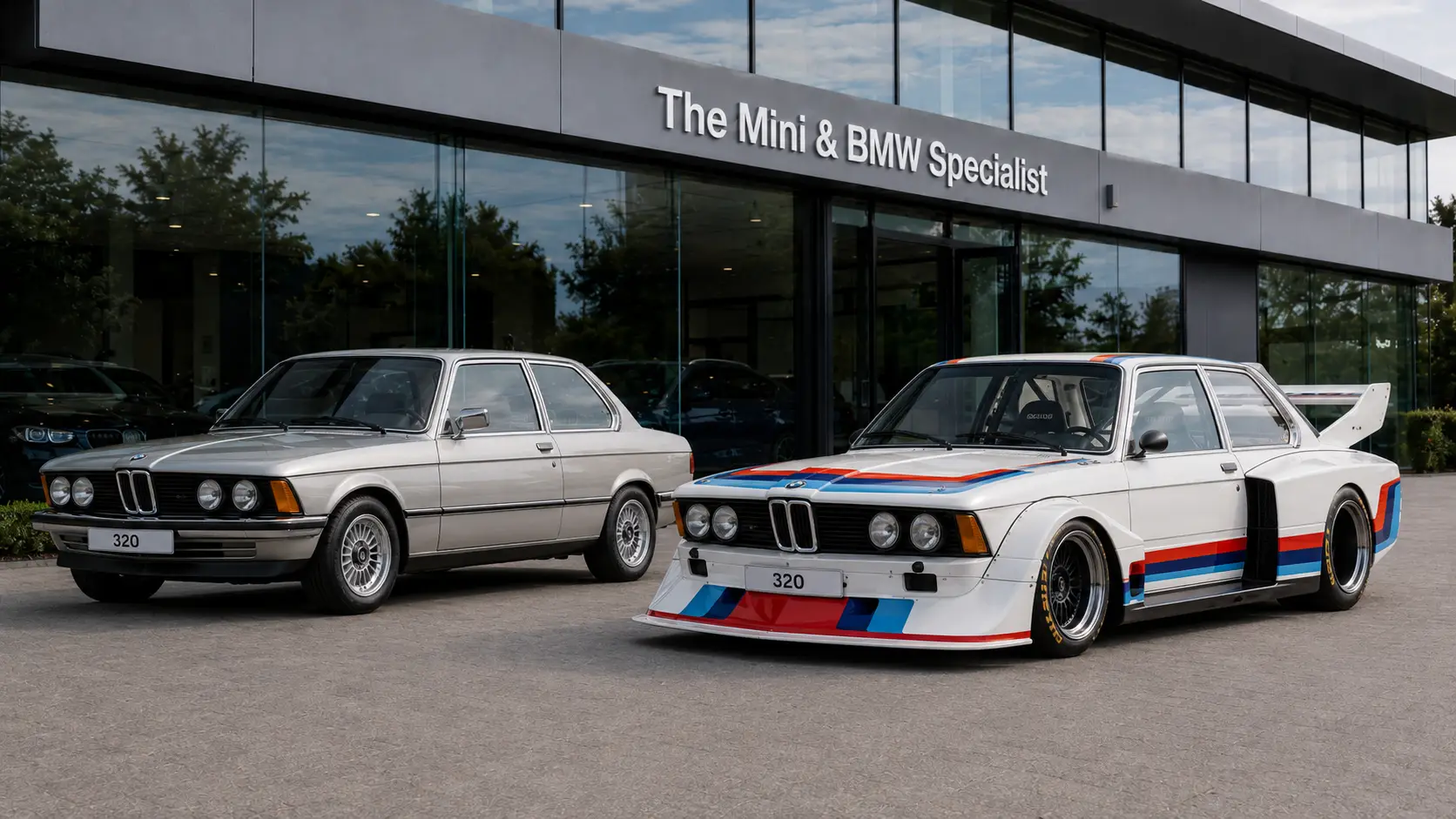
Engines
Service points for this generation
Show details for the Second generation (E30)
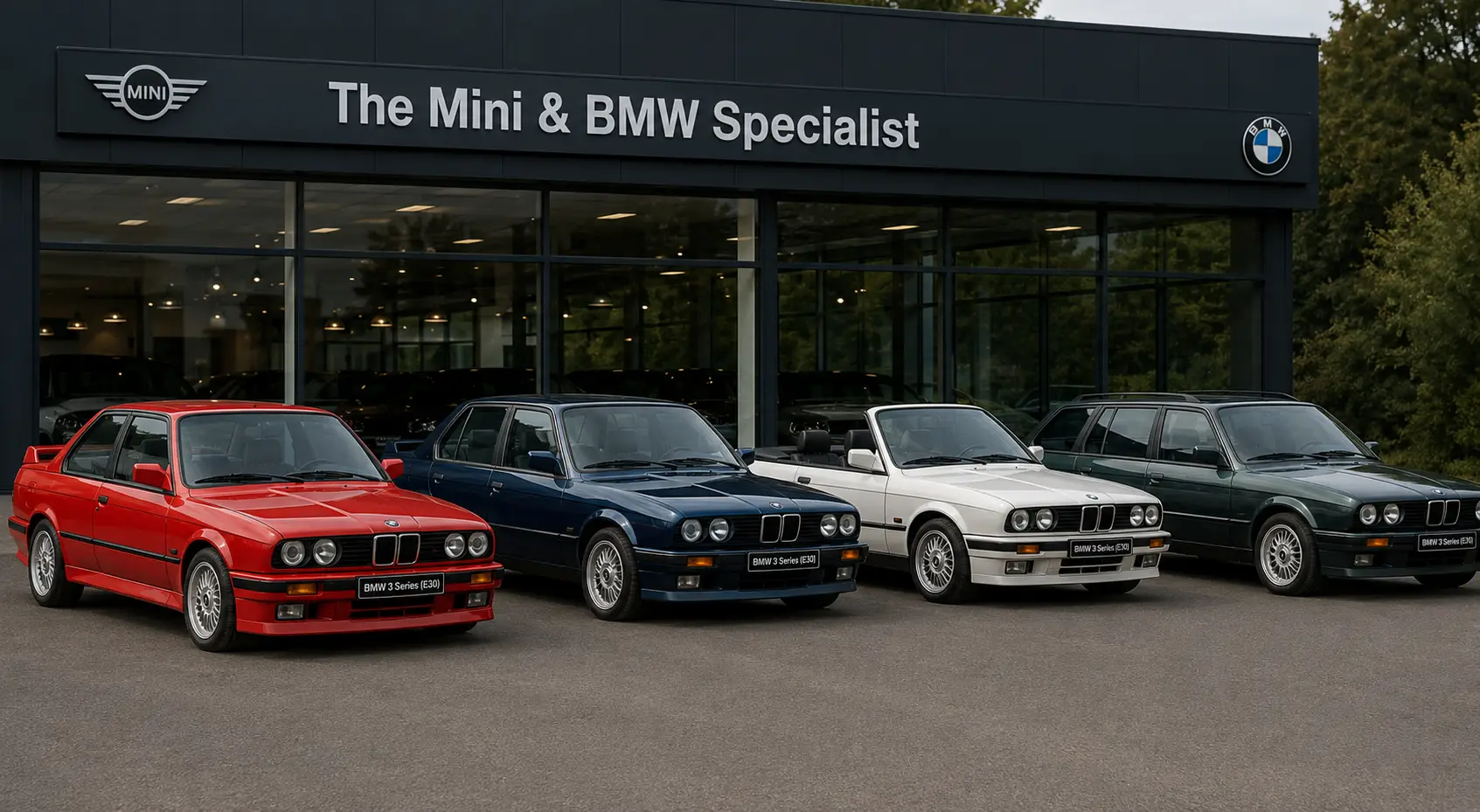
Engines
Service points for this generation
Show details for the Third generation (E36)
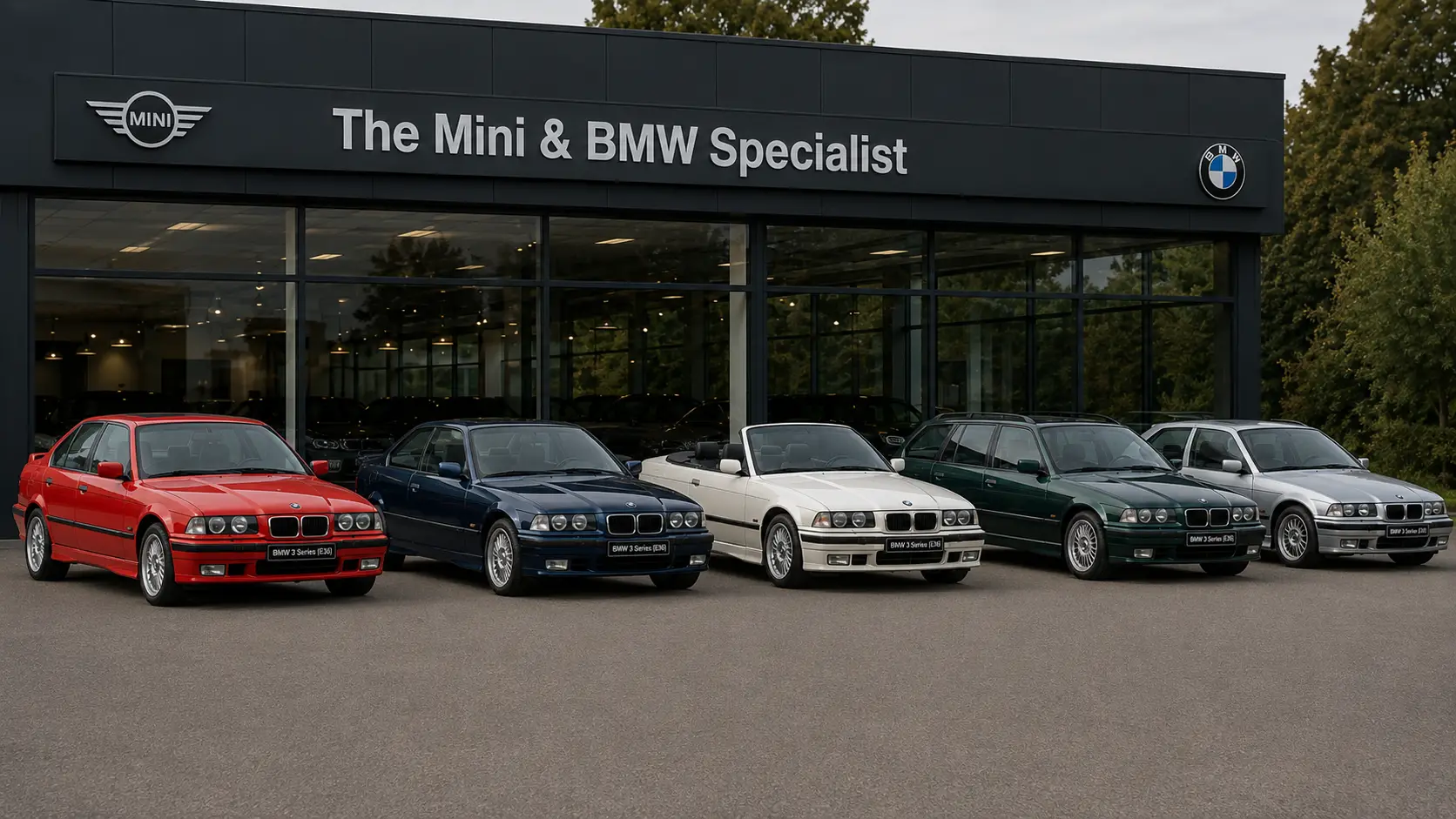
Engines
Service points for this generation
Show details for the Fourth generation (E46)
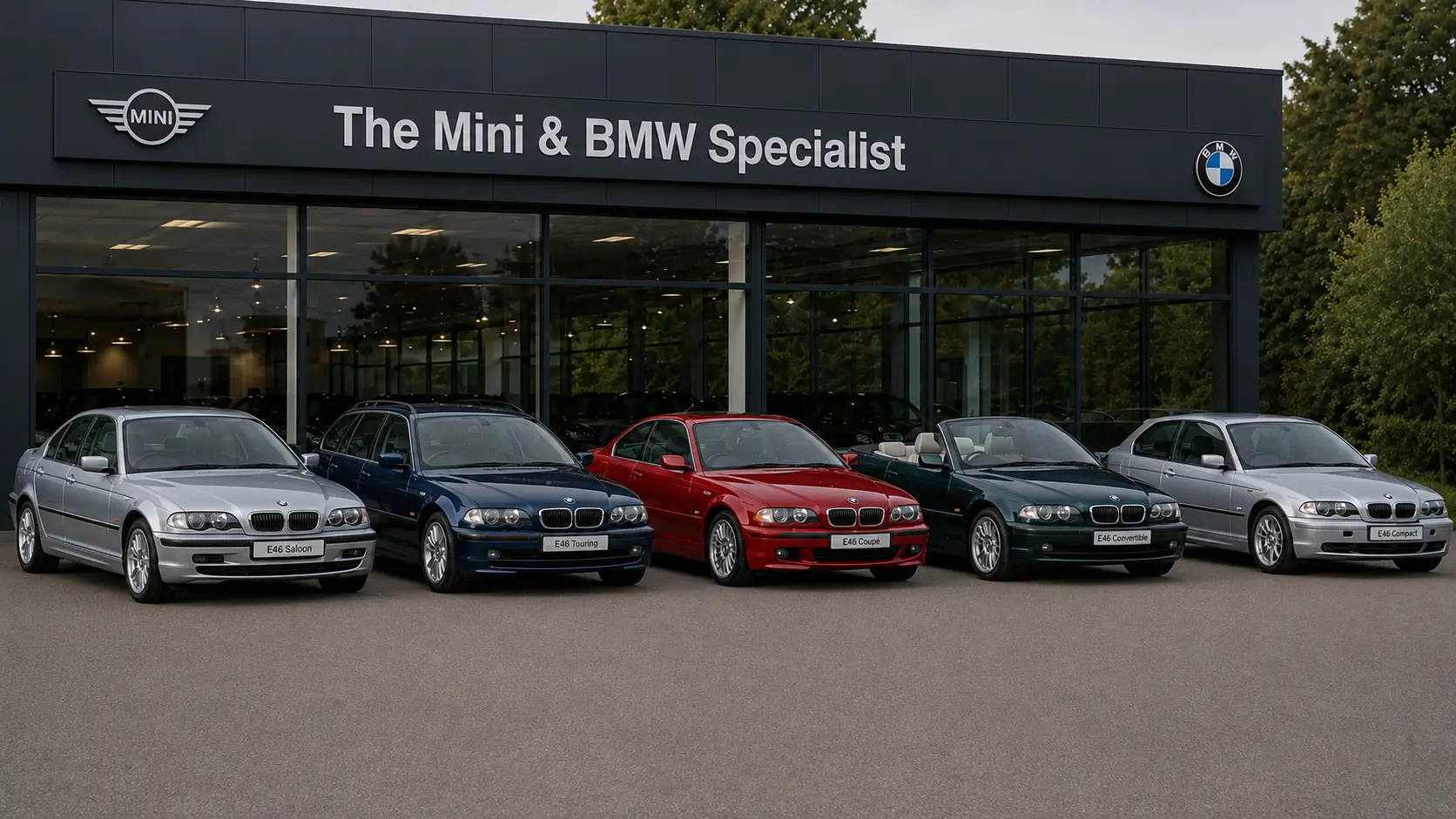
Engines
Service points for this generation
Show details for the Fifth generation (E90/E91/E92/E93)
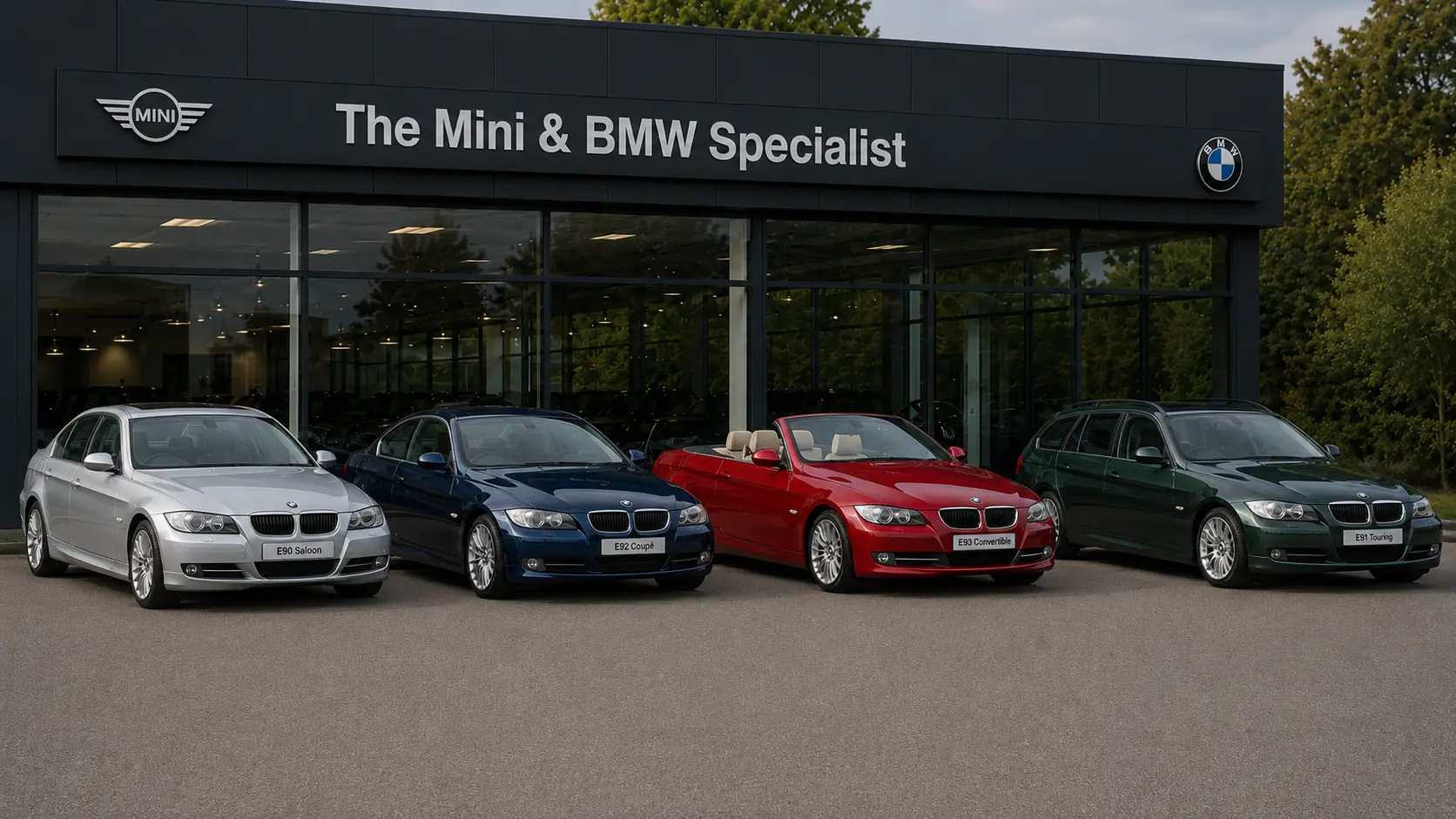
Engines
Service points for this generation
Show details for the Sixth generation (F30/F31/F34)
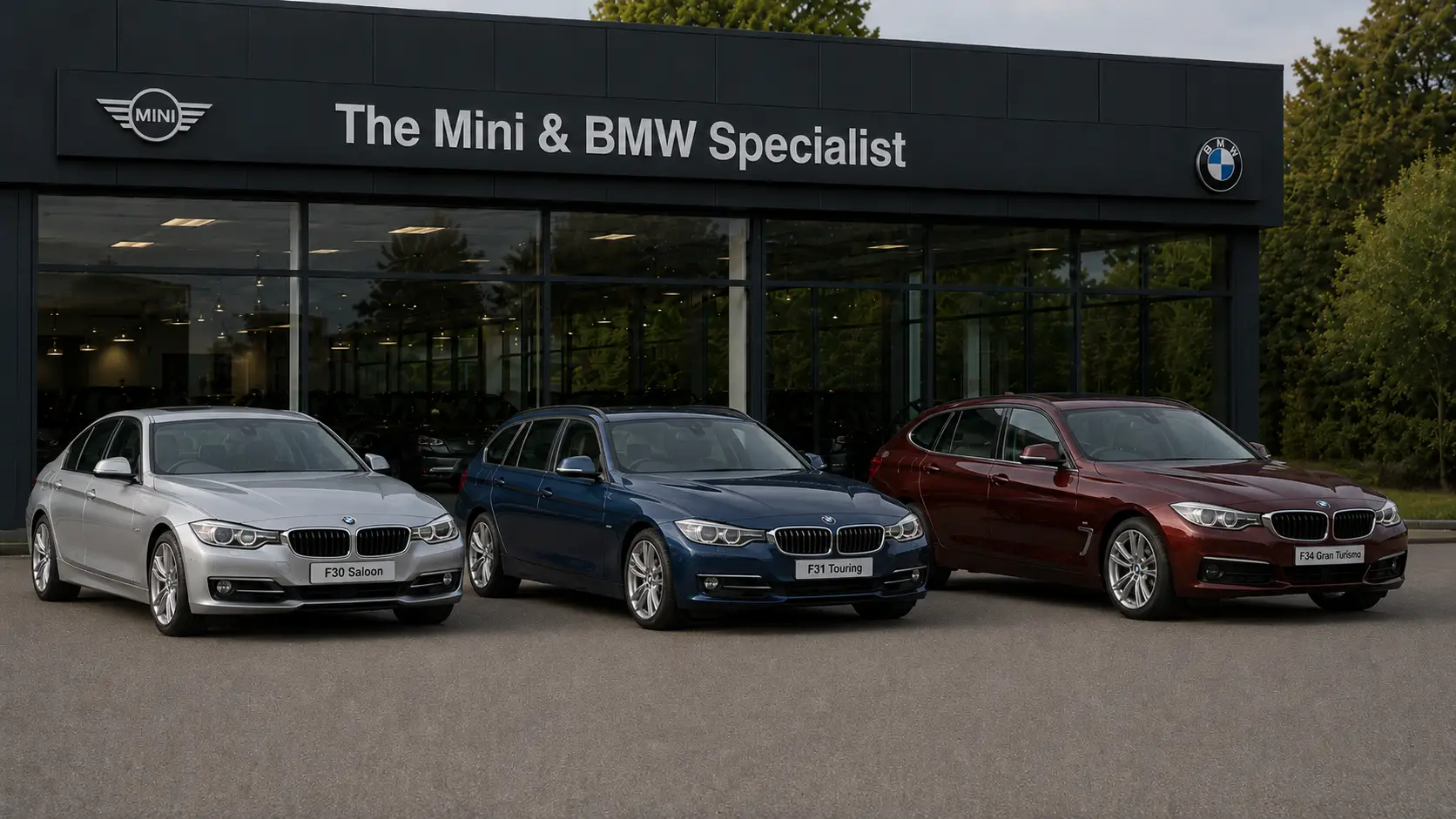
Engines
Service points for this generation
Show details for the Seventh generation (G20/G21)
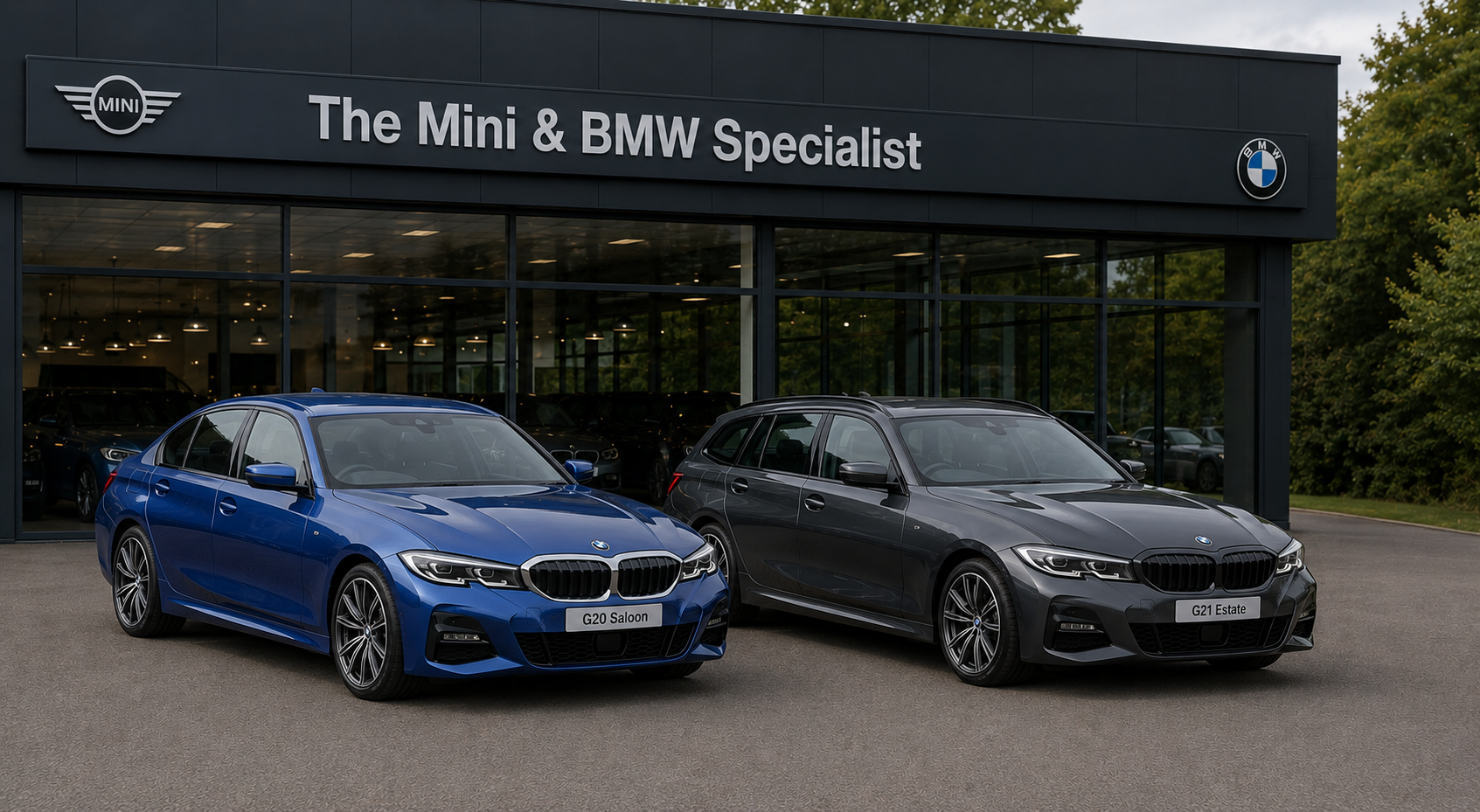
Engines
Service points for this generation
BMW 3 Series Servicing FAQs
- What oil is best for a BMW 3 Series?
- Modern BMW 3 Series petrol engines (N20, N55, B48, B58) require BMW Longlife-01 or Longlife-14 FE specification oil — typically a 0W-20 or 5W-30 fully synthetic, depending on engine and model year. Diesel variants (N47, B47, B57) require BMW Longlife-04, a 5W-30 fully synthetic compatible with the diesel particulate filter. We use the correct BMW-approved specification for your specific engine and year, supplied by Castrol or equivalent OE-standard suppliers, and update your onboard service computer with the oil grade and date.
- How often does a BMW 3 Series need servicing?
- We recommend servicing your BMW 3 Series every 12 months or 12,000 miles, whichever comes first — regardless of what the onboard service computer (CBS) says, since CBS intervals can stretch to 18,000+ miles on light usage and that's too long for modern turbocharged engines. Diesel variants (320d, 330d, 335d) benefit from shorter intervals if used predominantly on short journeys, due to DPF regeneration and oil dilution. Plug-in hybrid variants (320e, 330e) follow the same 12-month interval but have additional checks for the high-voltage cooling system and onboard charger.
- Does a BMW 3 Series service include a brake fluid change?
- Brake fluid changes are separate from a standard service but are recommended every two years on the 3 Series, in line with BMW's published schedule. Brake fluid is hygroscopic — it absorbs moisture over time, which lowers its boiling point and risks vapour lock under hard braking. We offer a fixed-price brake fluid flush using DOT 4 LV (low viscosity) fluid as required by all F30 and G20 generation 3 Series, including models fitted with M Sport brakes. See your model's service options for current pricing.
- Will servicing my BMW 3 Series at an independent garage affect the warranty?
- No — under EU Block Exemption Regulation 461/2010 (retained in UK law post-Brexit), you can have your BMW 3 Series serviced at any independent garage without affecting your manufacturer or extended warranty, provided OE-standard parts are used and the BMW service schedule is followed. We use genuine BMW or OE-standard parts throughout, follow BMW's published service intervals and procedures, and provide a full digital service history that satisfies warranty requirements. Your warranty remains intact.
- How much is a full service on a BMW 3 Series?
- BMW 3 Series servicing costs depend on the model, engine, and service type. Interim services start from around £180, full services from around £280, with diesel variants and M Sport models typically £20–£40 higher due to additional consumables. Plug-in hybrids (320e, 330e) sit at the upper end due to HV system checks. Use our BMW 3 Series Service Calculator at the top of this page for fixed prices on your exact model, or call us on 0330 999 0020 for advice.
- How do you service a BMW 3 Series 320e or 330e plug-in hybrid?
- The 320e and 330e share the B48 petrol engine and largely the same service schedule as the standard petrol 3 Series — 12 months / 12,000 miles, BMW Longlife-01 FE oil, standard filters and consumables. The differences are around the hybrid system: a separate low-temperature cooling loop for the high-voltage battery and power electronics that needs its coolant level and condition checked, an onboard charger that benefits from periodic diagnostic interrogation, and a 12V auxiliary battery that works harder than on a pure ICE car and tends to need earlier replacement. We're set up for plug-in hybrid servicing with isolation procedures and HV-rated tooling. The high-voltage battery itself is sealed and warrantied separately by BMW (typically 8 years / 100,000 miles).