Coolant loss on BMW 7-Series models typically stems from three sources: thermostat housing failure, water-pump seal wear, or radiator micro-fractures. Early signs include rising temperature gauge, sweet-smelling coolant odour, or wet stains beneath the engine bay. Thermostat replacement costs £1,200–£1,800; water-pump replacement £1,500–£2,500; radiator replacement £1,500–£2,800 depending on generation. V8 and V12 models are particularly sensitive to coolant loss – skipping regular cooling-system checks can lead to catastrophic overheating and engine damage costing £5,000+. The Mini & BMW Specialist performs annual cooling-system pressure tests and flushes to identify weak components before failure occurs. Turbocharger replacement on BMW 7-Series ranges from £1,500–£3,500 depending on engine variant and whether a single or twin-turbo unit requires replacement. Labour accounts for 60% of the cost; the turbocharger unit itself £600–£1,500. Early signs of turbocharger wear include loss of power, black exhaust smoke, or high-pitched whining when accelerating. Turbocharger longevity depends entirely on maintenance: regular oil changes are critical (dirty oil destroys turbo bearings), and allowing the engine to cool after hard driving prevents heat soak. Most turbocharged 7-Series deliver 150,000+ miles with proper care. The Mini & BMW Specialist diagnoses turbo faults via boost-pressure testing and intercooler inspection before recommending replacement. iDrive faults on E65, F01, and G11 models can range from software glitches to screen failures or controller module faults. First troubleshooting step: restart the vehicle (turn ignition off, wait 30 seconds, restart). If the system remains unresponsive, diagnostic scanning is required to identify whether the fault is software-related, a failing touchscreen, or a faulty iDrive controller. Software faults cost £100–£300 to diagnose and often resolve via over-the-air update or manual software reset. Touchscreen replacement costs £600–£1,200; iDrive controller replacement £800–£1,500. The Mini & BMW Specialist performs full iDrive diagnostics on all generations and can often resolve issues without component replacement. Winter starting issues on BMW 7-Series typically stem from weak batteries, faulty glow plugs (diesel), or frozen fuel. Battery voltage drops 40% in cold weather; a weak battery may crank slowly and fail to start. Glow plugs warm diesel fuel for ignition – faulty plugs prevent diesel engines from firing in cold conditions. Frozen fuel (water contamination in fuel tank) blocks fuel lines. Battery replacement costs £200–£500; glow plug replacement £150–£400 depending on how many plugs need replacement. Fuel contamination requires tank flush (£300–£600). Prevention: use premium winter fuel in diesel models, keep the battery in peak condition with annual charging, and consider glow-plug diagnostics before winter if starting feels sluggish. The Mini & BMW Specialist provides battery testing, glow-plug replacement, and fuel-system diagnostics. Common faults vary by generation. E23–E38: carburetor wear, fuel-injection leaks, thermostat failure. E65: parking-brake wear, iDrive responsiveness issues, cooling-system leaks. F01: cooling-system failures (V8 models), parking-brake faults, iDrive software glitches. G11: minimal faults; plug-in hybrid battery diagnostics occasionally needed. G70: very few reported faults (recent production). Regular servicing prevents 80% of these issues. The Mini & BMW Specialist can diagnose any generation's common faults and advise whether repair is urgent or can be scheduled as part of planned maintenance.


BMW 7 Series Service Costs
Transparent pricing, OE-quality parts and open, honest advice.
BMW 7 Series Service Costs – Reliable Care Without Main Dealer Prices
Select your BMW model below (or enter your registration) to view fixed service costs using our Service Calculator.
Looking for Premium BMW 7 Series Servicing?
Use our BMW 7 Series Service Calculator to check fixed pricing, compare service packages, and plan your maintenance confidently.
We service all 7 Series models — including the 730d, 740i, 745e, 750i and 760Li — using only OE-standard parts for performance and warranty protection.
Our prices include parts, labour, and VAT as standard, with no hidden costs.
We always reset the onboard service computer and update digital service records where fitted.
Conveniently located near Birmingham with easy access to the M5 and M6 motorways, we are trusted specialists for petrol, diesel, and hybrid BMW 7 Series Saloon and LWB models across the West Midlands.
Why Choose Us for Your BMW 7 Series Servicing?
Transparent Pricing
Fixed prices with parts, labour, and VAT included — no hidden costs.
Digital Service Updates
Service computer reset and digital history updated (where fitted).
Genuine OE-Standard Parts
We use OE-spec parts to protect your performance and warranty.
All Models Expertly Serviced
Saloon and Long Wheelbase petrol, diesel, and hybrid models serviced with care.
Convenient Location
Located in Great Bridge, West Midlands (DY4 7LH) — easy access from Birmingham, Wolverhampton, Dudley, M5 and M6.
Trusted by BMW Owners
Proven track record for honest advice, expert service, and lasting customer relationships.
BMW 7 Series Fixed-Price Servicing Guide
Important: The service prices shown below are typical examples. Exact pricing varies by model, engine size, and fuel type. For an exact quote, please select your model using the Service Calculator above.
All services include VAT, parts, labour, service computer reset, and digital service record updates (where fitted). No hidden charges — just clear, honest pricing.
| Service | What’s Included | Price |
|---|---|---|
| Bronze Service | Oil and filter change using BMW spec oil and filter | From £250.00 |
| Silver Service (6 Cylinder) | Oil, filter, and air filter change using BMW spec parts | From £299.00 |
| Gold Service (6 Cylinder) | Oil, filter, air filter, and cabin filter change using BMW spec parts | From £350.00 |
| Platinum Service (6 Cylinder Petrol) | Gold Service plus spark plug replacement | From £500.00 |
| Platinum Service (Diesel) | Gold Service plus fuel filter replacement | From £395.00 |
| Brake Fluid Flush | Flush and replacement using high-performance DOT4 brake fluid | £100.00 |
| MOT | Official Ministry of Transport test for vehicles over 3 years old | £50.00 |
| Diagnostic Check | Dealer-level BMW diagnostic scan and technician report | £80.00 |
What’s Included with Your BMW 7 Series Service?
- Fixed-price servicing with genuine or OE-standard parts
- Onboard service computer reset and digital history update (where fitted)
- Brake, steering, suspension, and engine health checks
- Service options tailored for petrol, diesel, hybrid, and M Sport models
- Full invoice transparency — no hidden charges
Need Help Choosing the Right BMW 7 Series Service?
Use our BMW 7 Series Service Calculator at the top of this page to explore all service options for your car, compare prices, and book online with confidence.
Prefer to talk? Call us on 0330 999 0020 — our team is happy to help with advice and bookings.
Generations of the BMW 7 Series
Knowing which generation your BMW 7 Series belongs to matters for servicing. Engines, oil specifications, service intervals, and common faults all vary significantly between generations. Use the table below to identify your generation, then explore the details for engine codes, body styles, and service points.
| Generation | Years | Chassis codes | Body styles | Platform |
|---|---|---|---|---|
| First generation (E23) | 1977–1987 | E23 | 4-door saloon | BMW E23 platform (1977–1987) |
| Second generation (E32; 1986) | 1986–1994 | E32 | 4-door saloon; 4-door saloon (long-wheelbase L variant) | BMW E32 platform (1986–1994) |
| Third generation (E38) | 1994–2001 | E38 | 4-door saloon; 4-door saloon (long-wheelbase L variant) | BMW E38 platform (1994–2001) |
| Fourth generation (E65/E66) | 2001–2008 | E65 (standard), E66 (long-wheelbase) | 4-door saloon; 4-door saloon (long-wheelbase L variant) | BMW E65 platform (2001–2008) |
| Fifth generation (F01/F02) | 2008–2015 | F01 (standard), F02 (long-wheelbase) | 4-door saloon; 4-door saloon (long-wheelbase L variant) | BMW F01 platform (2008–2015) |
| Sixth generation (G11/G12) | 2015–2023 | G11 (standard), G12 (long-wheelbase) | 4-door saloon; 4-door saloon (long-wheelbase L variant) | BMW G11 platform (2015–2023) |
| Seventh generation (G70/G71) | 2023–present | G70 (standard), G71 (long-wheelbase) | 4-door saloon; 4-door saloon (long-wheelbase M variant) | BMW G70 platform (2023–present) |
Show details for the First generation (E23)
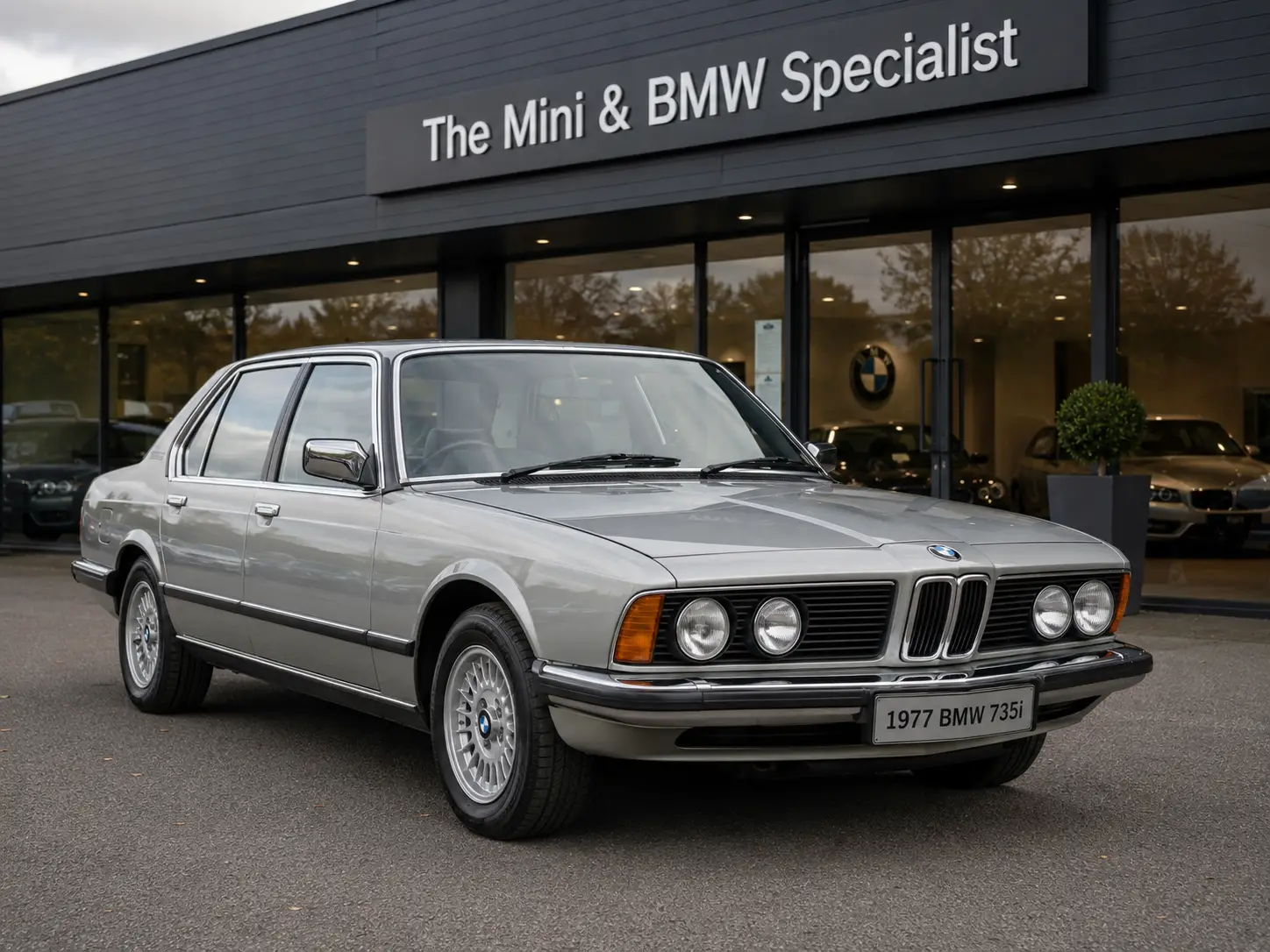
The E23 was BMW's flagship sedan from 1977 to 1987, representing a significant step forward in comfort, technology, and prestige. It replaced the E3 (3.0S/3.3Li) as the company's top-tier offering and established the 7-Series as a technological leader in the luxury segment. The E23 introduced power steering as standard across the range, advanced climate control, and – in later years – the revolutionary ABS braking system. Production spanned a full decade, with over 400,000 units sold worldwide, reflecting exceptional market acceptance. The E23 remains historically important as the blueprint for the modern 7-Series identity: refinement, innovation, and understated German engineering excellence.
Engines
The E23 launched with the M30 2.8-litre straight-six, producing 184 hp and 255 Nm (1977–1979). A 3.0-litre version (192 hp, 270 Nm) followed (1979–1987), initially carburetted, later fuel-injected. The most significant development came with the introduction of Bosch L-Jetronic fuel injection across the range in the early 1980s, improving reliability, cold-start performance, and fuel economy. Late-production E23s (1982–1987) also received the M30B34 3.4-litre engine (218 hp, 305 Nm), available in selected markets and particularly prized in Japan, where displacement was culturally significant. All petrol engines featured inline-six configuration, hydraulic valve lifters, and proven durability; many examples remain roadworthy today with proper maintenance.
Diesel variants were not offered during the E23's production run. BMW's diesel programme for executive saloons did not begin until the second-generation 7-Series (E32) in the early 1990s.
Service points for this generation
E23 ownership requires familiarity with classic-era components: manual gearboxes (four-speed or five-speed depending on model year), hydraulic power steering, and carburetted or early fuel-injection engines. Most service work is straightforward by vintage standards; engine bays are spacious and component access is logical. The transition from Solex carburettors to Bosch L-Jetronic fuel injection in the early 1980s marks a serviceable divide. Pre-1980 carburetted models benefit from periodic tuning and jet cleaning; later L-Jetronic variants are more reliable but require competent fuel-system diagnostics if issues arise. Parts availability is good across Europe and North America through BMW enthusiast specialists and period-correct suppliers. The simplicity of the M30 engine, compared to modern turbocharged units, makes the E23 an accessible entry point into classic BMW ownership, though cosmetic restoration (chrome, trim, interior) can be costly.
Show details for the Second generation (E32; 1986)
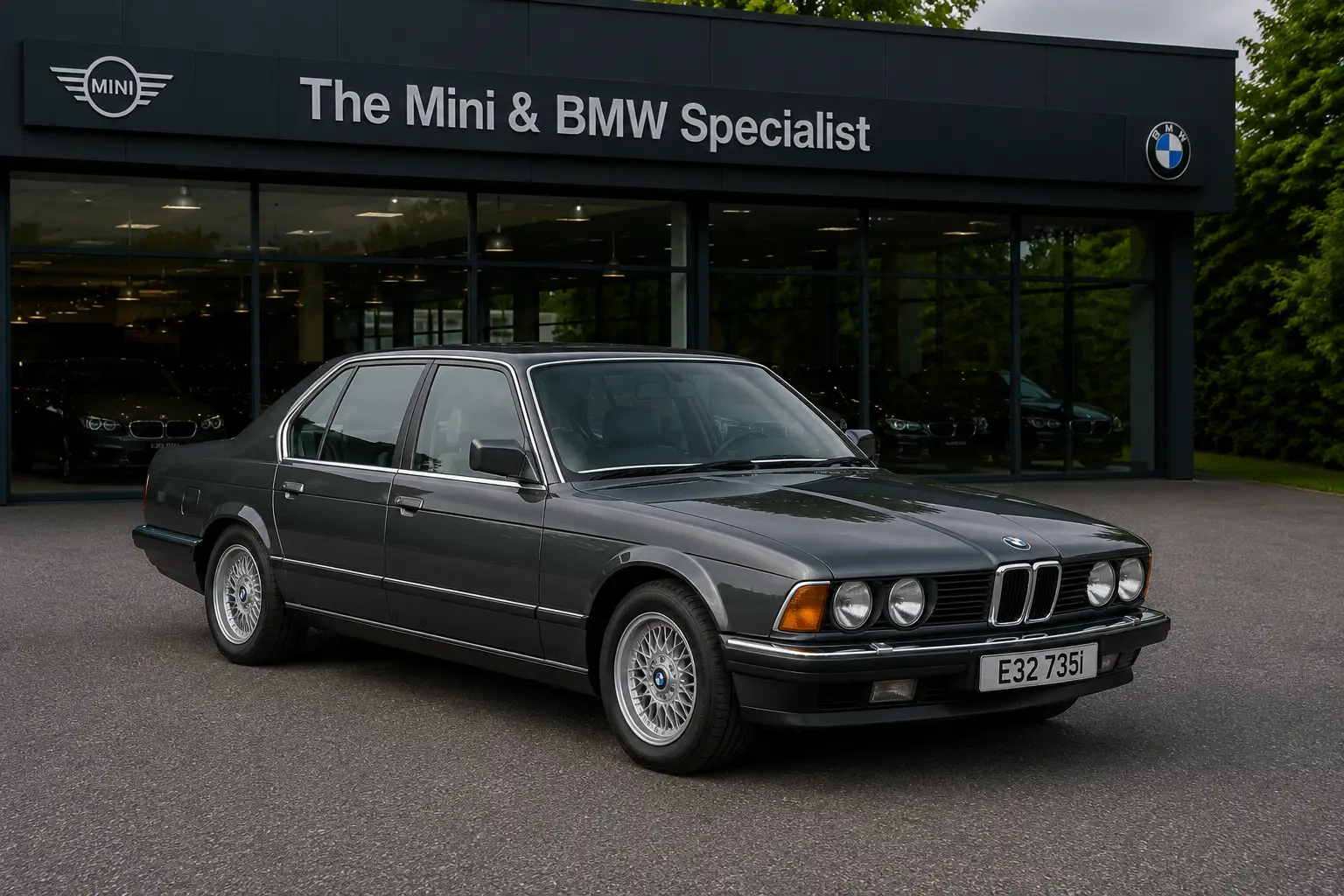
The E32 marked a generational leap forward for BMW's flagship, introducing substantial advances in aerodynamics, safety, technology, and powertrain diversity. Launched in 1986 and produced through 1994, the E32 was longer, wider, and more refined than its E23 predecessor, yet maintained the understated aesthetic BMW had cultivated. A critical milestone: the E32 introduced the 750i, the first 7-Series powered by a V12 engine, elevating BMW's prestige within the luxury segment and establishing a model line that would persist for decades. ABS braking became standard across the range — a significant safety advancement — alongside power steering, advanced climate control, and the first iterations of BMW's on-board diagnostics. The long-wheelbase L variant extended the rear-seat legroom by 10 centimetres, creating distinct rear-passenger and chauffeur-driven market positioning. Over 400,000 E32s were produced globally, cementing its success as both a technological statement and a commercial triumph for BMW.
Engines
The E32 offered three straight-six and one V12 petrol engine across its production run. The 730i (1986–1992) featured the M30B30 3.0-litre inline-six with 184 hp and 270 Nm, carburetted initially, then fuel-injected from 1988 onwards; reliability improved substantially with the transition to Bosch fuel injection. The 735i (1988–1994) employed the M30B35 3.5-litre inline-six, producing 218 hp and 305 Nm — available with automatic or 5-speed manual transmission. Most significantly, the 750i (1987–1994) broke new ground with the M70 5.0-litre quad-cam V12, developing 300 hp and 450 Nm, paired exclusively with the ZF 4-speed automatic transmission. The V12 represented the pinnacle of 1980s–early 1990s engine engineering: smooth, powerful, and demanding of premium fuel and careful maintenance. All petrol engines featured hydraulic valve lifters, corrosion-resistant design, and respectable longevity when properly serviced. Fuel consumption was respectable for the era, though the V12 remained a premium proposition both at the pump and in maintenance costs.
The E32 diesel lineup was market-dependent. The M21D 2.4-litre turbodiesel became available in select European markets from 1991 onwards, producing 110 hp and 245 Nm — emphasising economy and torque over performance. Diesel variants were never offered in North America or many other markets outside continental Europe, reflecting regulatory and market preferences of the era. Diesel E32s are relatively uncommon and increasingly sought by enthusiasts valuing low-speed torque and fuel economy; parts availability and specialist knowledge are correspondingly more limited.
Service points for this generation
E32 ownership spans a wide technical range depending on model year and engine choice. The 730i (particularly pre-1988 carburetted versions) benefits from periodic carburetor tuning and jet cleaning; post-1988 fuel-injected models are more reliable but require competent diagnostics if fuel-system issues arise. The 735i straight-six is robust and long-lived, with straightforward service intervals and logical component access. The 750i V12 demands specialist knowledge and meticulous maintenance: spark-plug changes require patience, timing-chain guides can wear, and premature ignition-coil failure was noted on some early examples. However, when well-maintained, the M70 is a formidable powerplant offering smooth, linear delivery and surprising reliability. Automatic transmissions (ZF 4-speed) are generally sturdy; manual transmissions are durable but can develop notchy gear selection with age. The E32's electrical systems are more complex than the E23, with early engine-management and ABS modules requiring specialist diagnostics if faults arise. Classic BMW suppliers stock most mechanical and electrical parts; V12-specific components (spark plugs, ignition coils, fuel injectors) are pricier but available. The E32 represents a transitional point between analogue and early-digital engineering — a rewarding project for owners willing to invest in proper diagnosis and quality service.
Show details for the Third generation (E38)
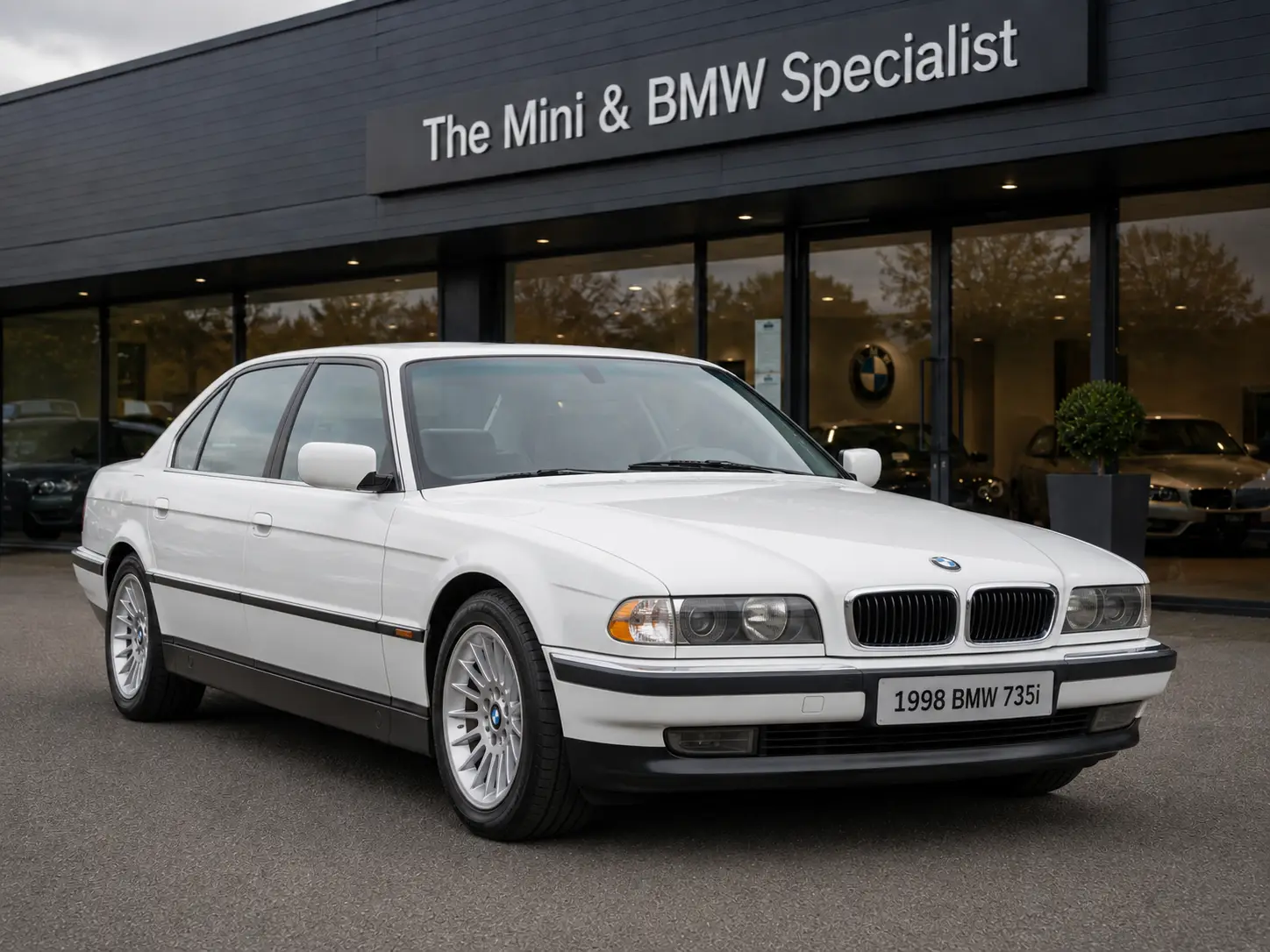
The E38 represented the pinnacle of 1990s luxury-saloon engineering, introducing a wealth of technological advances that would define BMW's executive offering into the 2000s. Launched in 1994 and produced through 2001, the E38 was significantly longer, wider, and more spacious than its E32 predecessor, yet maintained the refined aesthetic that characterised the 7-Series. The third generation saw the introduction of advanced on-board diagnostics, electronic stability control, xenon headlights as an option, and the first iterations of BMW's iDrive-precursor systems. The long-wheelbase L variant extended rear legroom even further, establishing the 7-Series as the dominant choice for executive chauffeur services across Europe. The V12 engine line continued from the E32, with the M73 producing 326 hp and later the M73B54 with 402 hp, making the 750i and 750iL among the most powerful luxury saloons of their era. Over 650,000 E38s were built globally, reflecting sustained market success and the model's reputation for reliability, comfort, and technological leadership.
Engines
The E38 petrol range spanned five engines across its production run. The 730i (1994–1998) employed the M30B30 3.0-litre inline-six producing 184 hp and 270 Nm, carburetted initially, then fuel-injected. The 735i (1994–2001) featured the M30B35 3.5-litre inline-six with 218 hp and 305 Nm, and from 1996 onwards was available alongside the new M52B28 2.8-litre twin-cam inline-six (193 hp, 280 Nm) – a significant departure from the M30 family and a sign of BMW's engineering evolution. The 740i (1996–2001) introduced the new M60B40 4.0-litre V8, developing 286 hp and 400 Nm, providing exceptional smoothness and performance. Most significantly, the 750i (1994–2001) retained the M73 5.0-litre quad-cam V12, initially producing 326 hp and 450 Nm, upgraded in 1998 to the M73B54 variant offering 402 hp and 560 Nm – making it one of the most powerful engines fitted to any luxury saloon. Late-production examples (1998–2001) benefited from Bosch Motronic engine management with enhanced diagnostics, improved emissions control, and better cold-start performance. All engines demonstrated robust longevity when properly maintained, though the V12 variants demanded specialist knowledge and premium fuel.
Diesel variants were not offered in the E38 during its production run. BMW's diesel programme for the 7-Series did not resume until the fourth-generation E65 (2003 onwards) with the introduction of the M57 turbodiesel. The absence of diesel power reflected market positioning – the E38 lineup emphasised performance and refinement over economy.
Service points for this generation
E38 ownership spans a considerable technical range depending on model year and engine choice. The 730i and 735i straight-six variants (M30B30 and M30B35) are robust and accessible, with straightforward service intervals and logical component layout; early carburetted models benefit from periodic tuning, whilst later fuel-injected examples are more reliable but require competent diagnostics if issues arise. The newer M52B28 (1996+) represents a departure from the older M30 family – twin-cam design requires familiarity with different valve-cover removal and spark-plug access – but offers improved reliability and efficiency. The V8-powered 740i demands specialist knowledge; the M60B40 is powerful and smooth but can suffer from timing-chain wear on higher-mileage examples, and cooling-system maintenance is critical to longevity. The 750i V12 (both M73 and M73B54) represents the pinnacle of 1990s engine engineering and demands meticulous care: spark-plug changes are labour-intensive, glow-plug fouling can occur, and ignition-coil reliability varies by model year. However, when well-maintained, the V12 offers silky, linear delivery and surprising durability. Automatic transmissions (ZF 5-speed) are generally sturdy; manual options are durable but increasingly rare. Electrical systems are significantly more complex than E23 or E32 examples, with Bosch engine-management modules, advanced climate control, and early electronic-stability-control systems requiring specialist diagnostics if faults develop. Parts availability is good across Europe and North America through BMW specialists; V12-specific components remain pricier but available. The E38 represents a bridge between analogue and early-digital luxury-saloon engineering – rewarding for owners willing to engage with its greater complexity and invest in quality specialist service.
Show details for the Fourth generation (E65/E66)
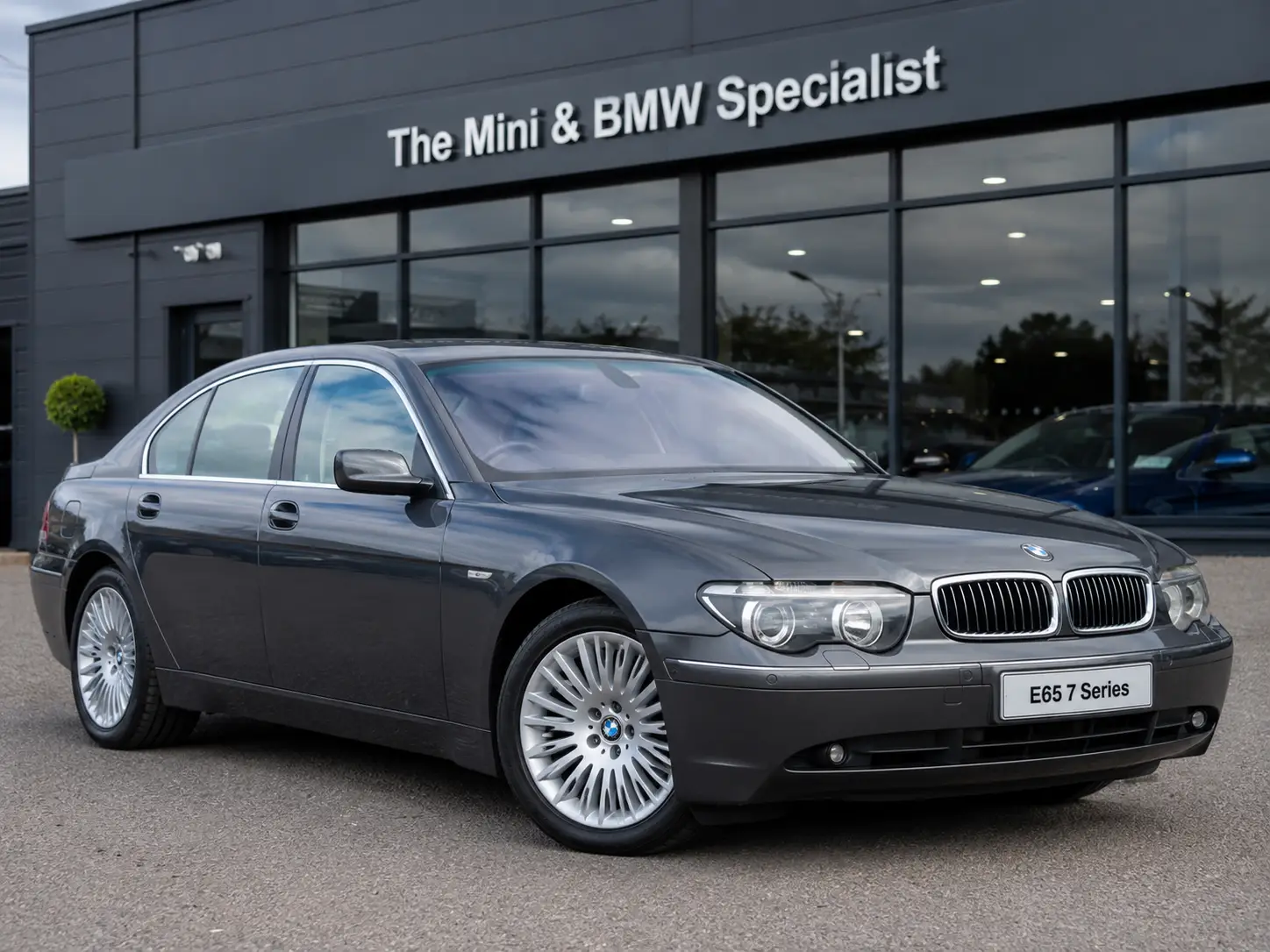
The E65 represented a watershed moment for the 7-Series, introducing the revolutionary iDrive infotainment system and marking BMW's decisive pivot toward technology-led luxury. Launched in 2001 and produced through 2008, the E65 was longer, lower, and more aerodynamic than its E38 predecessor, whilst incorporating substantially more electronic systems and driver-assistance features. The introduction of the M57 turbodiesel engine option brought fuel economy and low-speed torque to the luxury segment, fundamentally expanding the 7-Series appeal. The iDrive system – initially criticised for complexity – pioneered the integrated control philosophy that would dominate automotive interfaces for the following decade. The long-wheelbase L variant offered executive rear-seat comfort approaching limousine standards. Engine options spanned from economical diesels to the legendary 760i's 6.0-litre V12 producing 438 hp, establishing the E65 as the most powerful standard 7-Series to date. Production figures exceeded 800,000 units globally, reflecting sustained market dominance despite the vehicle's technological boldness and the initial iDrive learning curve.
Engines
The E65 petrol range reflected BMW's transition toward more advanced engine families. The 730i (2001–2005) employed the M54B30 3.0-litre inline-six producing 218 hp and 300 Nm, replaced from 2005 onwards by the N52B30 3.0-litre inline-six with 255 hp and 310 Nm – featuring VarioCam variable valve timing and enhanced efficiency. The 735i (2001–2005) used the M54B35 3.5-litre inline-six with 272 hp and 350 Nm; from 2005 onwards, BMW shifted the 735i lineup to V8 power with the N54B30 or N52B30 variants depending on market. The 740i (2001–2008) featured the N62B40 4.0-litre V8, initially producing 326 hp and 450 Nm, upgraded from 2005 onwards to 360 hp and 465 Nm – a smooth, powerful engine suitable for sustained autobahn cruising. The 745i (2005–2008) introduced the N62B48 4.8-litre V8 with exceptional 367 hp and 500 Nm. Most significantly, the 750i and 760i variants retained V12 power with the N73B54 5.0-litre quad-cam engine producing 444 hp and 520 Nm – and from 2005 onwards, the flagship 760i received the N73B60 6.0-litre V12 with 438 hp and 600 Nm, establishing it as the most powerful standard-production 7-Series to date. All petrol engines featured advanced Bosch Motronic engine management with real-time diagnostics integrated into the iDrive system, substantially improving troubleshooting and maintenance scheduling.
The E65 marked the return of diesel power to the 7-Series after a 13-year hiatus. The 730d (2001–2008) employed the M57D30 3.0-litre turbodiesel producing 218 hp and 500 Nm – exceptional low-end torque making it popular with chauffeur-driven applications across Europe. The M57 represented peak engineering of the second-generation diesel family: electronically controlled common-rail injection, integrated turbocharging, and robust reliability over 200,000+ miles with proper maintenance. From 2006 onwards, BMW introduced the 735d variant using the same M57D30 engine, broadening diesel appeal within the range. Diesel variants were primarily available in European markets and the United Kingdom; North American and Asian markets received petrol and V12 options predominantly. Diesel E65s are increasingly sought by enthusiasts and fleet operators valuing exceptional fuel economy (35+ mpg highway achievable) and the legendary reliability of the M57 engine family.
Service points for this generation
E65 ownership introduces considerably more complexity than E38 examples, particularly regarding electronics and the iDrive system. The inline-six engines (M54 and N52 families) are mechanically sound and long-lived; the transition from M54 to N52 in 2005 brought VarioCam variable valve timing, improved efficiency, and revised spark-plug access – requiring care during service but offering enhanced reliability. The V8 engines (N62 family) are powerful and smooth but demand meticulous cooling-system maintenance; thermostat failures and water-pump wear are documented issues on higher-mileage examples. The M57 turbodiesel is exceptionally robust and long-lived – many examples exceed 200,000 miles with minimal intervention – but requires quality diesel fuel and prompt DPF regeneration cycles on later variants. The N73 V12 variants (760i, 750i) represent the pinnacle of naturally aspirated V12 engineering and demand specialist knowledge: spark-plug changes are labour-intensive, cooling-system care is critical, and fuel costs reflect the high-capacity engine. Automatic transmissions (ZF 6-speed) are generally durable; manual options are exceedingly rare. The iDrive system – initially criticised but increasingly user-friendly in later software versions – requires specialist diagnostics when faults develop; component failures are costly. Climate control, xenon headlights, electronic suspension, and electronic parking brake systems are significantly more sophisticated than E38 examples and require specialist-grade diagnostics. Parts availability is excellent across Europe and North America through BMW and independent suppliers; electrical components can be pricey. The E65 represents the inflection point between mechanical and digital luxury engineering – rewarding for owners willing to embrace technology and invest in specialist service, but demanding more time and cost than E38 or earlier generations for complex diagnostics and repairs.
Show details for the Fifth generation (F01/F02)
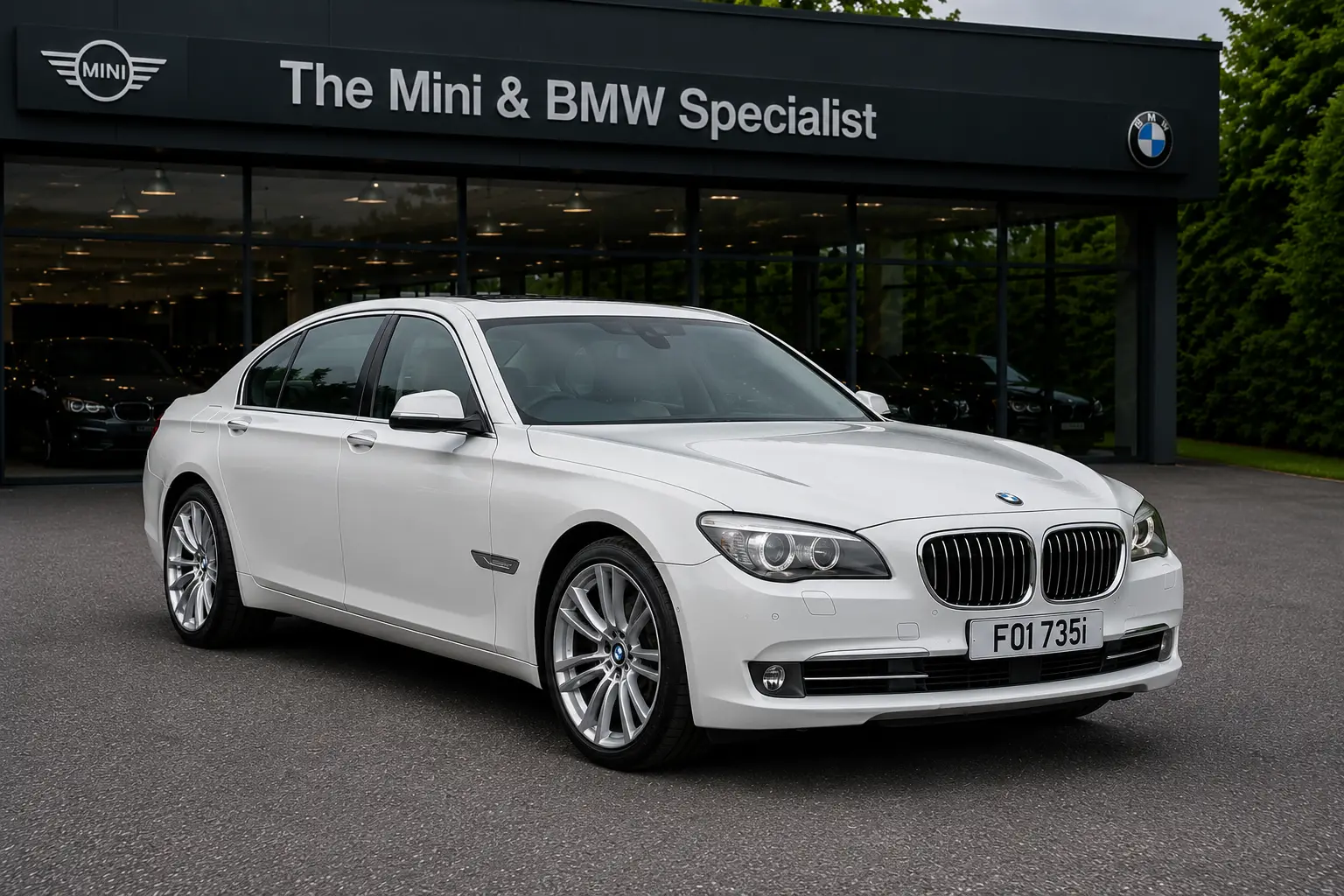
The F01 represented BMW's return to engineering discipline after the E65's technology-heavy approach, rebalancing luxury with dynamic handling and efficiency. Launched in 2008 and produced through 2015, the F01 was lighter, more agile, and substantially more efficient than its E65 predecessor whilst maintaining—and refining—the iDrive system that had become industry standard. The F01 introduced the revolutionary ActiveHybrid 7, pairing a turbocharged V8 with electric-motor assistance to deliver both performance and fuel economy previously thought incompatible in luxury saloons. The long-wheelbase F02 variant offered executive rear-seat accommodation rivalling limousines, with enhanced climate control, massage functions, and seat reconfiguration. Design matured considerably; the F01 eschewed E65's controversial proportions in favour of understated elegance. Engine technology advanced dramatically with widespread turbocharged and turbodiesel powerplants, producing exceptional power and torque from smaller displacements. Over 900,000 F01s were produced globally, cementing BMW's dominance in the premium saloon segment and establishing the template for modern luxury-saloon engineering that persists to the present day.
Engines
The F01 petrol range emphasised efficient turbocharged technology. The 740i (2008–2015) initially featured the N54B30 3.0-litre twin-turbo inline-six producing 326 hp and 450 Nm, replaced from 2010 onwards by the single-turbo N55B30 variant (also 326 hp, 450 Nm) with improved response and efficiency. The 750i (2008–2015) employed the N63B44 4.4-litre twin-turbo V8, initially producing 408 hp and 600 Nm, upgraded from 2012 onwards to 450 hp and 650 Nm – delivering superb low-end torque and highway refinement. Most significantly, the ActiveHybrid 7 (2010–2015) paired the N63B44 V8 with a 54-kW electric motor and high-voltage battery, producing a combined 455 hp and 700 Nm whilst achieving fuel economy within 15% of the 740i – a remarkable achievement for a performance luxury saloon. The 760i (2012–2015) featured the all-new N74B60 6.0-litre twin-turbo V12, producing 544 hp and 750 Nm – the most powerful standard-production 7-Series engine to date, offering linear power delivery and exceptional refinement. All petrol engines featured advanced fuel injection, variable valve timing, and seamless integration with the refined 8-speed automatic transmission (ZF 8HP), providing exemplary smoothness and efficiency across the rev range.
The F01 diesel programme expanded significantly from the E65. The 730d (2008–2015) employed the N57D30 3.0-litre single-turbo common-rail diesel, initially producing 258 hp and 560 Nm, upgraded from 2012 onwards to 265 hp and 580 Nm – exceptional efficiency and low-end torque making it the engine of choice for chauffeur-driven operations across Europe and the United Kingdom. Later variants benefited from improved SCR emissions control, better DPF management, and refined fuel injection resulting in quieter operation and improved cold-start characteristics. Diesel F01s are increasingly sought by enthusiasts and fleet operators valuing 40+ mpg highway capability and the legendary robustness of the N57 family. Parts availability and specialist knowledge remain excellent across Europe; the N57 represents one of modern diesel engineering's most successful platforms.
The F01 ActiveHybrid 7 (2010–2015) was the first hybrid variant in 7-Series history, pairing the N63B44 twin-turbo V8 with a 54-kW electric motor, high-voltage lithium-ion battery pack (120 Nm electric torque), and intelligent energy management. Combined output reached 455 hp and 700 Nm, with the system delivering seamless petrol-electric transitions and genuine fuel savings (typically 25–30% improvement over a conventional N63 V8). The hybrid system integrated with the 8-speed automatic transmission and regenerative braking to optimise efficiency during urban driving, whilst the V8 provided undiminished performance during acceleration and autobahn cruising. ActiveHybrid 7 examples are increasingly collectable as early examples of luxury-performance electrification and offer compelling real-world economy without sacrificing driving engagement. Fully electric variants were not available for the F01; the first all-electric 7-Series did not arrive until the i7 (2022+).
Service points for this generation
F01 ownership reflects the generation's engineering maturity and complexity. The N55B30 inline-six (740i) is mechanically sound and long-lived, with straightforward maintenance and good parts availability; turbocharger longevity depends on regular oil changes and avoiding excessive boost pressure. The N63B44 V8 (750i) and N74B60 V12 (760i) are powerful, smooth engines with proven reliability, though cooling-system maintenance is critical – thermostat failures and water-pump wear can be costly. The N57D30 diesel is exceptionally robust and durable, with many examples exceeding 150,000 miles with minimal intervention; proper DPF regeneration cycles and quality diesel fuel are essential to longevity. The ActiveHybrid 7's battery management system is sophisticated; hybrid-specific diagnostics are required for energy-storage or electric-motor faults, adding cost and complexity but offering excellent real-world reliability when properly serviced. The iDrive system – now mature and user-friendly – requires specialist diagnostics for infotainment, navigation, or climate-control faults; parts are pricier than mechanical items. The 8-speed ZF automatic transmission is durable and smooth; servicing requires specialist fluid and torque specifications. LED headlights, adaptive suspension, electronic stability control, and electronic parking systems are standard across the range and benefit from specialist diagnostics. Parts availability is excellent across Europe and North America; routine service costs are reasonable, but component failures (particularly electronics and turbochargers) can be expensive. The F01 represents the maturation of modern luxury-saloon engineering – technically sophisticated but reliable and accessible to specialists familiar with current BMW systems. Owners willing to invest in proper maintenance and specialist service can expect 150,000+ miles of dependable, comfortable motoring. The Mini & BMW Specialist provides comprehensive servicing, hybrid diagnostics, turbocharged-engine support, and specialist repair for fifth-generation 7-Series ownership.
Show details for the Sixth generation (G11/G12)
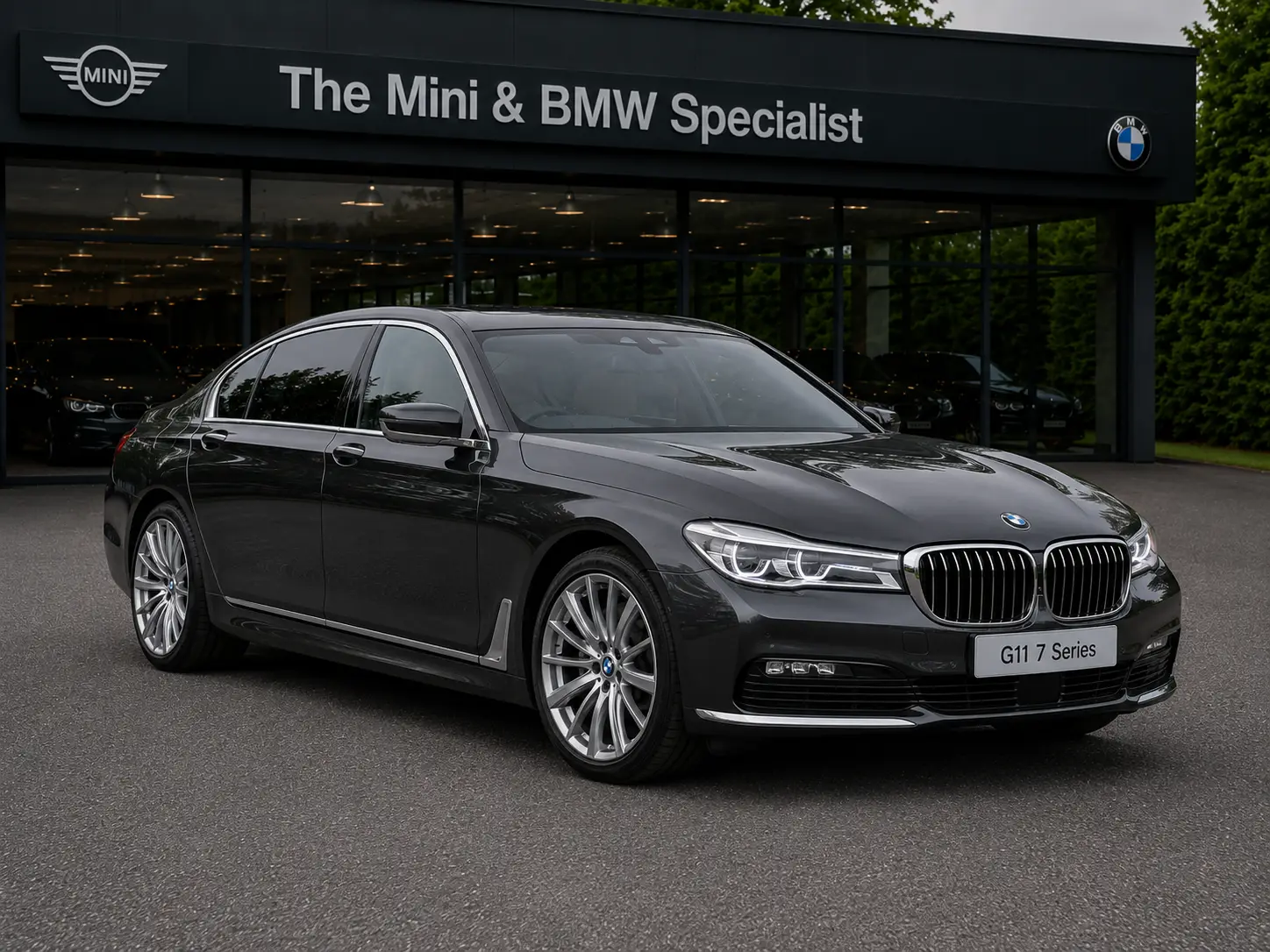
The G11 represented BMW's commitment to lightweight engineering and efficient electrification, delivering luxury, performance, and economy in unprecedented balance. Launched in 2015 and produced through 2023, the G11 was lighter than its F01 predecessor despite increased interior space, achieved through extensive use of aluminium and high-strength steel. The introduction of the 750e plug-in hybrid (later renamed 745e) marked a watershed moment for the 7-Series, pairing turbocharged V8 power with electric-motor torque to deliver 394 hp and genuine fuel economy – the first true electrified flagship saloon. iDrive 5.0 brought touchscreen capability, gesture control, and integrated connected services; later updates introduced iDrive 7.0 with over-the-air software updates and enhanced artificial-intelligence functions. The long-wheelbase G12 variant offered executive rear-seat accommodation with multi-adjustable seats, ambient lighting, and champagne storage – effectively a four-seat luxury lounge. Design evolved toward understated elegance; the controversial dual-kidney grille grew larger but remained proportionate. Engine technology advanced with new twin-scroll turbocharged units offering exceptional power and efficiency from smaller displacements. Over 1 million G11s were produced globally through 2023, establishing the generation as the most commercially successful 7-Series ever and setting the template for modern luxury-saloon electrification that continues into the present G70 generation.
Engines
The G11 petrol range emphasised turbocharged efficiency. The 740i (2015–2023) initially employed the N55B30 3.0-litre twin-turbo inline-six producing 340 hp and 450 Nm, replaced from 2019 onwards by the revolutionary B58B30 3.0-litre single-turbo inline-six with 335 hp and 500 Nm – demonstrating that BMW's engineering focus had shifted toward efficiency and reliability over raw power. The 750i (2015–2023) featured the N63B44 4.4-litre twin-turbo V8, producing 445 hp and 650 Nm, delivering superb low-end torque and sustained highway performance. Most significantly, the 750e plug-in hybrid (2015–2022, renamed 745e from 2023 onwards) paired the N63B44 V8 with a 112-kW electric motor, high-voltage lithium-ion battery pack (370 Nm electric torque), and intelligent energy management, producing a combined 394 hp and 561 Nm whilst achieving 40+ mpg combined fuel economy and up to 30 miles of pure-electric range – an exceptional achievement for a performance V8 luxury saloon. The 760i (2016–2023) featured the all-new N74B60 6.0-litre twin-turbo V12, initially producing 585 hp and 750 Nm, upgraded from 2020 onwards to 630 hp and 800 Nm – the most powerful standard-production BMW engine of the generation and among the last turbocharged V12s produced for road cars. All petrol engines integrated seamlessly with the 8-speed automatic transmission (ZF 8HP), providing exemplary smoothness and efficiency across the rev range.
The G11 diesel programme continued from the F01 with refined efficiency. The 730d (2015–2023) employed the B47D20 3.0-litre single-turbo common-rail diesel, producing 258 hp and 560 Nm – exceptional fuel economy (45+ mpg highway achievable) and low-end torque making it the engine of choice for European fleet operations and chauffeur-driven services. Later variants benefited from improved SCR emissions control, refined fuel injection, and optimised DPF management resulting in quieter operation, better cold-start characteristics, and reduced particulate emissions. Diesel G11s are increasingly sought by enthusiasts and fleet operators valuing genuine 40–50 mpg capability and the legendary robustness of the B47 platform. Parts availability and specialist knowledge remain excellent across Europe and the United Kingdom.
The G11 750e plug-in hybrid (2015–2022, renamed 745e from 2023) was BMW's most successful electrified 7-Series variant, pairing the N63B44 twin-turbo V8 with a 112-kW electric motor, high-voltage lithium-ion battery pack (370 Nm electric torque), and intelligent energy management. Combined output reached 394 hp and 561 Nm, with the system delivering seamless petrol-electric transitions, up to 30 miles of pure-electric range, and genuine 40+ mpg combined fuel economy – remarkable for a performance V8 luxury saloon. The hybrid system optimised battery charging via regenerative braking and engine-management algorithms, allowing extensive urban driving on electric power alone and unlimited range via the turbocharged V8 engine. ActiveHybrid 7 (2015–2018) also remained available, pairing the N63B44 V8 with traditional hybrid technology (54 kW electric motor) for those prioritising performance over electric range. Fully electric variants were not available for the G11; the first all-electric 7-Series arrived with the i7 (2022+, contemporary with G11 production end).
Service points for this generation
The G11 750e plug-in hybrid (2015–2022, renamed 745e from 2023) was BMW's most successful electrified 7-Series variant, pairing the N63B44 twin-turbo V8 with a 112-kW electric motor, high-voltage lithium-ion battery pack (370 Nm electric torque), and intelligent energy management. Combined output reached 394 hp and 561 Nm, with the system delivering seamless petrol-electric transitions, up to 30 miles of pure-electric range, and genuine 40+ mpg combined fuel economy – remarkable for a performance V8 luxury saloon. The hybrid system optimised battery charging via regenerative braking and engine-management algorithms, allowing extensive urban driving on electric power alone and unlimited range via the turbocharged V8 engine. ActiveHybrid 7 (2015–2018) also remained available, pairing the N63B44 V8 with traditional hybrid technology (54 kW electric motor) for those prioritising performance over electric range. Fully electric variants were not available for the G11; the first all-electric 7-Series arrived with the i7 (2022+, contemporary with G11 production end).
Show details for the Seventh generation (G70/G71)
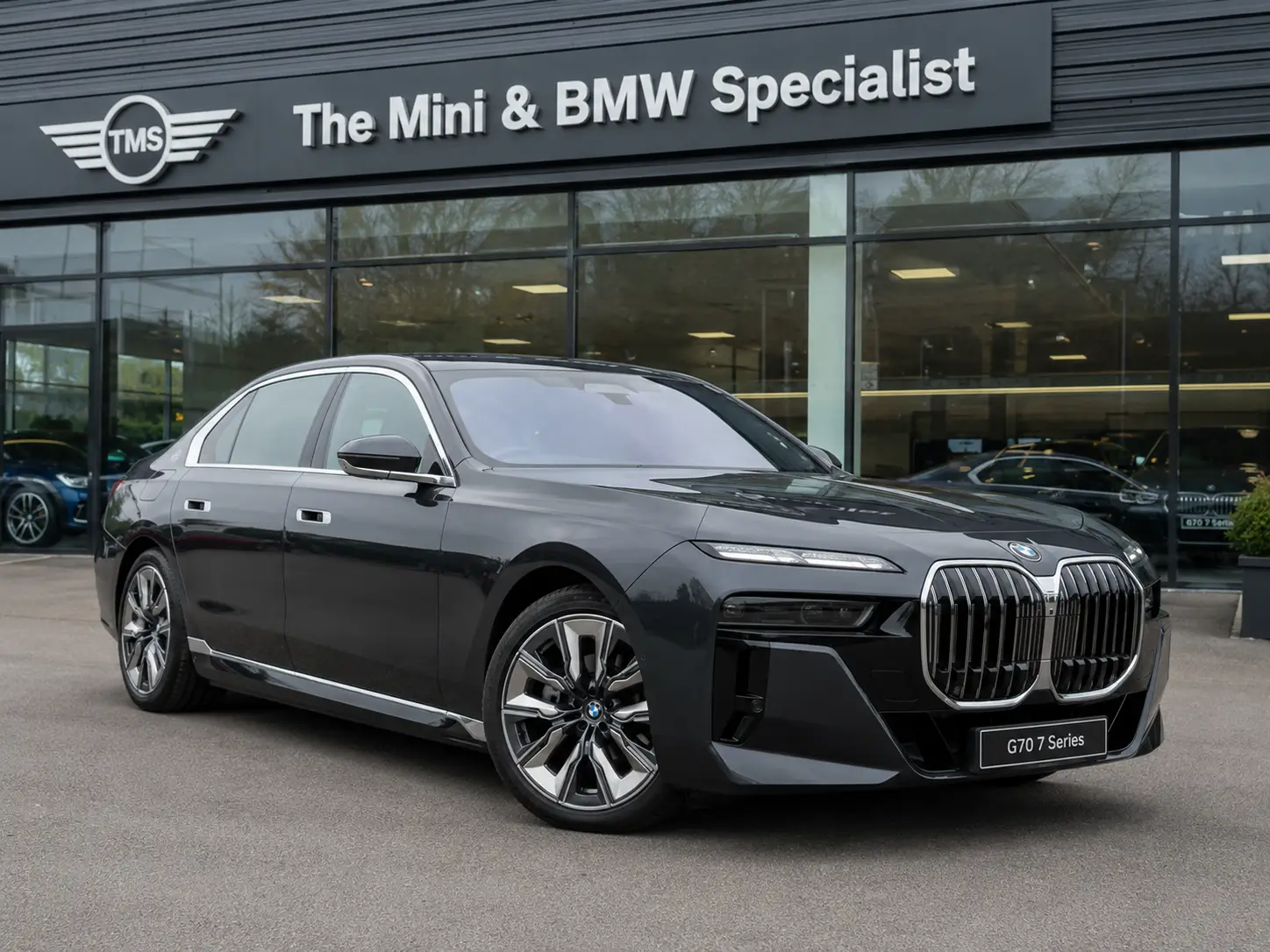
The G70 represents BMW's definitive commitment to electrified, all-wheel-drive luxury for the 2020s and beyond. Launched in 2023 and continuing into present production, the G70 introduces a bold new design language with a dramatically enlarged dual-kidney grille, refined proportions, and a minimalist interior philosophy emphasising quality over complexity. All G70 variants feature standard all-wheel drive (xDrive), establishing the 7-Series as a genuine all-weather luxury saloon capable of traversing challenging terrain without sacrificing refinement. The seventh generation makes plug-in hybrid (750e xDrive) its core offering, reflecting BMW's strategic pivot toward electrification – the 750e delivers 536 hp combined, genuine 40+ mpg fuel economy, and up to 50 miles of pure-electric range. iDrive 8.0 introduces artificial-intelligence integration, natural-language voice control, and seamless over-the-air software updates, transforming the in-car experience toward intuitive digital interaction. The long-wheelbase G71 M variant offers executive rear-seat accommodation rivalling dedicated business-class vehicles, with enhanced comfort features, massage functions, and ambient lighting. Engine technology reaches new peaks: the 740i features the refined B58B30M turbocharged inline-six with 375 hp; the 750i employs the N63B44M twin-turbo V8 with 516 hp; the 760i and M760i offer the legendary N74B60M 6.0-litre twin-turbo V12 with 643–645 hp – representing the swansong of naturally aspirated V12 development before electric powertrains assume dominance. With production only recently commenced, the G70 represents the present frontier of luxury-saloon technology and engineering excellence.
Engines
The G70 petrol range emphasises efficiency, performance, and advanced turbocharging technology. The 740i xDrive (2023–present) features the B58B30M 3.0-litre single-turbo inline-six, a refined evolution of the B58 family, producing 375 hp and 500 Nm – delivering exceptional responsiveness and efficiency across the rev range. The 750i xDrive (2023–present) employs the N63B44M 4.4-litre twin-turbo V8, a significantly updated variant of the legacy N63 architecture, producing 516 hp and 750 Nm – delivering superb low-end torque, sustained high-rpm power, and exceptional smoothness befitting a flagship saloon. Most significantly, the 750e xDrive plug-in hybrid (2023–present) pairs the N63B44 twin-turbo V8 with a 145-kW electric motor (195 hp electric), a 111.5-kWh lithium-ion battery pack, and intelligent energy management, producing a combined 536 hp and 750 Nm whilst achieving 40+ mpg combined fuel economy and up to 50 miles of pure-electric range – representing the pinnacle of electrified performance for a conventional luxury saloon. The 760i xDrive (2023–present) and M760i xDrive (2024–present) feature the all-new N74B60M 6.0-litre twin-turbo quad-cam V12, producing 643 hp and 850 Nm (M-tuned variant 645 hp) – representing the evolutionary endpoint of turbocharged V12 development and among the last such engines produced for road cars before full electrification takes precedence. All petrol and hybrid engines integrate seamlessly with the 8-speed automatic transmission (ZF 8HP90), providing exemplary smoothness, efficiency, and rapid response across the entire engagement range.
The G70 750e xDrive plug-in hybrid (2023–present) is BMW's core electrified flagship, pairing the N63B44 twin-turbo V8 with a 145-kW electric motor (195 hp electric), a 111.5-kWh high-voltage lithium-ion battery pack, and intelligent energy management. Combined output reaches 536 hp and 750 Nm, with the system delivering seamless petrol-electric transitions, up to 50 miles of pure-electric range (WLTP combined cycle), and genuine 40+ mpg combined fuel economy – exceptional achievement for a performance V8 luxury saloon. The hybrid system optimises battery charging via regenerative braking and predictive energy management, utilising GPS navigation data to pre-condition battery state-of-charge for upcoming driving profiles. Fast-charging capability allows 80% charge in approximately 35 minutes via 11 kW AC charger or rapid DC charging infrastructure. Fully electric variants are not available for the G70; the all-electric i7 (2023+, contemporary platform sibling) serves customers prioritising zero-emission driving exclusively.
G70 ownership represents the leading edge of contemporary luxury-saloon technology and demands engagement with advanced electrification and digital systems. The B58B30M inline-six is exceptionally refined and efficient, with straightforward maintenance and emerging parts availability; single-turbo design offers excellent reliability and simplified diagnostics. The N63B44M V8 is powerful, smooth, and benefits from revised turbocharger architecture offering improved reliability compared to earlier N63 variants, though cooling-system maintenance remains critical on any high-performance V8. The 750e PHEV's battery management system is sophisticated and represents BMW's most mature plug-in hybrid architecture; high-voltage diagnostics require specialist equipment and training, but battery reliability has proven exceptional across real-world usage. The revolutionary N74B60M V12 represents the pinnacle of naturally aspirated V12 engineering before electrification; it demands specialist knowledge, premium fuel, and meticulous maintenance, but offers linear, refined power delivery and exceptional durability when properly serviced. iDrive 8.0 is user-friendly and benefits from over-the-air software updates reducing dealer visits for minor issues; however, advanced diagnostics for infotainment, navigation, or autonomous-driving-system faults require specialist facilities and training. All-wheel drive (xDrive) system is robust; however, differential servicing and calibration require specialist equipment. Adaptive suspension, laser headlights, electronic parking, and advanced driver-assistance systems (including Level 2 semi-autonomous functions) are standard and benefit from specialist calibration and updates. Parts availability is strong through BMW dealer networks and emerging independent specialists; high-voltage hybrid components remain pricier than mechanical items. The G70 represents the contemporary frontier of connected, electrified, semi-autonomous luxury-saloon engineering – technically sophisticated, digitally integrated, and requiring specialists familiar with cutting-edge BMW systems and software architecture. Owners willing to embrace advanced technology and invest in proper specialist service can expect 150,000+ miles of exceptional, economical, and remarkably capable motoring. The Mini & BMW Specialist provides comprehensive servicing, plug-in hybrid and high-voltage diagnostics, iDrive 8.0 support, turbocharged-engine expertise, and specialist repair for seventh-generation 7-Series ownership.
Service points for this generation
G70 ownership represents the leading edge of contemporary luxury-saloon technology and demands engagement with advanced electrification and digital systems. The B58B30M inline-six is exceptionally refined and efficient, with straightforward maintenance and emerging parts availability; single-turbo design offers excellent reliability and simplified diagnostics. The N63B44M V8 is powerful, smooth, and benefits from revised turbocharger architecture offering improved reliability compared to earlier N63 variants, though cooling-system maintenance remains critical on any high-performance V8. The 750e PHEV's battery management system is sophisticated and represents BMW's most mature plug-in hybrid architecture; high-voltage diagnostics require specialist equipment and training, but battery reliability has proven exceptional across real-world usage. The revolutionary N74B60M V12 represents the pinnacle of naturally aspirated V12 engineering before electrification; it demands specialist knowledge, premium fuel, and meticulous maintenance, but offers linear, refined power delivery and exceptional durability when properly serviced. iDrive 8.0 is user-friendly and benefits from over-the-air software updates reducing dealer visits for minor issues; however, advanced diagnostics for infotainment, navigation, or autonomous-driving-system faults require specialist facilities and training. All-wheel drive (xDrive) system is robust; however, differential servicing and calibration require specialist equipment. Adaptive suspension, laser headlights, electronic parking, and advanced driver-assistance systems (including Level 2 semi-autonomous functions) are standard and benefit from specialist calibration and updates. Parts availability is strong through BMW dealer networks and emerging independent specialists; high-voltage hybrid components remain pricier than mechanical items. The G70 represents the contemporary frontier of connected, electrified, semi-autonomous luxury-saloon engineering – technically sophisticated, digitally integrated, and requiring specialists familiar with cutting-edge BMW systems and software architecture. Owners willing to embrace advanced technology and invest in proper specialist service can expect 150,000+ miles of exceptional, economical, and remarkably capable motoring. The Mini & BMW Specialist provides comprehensive servicing, plug-in hybrid and high-voltage diagnostics, iDrive 8.0 support, turbocharged-engine expertise, and specialist repair for seventh-generation 7-Series ownership.
Found your model? Get an exact service price in seconds using the Service Calculator at the top of this page, or call us to discuss your specific car.